
Softwares
This complete guide to MEDDIC sales training in 2026 explains how the MEDDIC framework helps sales teams qualify deals more effectively, shorten sales cycles, and close higher-value opportunities with a structured, data-driven approach.

Sales leadership expert with 10+ years in B2B training and team development
7 Min
The MEDDIC sales methodology has been the gold standard for complex B2B deals since the 1990s. Industry titans like Google and Salesforce use it to bring rigor to the chaos of enterprise sales.
However, a massive gap remains: knowing the acronym is easy, but executing it on a live call under pressure is where most teams falter. Traditional classroom lectures and static videos can't simulate the heat of a real negotiation.
To truly master MEDDIC, reps need to move beyond theory and into consistent, high-fidelity application.
In this guide, we'll break down everything you need to know about MEDDIC sales training, from the core framework itself to the best ways to train your team.
We'll also explore why AI-powered sales roleplay — specifically Kendo AI — is emerging as the most effective way to actually internalize MEDDIC principles and apply them under pressure.
TL;DR
MEDDIC remains the gold standard for qualifying complex B2B deals, but traditional training methods create a massive theory-to-execution gap
40-50% of teams abandon MEDDIC within 6 months due to adherence decay and lack of realistic practice opportunities
AI roleplay platforms like Kendo AI bridge this gap with unlimited, realistic practice scenarios and instant feedback
Proven ROI: Teams using AI-powered MEDDIC training see 60%+ improvement in close rates and 70% faster ramp times
The shift is happening now: Leading sales orgs are replacing static coursework with AI-driven, execution-focused training
What Is MEDDIC? A Quick Refresher
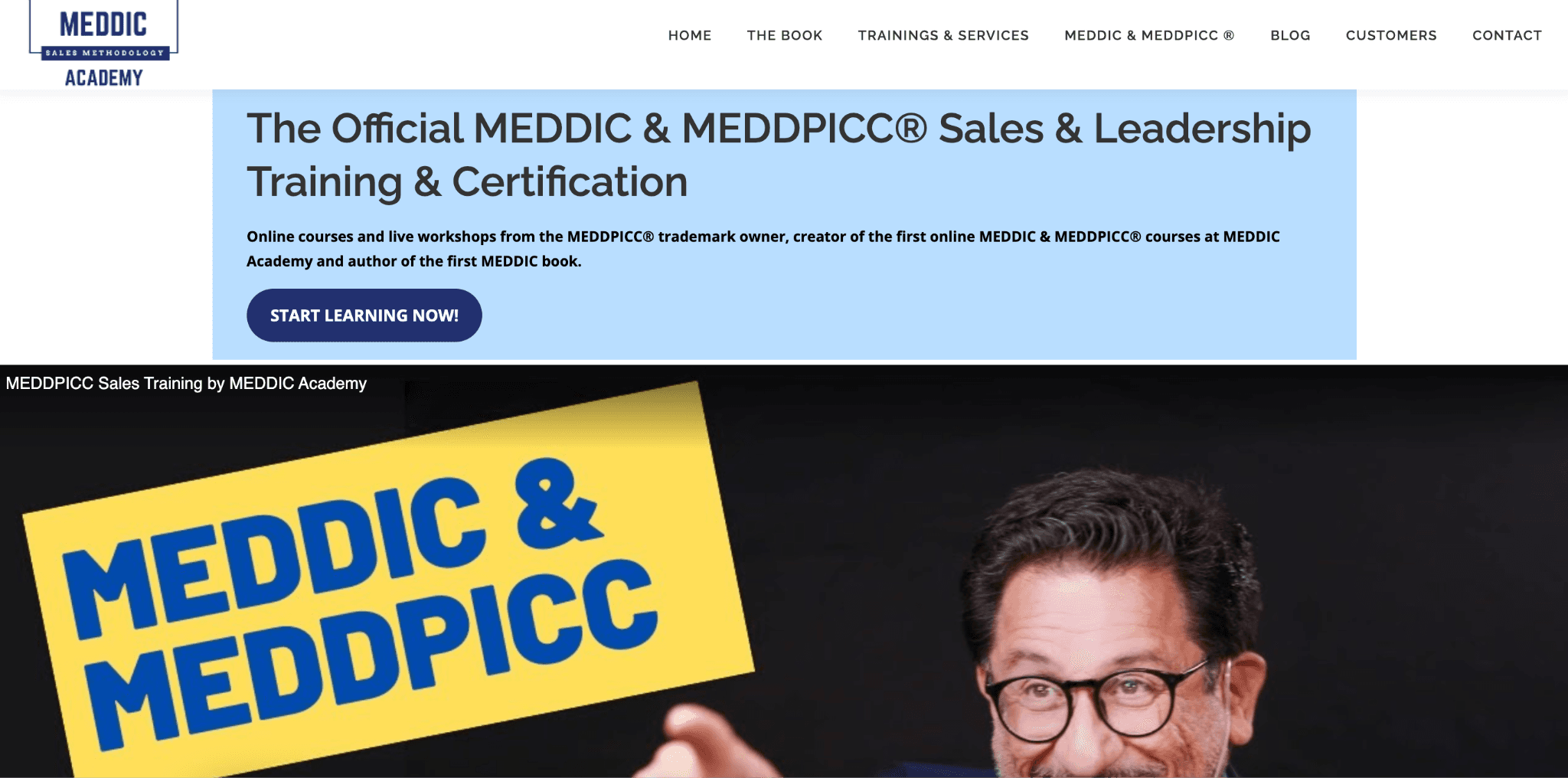
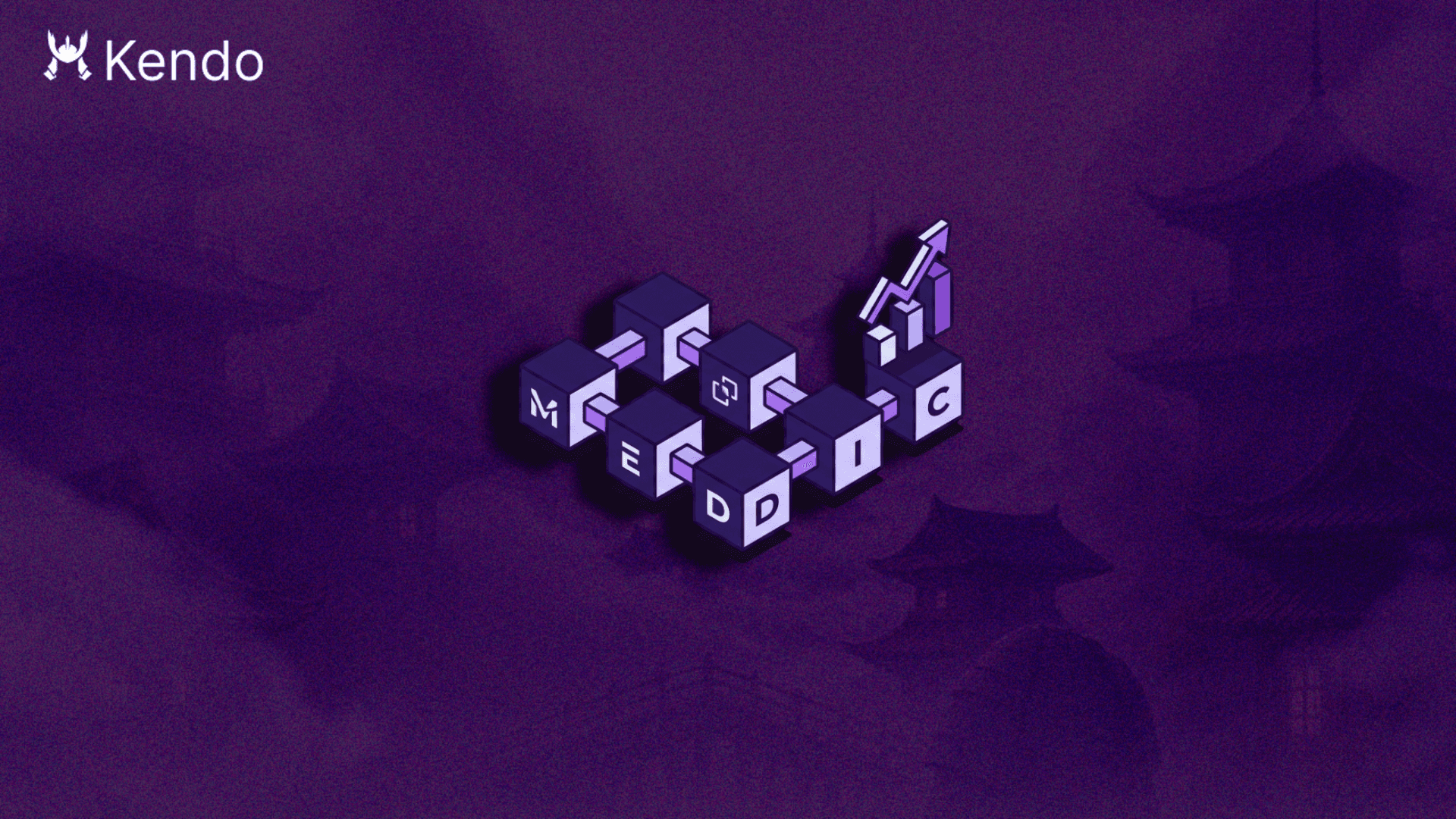
MEDDIC is a sales qualification methodology designed for complex, enterprise B2B sales cycles. The acronym stands for:
M — Metrics: The measurable gains and economic benefits your solution delivers. Without quantified value, deals stall.
E — Economic Buyer: The individual with discretionary access to budget and final sign-off authority. If you're not engaging the economic buyer, you're not controlling the deal.
D — Decision Process: The specific steps the customer's organization takes to evaluate, approve, and purchase a solution. Understanding this prevents late-stage surprises.
D — Decision Criteria: The formal and informal criteria the buyer uses to compare solutions. Knowing these lets you position against competitors and shape the evaluation in your favor.
I — Identify Pain: The core business pain that creates urgency and justifies the investment. No pain, no deal.
C — Champion: Your internal advocate within the buyer's organization — someone who has influence, access to the economic buyer, and a personal stake in your solution winning.
The expanded version, MEDDPICC, adds Paper Process (the legal, procurement, and administrative steps required to close a contract) and Competition (understanding who and what you're competing against, including the status quo and doing nothing).
The fundamental insight behind MEDDIC is simple: when you lose a deal, it's almost always because you failed to adequately address one or more of these elements. The methodology forces sales teams to qualify rigorously, identify gaps early, and take action before it's too late.
The Gap in Traditional MEDDIC Training
Most MEDDIC programs follow a predictable playbook: online certifications, theory-heavy workshops, and recorded libraries. While these provide the necessary foundational knowledge, they often fail at the point of execution.
1. Theory vs. Real-World Friction (Expertise & Experience)
Foundational platforms like MEDDIC Academy (led by co-creator Darius Lahoutifard) and MEDDICC are vital for learning the "alphabet" of the framework. However, there is a distinct difference between knowing the framework and applying it under pressure.
The Knowledge: Identifying a "Champion" in a slide deck.
The Execution: Navigating a live call where a prospect is actively dodging your Champion-building questions.
The Knowledge: Understanding "Metrics" in a quiz.
The Execution: Defending an ROI analysis in real-time against a skeptical Economic Buyer.
2. The "Passive Learning" Trap
Sales is a high-stakes performance skill. Like surgery or aviation, the gap between theory and mastery is closed only through deliberate practice. Traditional methods struggle to bridge this gap because:
Low-Stakes Roleplay: Peer-to-peer practice often lacks the "teeth" of a real buyer.
Feedback Latency: Coaching that arrives days after a call loses its impact.
Scalability: Live workshops are "one-off" events that don't provide the "flight hours" required for muscle memory.
3. Moving Toward Dynamic Execution (Trustworthiness)
To truly master MEDDIC, training must move from passive consumption to active simulation. Modern enablement requires environments where reps can fail safely, iterate instantly, and face the unpredictable nature of complex enterprise deals.
Why AI Sales Roleplay Is the Future of MEDDIC Training
The most significant advancement in MEDDIC sales training isn't a new course, a new book, or a new certification.
It's the emergence of AI-powered sales roleplay that allows reps to practice executing MEDDIC principles against realistic, dynamic AI prospects — on demand, at scale, and with immediate feedback.
The Hidden Costs of MEDDIC Training Failure
While MEDDIC's effectiveness is proven, companies like PTC grew from $300M to $1B using the framework, implementation success rates tell a different story.
Here's why most MEDDIC training programs fail to stick:
1. The Adherence Decay Crisis
Research consistently shows that without reinforcement, sales teams lose a significant portion of new training within weeks. Under pressure, reps naturally revert to old habits. If they haven’t practiced MEDDIC in high-stress, realistic scenarios, the framework is the first thing they abandon when a deal gets difficult.
2. The "Box-Ticking" Trap
Many teams treat MEDDIC as a CRM chore rather than a strategic weapon. Reps fill out scorecard fields just to satisfy management, but they never internalize the logic. This surface-level adoption results in "clean" CRM data that hides "dirty" deals, providing zero actual competitive advantage.
3. Missing Muscle Memory
When a prospect pushes back on ROI or an Economic Buyer goes cold, reps often default to "feature dumping." Mastery of MEDDIC requires muscle memory—the kind that can’t be built in a classroom. Without repetitive, realistic practice, the framework stays in the manual and never makes it to the live call.
4. Subjective Interpretation
One rep’s "Champion" is another’s "Coach." Without a unified standard for what "good" looks like, MEDDIC application becomes inconsistent across the org. This makes forecasting unreliable and prevents managers from providing clear, actionable coaching.
5. The Delayed Coaching Loop
Most managers don't have the bandwidth to review every call. By the time they provide MEDDIC-specific feedback, the opportunity to pivot the deal has passed. This delay prevents real-time skill development and leaves reps guessing.
What Bad MEDDIC Implementation Actually Costs You
Let's quantify the financial impact of MEDDIC training that doesn't stick:
Cost of Failed Deals
Average enterprise deal size: $250K
Deals lost due to poor qualification: 30-40%
Annual cost per rep: $750K-$1M in lost revenue
Training ROI Comparison
| Method | Initial Cost | Adherence Rate (6mo) | Cost Per Lasting Behavior Change |
|---|---|---|---|
| Traditional Workshops | $100K-$500K | 50-60% | $167K-$1M |
| Online Courses | $50K-$150K | 30-40% | $125K-$500K |
| AI Roleplay (Kendo) | $55/seat/month | 90%+ | $660/seat/year |
Time-to-Productivity Metrics
Traditional training: 12-16 weeks to MEDDIC proficiency
AI-powered training: 3-4 weeks to proficiency
Productivity gain: 8-12 weeks faster ramp time
How To Protect the Training Investment
Organizations invest hundreds of thousands in MEDDIC, only to see the methodology fade within months. To make MEDDIC "stick," teams must bridge the gap between initial theory and daily execution.
The Kendo Advantage: This is where AI-powered roleplay changes the game. By providing reps with a "flight simulator" for MEDDIC, Kendo AI allows for unlimited practice, instant feedback, and the development of the muscle memory needed to handle high-stakes deals—ensuring your training investment actually converts into revenue.
Kendo AI: The #1 AI Sales Roleplay Platform for MEDDIC Training
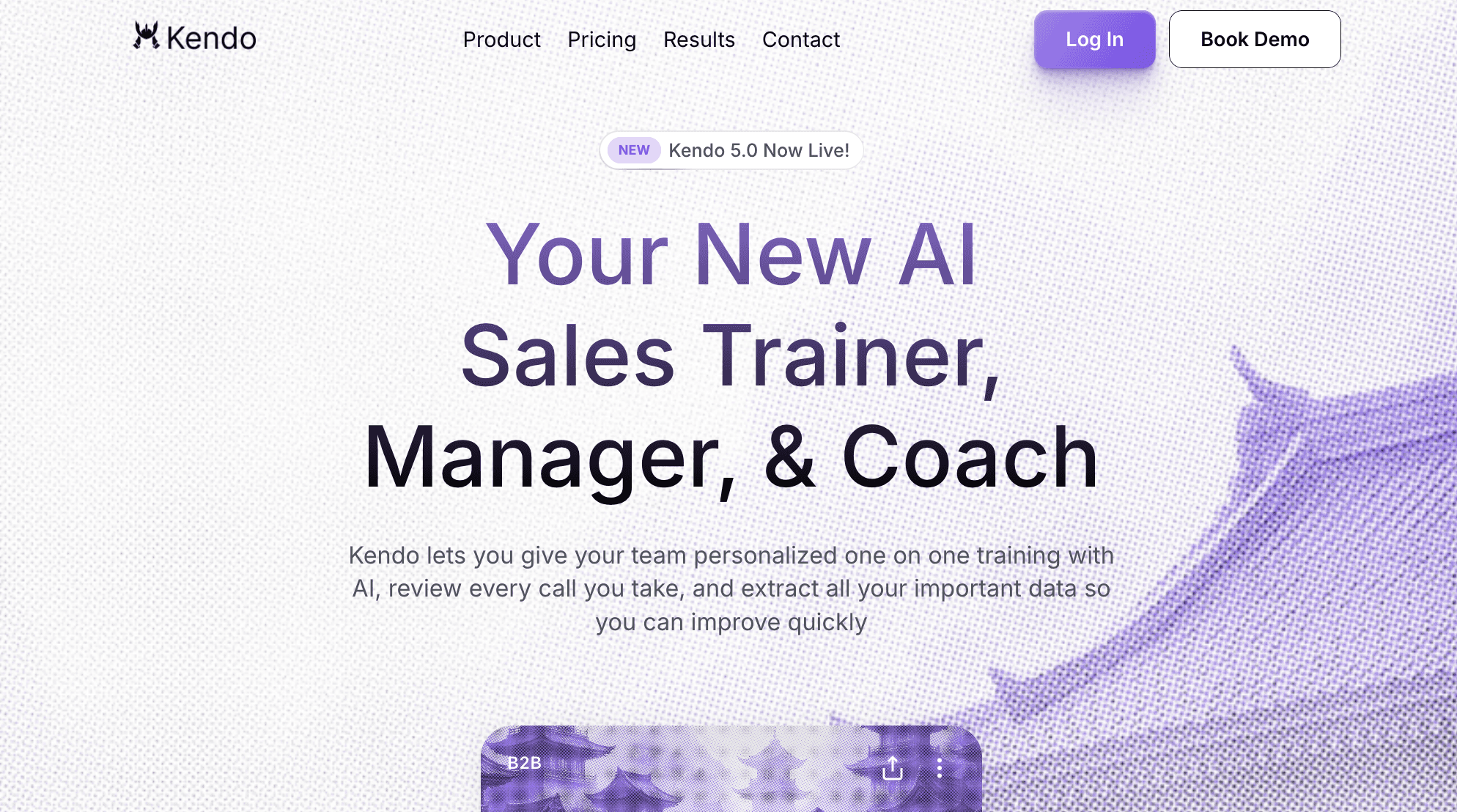
If traditional training is the textbook, Kendo AI is the flight simulator. It is the first comprehensive AI Sales Manager—an all-in-one suite built by sales veterans to turn MEDDIC theory into intuitive muscle memory.
Here is how Kendo transforms the framework from a checklist into a competitive advantage:
1. High-Fidelity, Human-Like AI Prospects
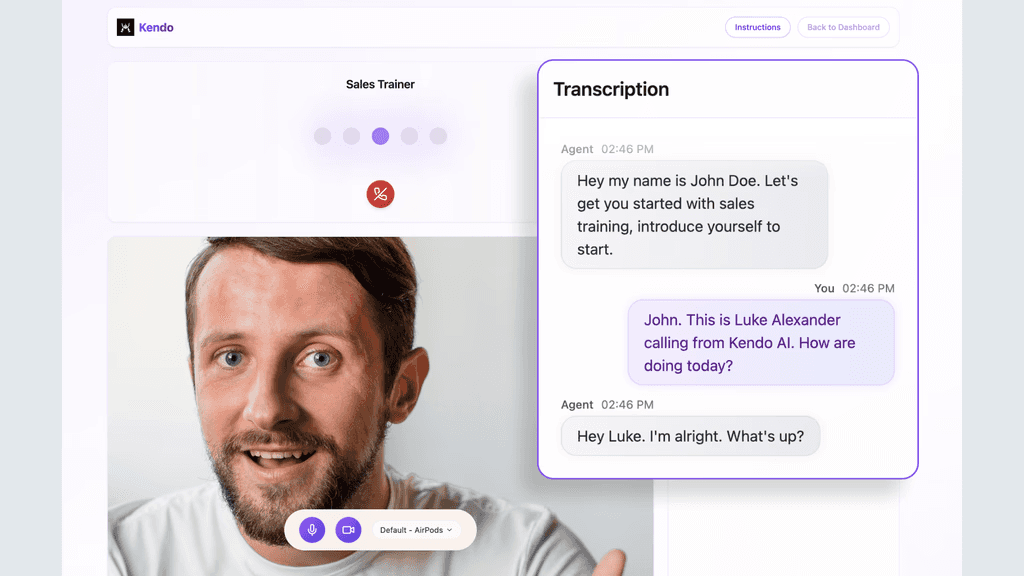
Kendo utilizes ultra-low latency, state-of-the-art voice technology to create prospects that feel—and sound—real. These aren't predictable bots; they are dynamic buyers who push back.
The MEDDIC Application: You can simulate an Economic Buyer who is protective of their budget, a Champion who is losing internal influence, or a prospect who intentionally obscures the Decision Process.
The Result: Reps learn to handle "real-world friction" in a safe environment before a live deal is on the line.
2. Scenarios Built in Seconds
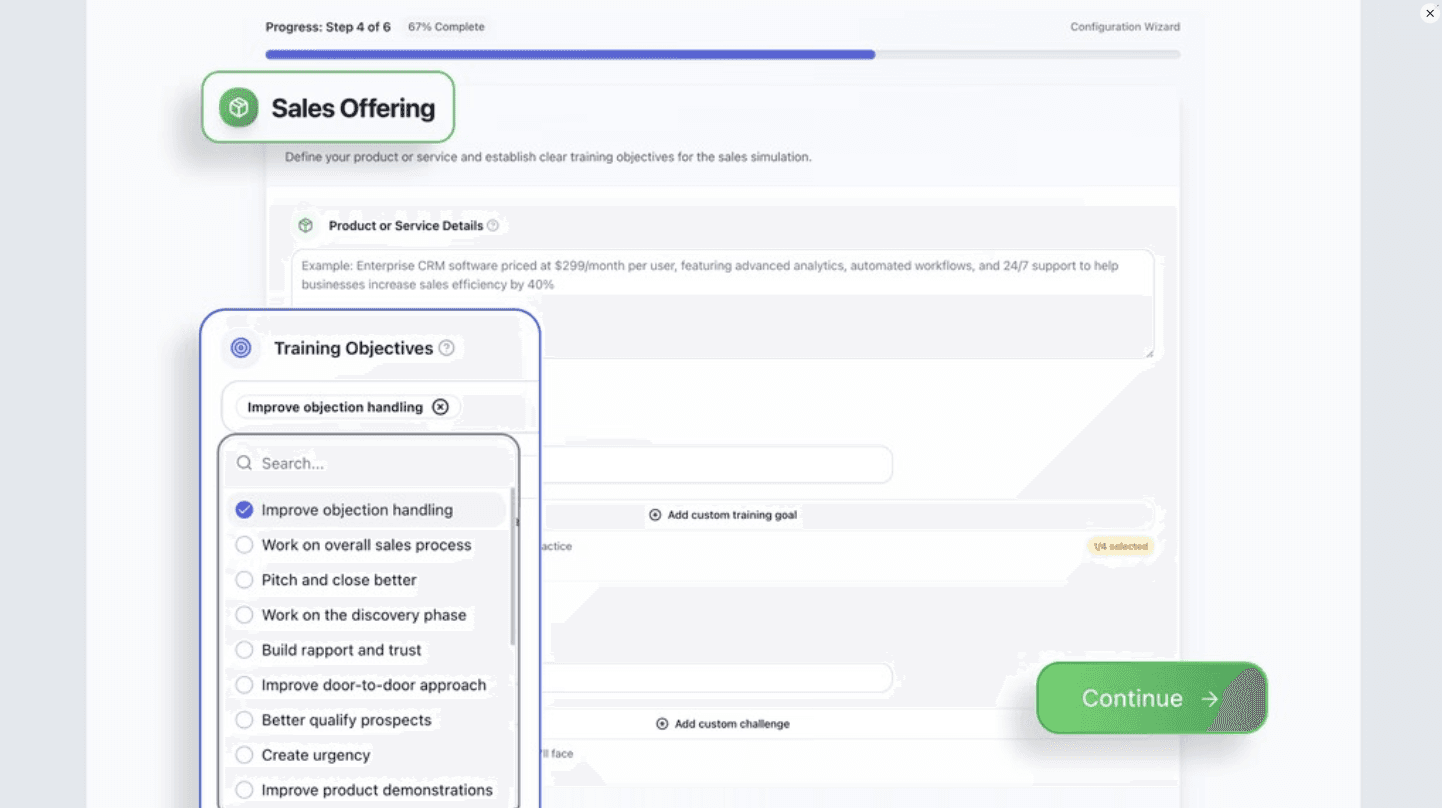
Unlike the static case studies found in traditional programs, Kendo allows sales leaders to create custom scenarios via simple prompts.
Hyper-Relevant Practice: Build tracks specifically for your industry, your product, and your specific rivals.
Micro-Focus Training: Create one scenario focused exclusively on Implicating Pain and another on navigating a complex Paper Process. This ensures your team isn't just "doing MEDDIC"—they are mastering it within your unique sales cycle.
3. The Instant Feedback Loop (Expert Coaching)
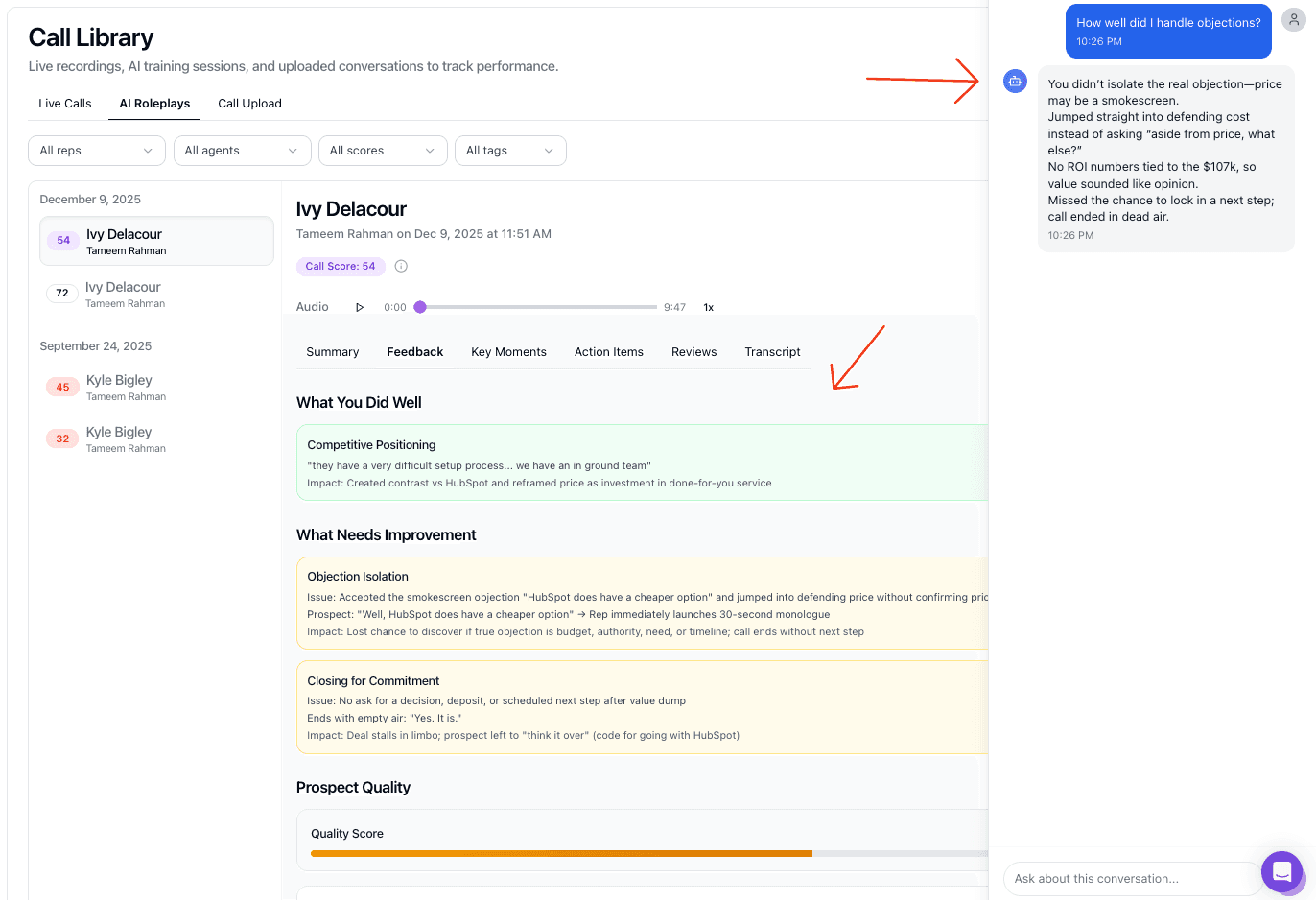
The biggest barrier to skill development is the delay between a mistake and its correction. Kendo’s AI scoring engine acts as a world-class coach that never sleeps.
Seconds, Not Days: Immediately after a roleplay or a real call, reps receive industry-specific, actionable feedback.
Iterative Learning: If a rep fails to quantify Metrics during a practice session, they find out why instantly and can jump back in to try again while the conversation is still fresh.
4. Continuous MEDDIC Auditing Across Every Call
Kendo doesn't stop at roleplay. By integrating with tools like Zoom and Fathom, it automatically reviews and scores 100% of your team's real sales calls.
Objective Scorecards: Align your AI scoring directly to the MEDDIC framework.
Total Visibility: Instead of a manager reviewing 2% of calls, Kendo provides a data-driven view of how consistently your team is identifying pain and engaging Economic Buyers across every single interaction.
The Kendo Edge: Mastery isn't about what your reps know; it's about how they perform under pressure. Kendo AI ensures that MEDDIC isn't just a framework they've "learned," but a language they speak fluently.
How to Build a High-Performance MEDDIC Program With Kendo AI
To move beyond "box-ticking" and drive actual revenue, organizations are using Kendo AI to create a continuous loop of practice and performance. Here is the four-step framework for implementation:
Step 1: Design High-Friction AI Prospects
Mastery requires more than just knowing what "Metrics" are—it requires defending them. Use Kendo’s creation engine to build scenarios for each MEDDIC pillar. Since you can create any prospect imaginable via simple prompts, you can tailor "gauntlets" such as:
The Skeptical EB: An Economic Buyer who demands concrete ROI and pushes back on every "Metric" provided.
The Procurement Gauntlet: A complex Decision Process scenario involving multiple stakeholders and legal hurdles.
The Fading Champion: A scenario where your internal ally is losing influence and needs coaching to sell internally.
Step 2: Implement "Flight Hours" Before Live Leads
The most successful teams eliminate the "trial by fire" approach, where new hires burn through expensive leads while practicing basics.
Case Study: United Insurance Pros mandates 3–5 hours of Kendo practice before a rep ever touches a live lead. This cut their onboarding time from 30 days to 24 hours and saved over $3,000 per agent, per month in wasted lead costs.
Continuous Improvement: Even for veterans, some companies like require their cold callers to engage in one hour of daily practice to keep their skills sharp. It’s the difference between a "$10 warm-up and wasting a $50 lead."
Step 3: Audit 100% of Calls Against MEDDIC Criteria
"You can't lie to AI." Instead of managers guessing which deals are healthy, Kendo’s automated call scoring reviews every interaction against your custom MEDDIC scorecards.
Objective Visibility: Track whether reps are actually uncovering pain or just filling out CRM fields.
Data-Driven Coaching: Use Kendo’s analytics to identify if a specific rep—or the entire team—is struggling with a particular element, and address it with data rather than "gut feel."
Step 4: Close the Feedback Loop Instantly
Traditional coaching suffers from "latency." Kendo removes the wait time between a mistake and a correction.
The "Plug-In" Method: Organizations like Globe Life take agents who struggle on a live call and immediately "plug them back into Kendo" to roleplay that specific problem area.
Warm-Up Reps: Like a pro athlete before a game, reps at Skvarla Insurance use Kendo for targeted warm-ups before their live blocks, ensuring they are "in the zone" for their most important conversations.
The Result: By shifting from passive workshops to a continuous cycle of Live Performance ↔ Targeted Practice, MEDDIC becomes the "operating system" of your sales team rather than just a training event.
MEDDIC Training Options Compared
| Capability | Traditional Courses & Workshops | MEDDIC-Specific Platforms | Kendo AI |
|---|---|---|---|
| MEDDIC framework knowledge | ✅ Strong | ✅ Strong | ✅ Via scorecard customization |
| Certification & credentials | ✅ Available | ✅ Available | ❌ Not offered |
| Live, realistic practice | ❌ Limited peer roleplay | ❌ Minimal | ✅ Unlimited AI roleplay |
| Custom scenario creation | ❌ Generic case studies | ❌ Pre-built content | ✅ Any scenario in seconds |
| Immediate post-call feedback | ❌ Delayed | ❌ Delayed | ✅ Instant AI coaching |
| Automatic scoring of real calls | ❌ Not available | ❌ Limited | ✅ Every call scored |
| Scalable to entire team | ⚠️ Expensive at scale | ⚠️ Per-seat costs add up | ✅ $55/seat/mo (Pro) |
| Data-driven performance tracking | ❌ Manual | ⚠️ Basic | ✅ Full analytics suite |
MEDDIC Implementation Timeline & Best Practices: Your 90-Day MEDDIC Rollout Plan
Weeks 1-2: Foundation & Setup
Leadership alignment on MEDDIC variation (MEDDIC/MEDDICC/MEDDPICC)
CRM scorecard configuration aligned to framework elements
Manager training on coaching and reinforcement techniques
Kendo AI setup: Create industry-specific roleplay scenarios for each MEDDIC element
Weeks 3-4: Initial Training
Team workshops covering MEDDIC theory and definitions
Live practice sessions using Kendo AI roleplay scenarios
Requirement: 5 hours of AI roleplay before touching live prospects
Establish daily practice routine (30 minutes minimum)
Weeks 5-8: Reinforcement Phase
Weekly deal clinics reviewing active opportunities through MEDDIC lens
Continued daily AI roleplay practice targeting weak areas
Manager 1:1s focused on MEDDIC execution gaps
Kendo AI call scoring: Automatic analysis of every live call
Weeks 9-12: Optimization
Performance analytics review: identify team-wide patterns
Customize AI roleplay scenarios based on real objections encountered
Advanced training on complex scenarios (multiple economic buyers, changing champions)
Full integration into sales process and forecasting
Change Management Strategies
Executive sponsorship: CRO/VP must visibly support and use MEDDIC language
Incentive alignment: Include MEDDIC scorecard completion in comp plans
Peer accountability: Public leaderboards for roleplay practice hours
Continuous reinforcement: Weekly team challenges using AI scenarios
Success Metrics to Track
Roleplay practice hours per rep per week
MEDDIC scorecard completion rates
Forecast accuracy improvement
Average deal size and close rate changes
Time-to-productivity for new hires
Stop Practicing on Your Customers; Try AI Sales Roleplay Now
MEDDIC is a masterpiece of sales engineering, but in 2026, knowing the acronym isn't a competitive advantage—executing it under pressure is.
Knowledge without deliberate practice is just theory. Relying on passive videos or sporadic roleplays creates an "execution gap" that costs you deals. Kendo AI bridges that gap, transforming MEDDIC from a static CRM checklist into a sharp, intuitive sales instinct.
For the Foundation: Visit MEDDIC Academy for the definitive certification from the framework's co-creators.
For the Mastery: Use Kendo AI to give your team the "flight hours" they need to win before the stakes are real.
Turn Theory Into Revenue
Don't let your next high-stakes deal be the first time your reps practice the framework. Give your team the unfair advantage of AI-powered muscle memory.
Book a demo with Kendo AI to see how the world’s most elite sales teams master MEDDIC at scale.
For foundational MEDDIC education and certification, MEDDIC Academy remains the official source for coursework from the methodology's co-creator. For teams looking to go beyond theory and into execution-focused, AI-driven training, Kendo AI is the clear leader.
Luke Alexander is a sales leadership expert with over a decade of hands-on experience in B2B sales management, team training, and revenue growth strategies. He specializes in building high-performing sales teams through data-driven coaching methodologies.
Related Articles
View all