

 vs
vs

Kendo vs Hyperbound
Compare two closed-loop sales coaching platforms. Kendo pairs transparent pricing with flexible call ingestion, while Hyperbound adds advanced practice formats, formal learning administration, and completed compliance credentials.
The short answer for a buying committee
Both platforms are credible closed-loop coaching suites. The strategic split is between Kendo's transparent pricing and documented call-ingestion extensibility, and Hyperbound's broader practice formats, formal learning administration, integration directory, and completed public certifications.
Choose Kendo to…
- Standardize coaching across teams. Kendo reviews and scores every ingested call, then identifies who needs intervention.
- Connect training to live performance. Practice and real calls use the same scorecard, so skill change can be measured against business outcomes.
- Scale manager oversight. Flagged calls, rep profiles, and targeted assignments reduce the hours required to find coaching moments.
- Pilot against your own sales motion. Configure buyers, objections, call types, and scorecards around the conversations your teams actually run.
- Keep cost and expansion visible. Published team pricing creates a baseline; larger rollouts can scope implementation, support, and custom configuration.
Choose Hyperbound to…
- Rehearse complex buying conversations. Multi-party roleplays can include several stakeholders, while screen-aware practice supports live product demos.
- Run a formal learning program. Modules, locked progression, certifications, badges, competitions, and named LMS integrations are publicly documented.
- Meet mature governance requirements. Hyperbound publishes completed SOC 2 Type II and ISO 27001 certifications, HIPAA and GDPR claims, SSO options, and a public Trust Center.
What each stakeholder needs to validate
Roleplay quality is only one part of the decision. Long-term fit also depends on measurable value, workflow integration, governance, and a rollout the organization can support. Smaller teams can use the same questions in a lighter evaluation.
Both vendors connect practice to live performance. Validate impact against your current ramp, conversion, manager-time, and pipeline baselines rather than relying on feature breadth alone.
Kendo centers the manager-to-training loop. Hyperbound is the stronger documented fit when multi-party practice, screen-aware demos, formal certification, or LMS delivery are mandatory.
Kendo publishes a Push API for call ingestion. Hyperbound names a broader integration directory. Map data direction, CRM writeback, identity, ownership, limits, and required tiers before rollout.
Hyperbound has the stronger completed public certification set today. Review current audit reports, data-retention terms, subprocessors, DPA scope, and any required BAA with both vendors.
How they stack up
| | |
|---|---|---|
| Product scope | Reviews every call, then trains reps on what they missed. Roleplay, scorecards, coaching, analytics, and candidate screening in one tool. | Practices reps, scores real calls, and coaches live deals. Roleplay, real-call scoring, deal coaching, automatic CRM updates, and agent-driven automations. |
| Public pricing | Yes. Pro $55/seat/mo (180 roleplay min) · Max $100/seat/mo (480 min) · Enterprise custom | Paid pricing not disclosed. Practice and Perform are separate, quote-only per-user licenses |
| Free access | Free trial including AI roleplay, call review, and the AI Sales Manager | Free package with 45 prebuilt AI roleplays and example scorecards |
| Security certifications | Vercel app hosting, Google Cloud/Firebase data storage, TLS 1.3, AES-256; SOC 2 Type II in progress | SOC 2 Type I and II, ISO 27001:2022, HIPAA, GDPR published on its Trust Center |
| Call ingestion | Zoom, Fathom, Fireflies, Slack, Zapier + open Push API for any source | Native recorder plus Zoom, Gong, Teams, Meet, Clari Copilot and Chorus; custom integrations available |
| G2 rating | 4.8/5 (G2) | 4.9/5 · 40 reviews (accessed August 2026) |
United Insurance reached baseline in 14 days instead of 45+
The published case study also reports onboarding setup reduced from 30 days to 24 hours.

"Kendo saved us $3,000 per new hire and has cut our ramp time from a month to only 7 days. It's a no brainer for any sales team."Waylon Artrip · Founder, United Insurance Pros
Published materials use two ramp measures: 14 days to full baseline in the case study and a quoted seven-day ramp from the customer. Both are shown as published; confirm the cohort, definition, and baseline during a reference review.
Where each platform actually wins
Compare the criteria that determine long-term fit: coaching coverage, practice formats, workflow integration, administration, security, and total cost. Open any row for the evidence and tradeoffs, including where Hyperbound has the stronger case.
Public: Pro $55/seat/mo, Max $100/seat/mo, Enterprise custom45 free roleplays; Practice and Perform paid prices are quote-onlyNative Zoom, Fathom, Fireflies; webhooks; public Push API for any recorder, dialer, or CRM25+ named integrations, API data export, and custom integrations by request40+ languages, 15+ voice models, more on request25+ languages on the homepage and pricing page; the Practice page says 30+Free trial includes roleplay, call review, and the AI Sales ManagerFree access includes 45 prebuilt roleplays and example scorecardsPro includes roleplay, 25 hours of live-call scoring, call review, and AI managementPractice and Perform are separate quote-only per-user licenses; Perform adds the real-call layerMonthly or annual plans; pooled, prorated team usage is publishedPer-user licensing with volume and multi-year discounts; exact bands are quote-basedAdaptive one-to-one prospects with full-call and objections-only modesMulti-party roleplays and live screen-share demo practiceTraining paths, goals, assignments, roles, permissions, and Enterprise SSO/SAMLModules, locked progression, certifications, SSO/SCIM, and named LMS connectionsVercel hosting, Google Cloud/Firebase storage, TLS 1.3, AES-256; SOC 2 Type II in progressSOC 2 Type II, ISO 27001:2022, HIPAA, and GDPR claims are publishedAdaptive prospects from sales context plus weighted scorecards for live and practice callsBots from prompts, transcripts, or LinkedIn plus custom, concept-based scorecardsReviews ingested calls, diagnoses gaps, and assigns targeted practice on the same rubricPerform scores real calls and creates bite-sized practice from deal signalsAsk Kendo answers from calls, flags coaching needs, and assigns trainingKota and Perform add manager analytics, deal signals, CRM actions, and automationsWhat users and customers report
on G2
View reviews ↗
★★★★★
on G2
40 reviews, accessed August 2026 · View reviews ↗
★★★★★
From ~33% to 60%+ in 6 months of scored practice before live calls.
Read the storyAgents reach baseline in 14 days instead of 45+, saving $3,000+ per agent monthly.
Read the storyTop performers roughly doubled monthly production, saving 10–20 hours per agent.
Read the storyWhat the loop looks like in the product
Inside the product: roleplay, call review, and the training loop.
Practice against the buyers your reps will face tomorrow
Kendo builds the exact prospect your reps struggle with, then scores their practice like a real call.
- Any buyer imaginable: industry, persona, objections, B2B or B2C
- Full-call or objections-only practice modes for your team
- 40+ languages and 15+ voices
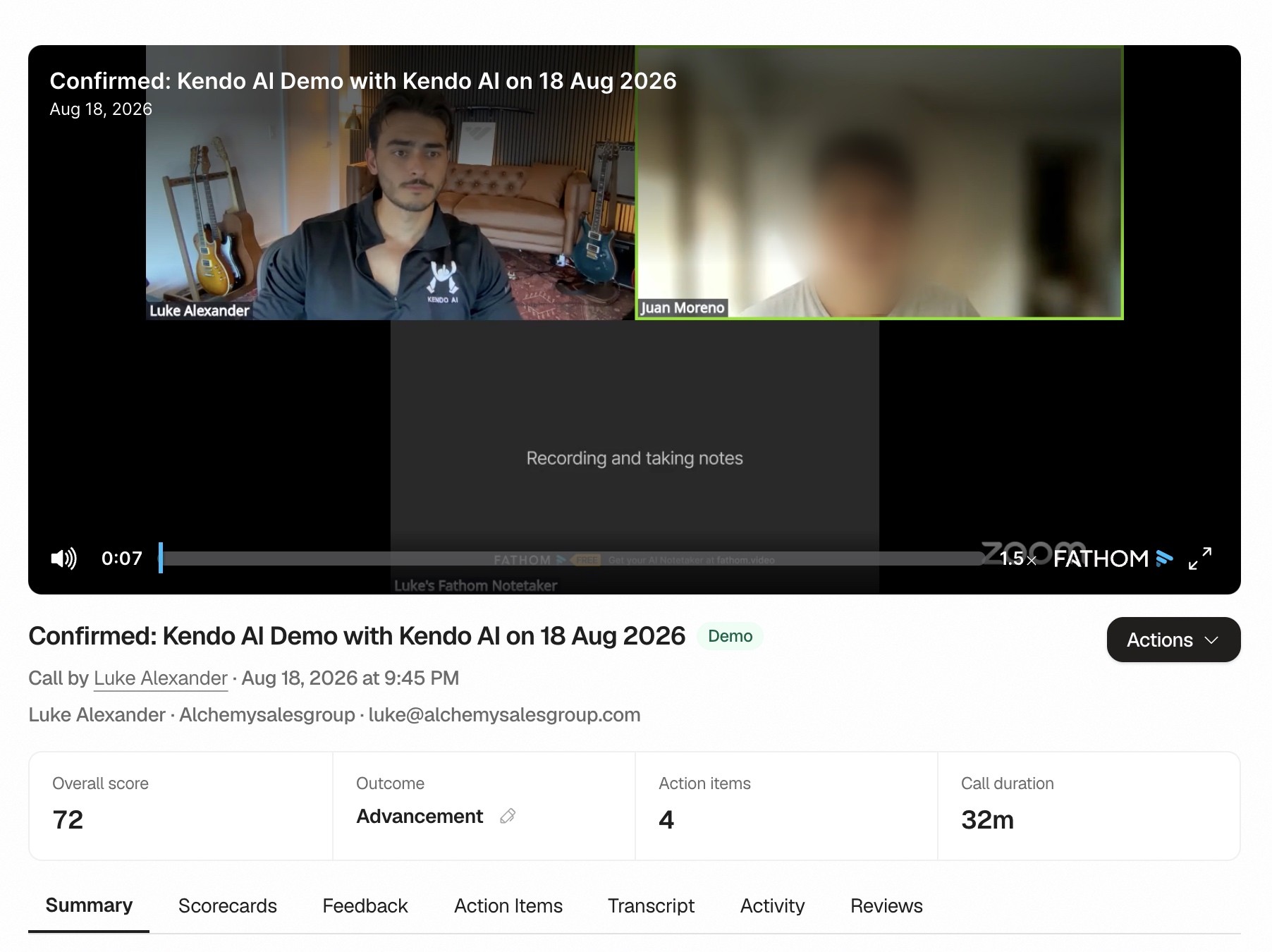
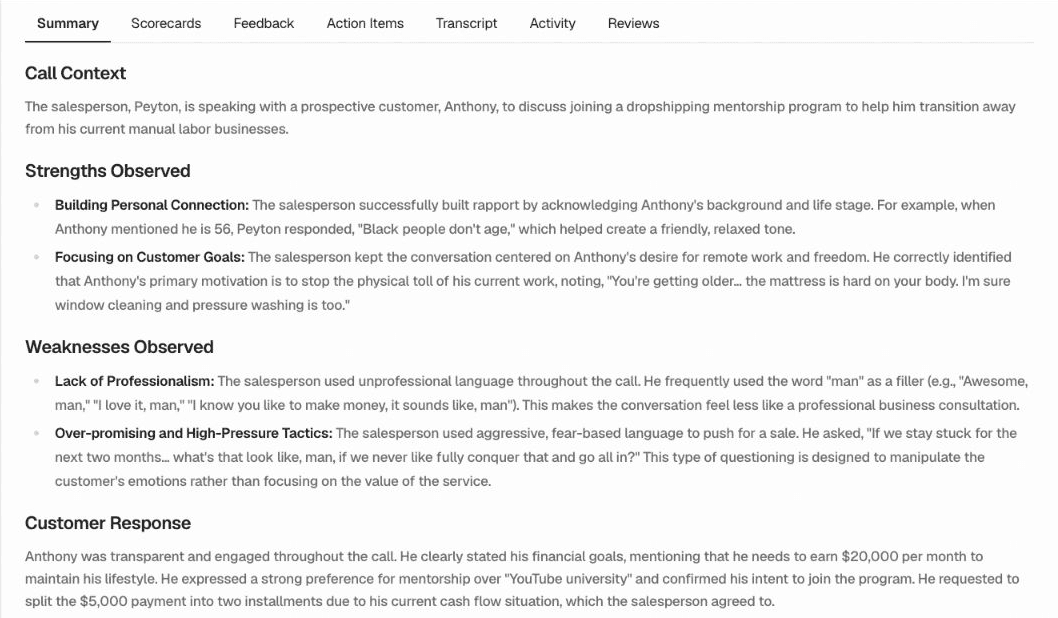
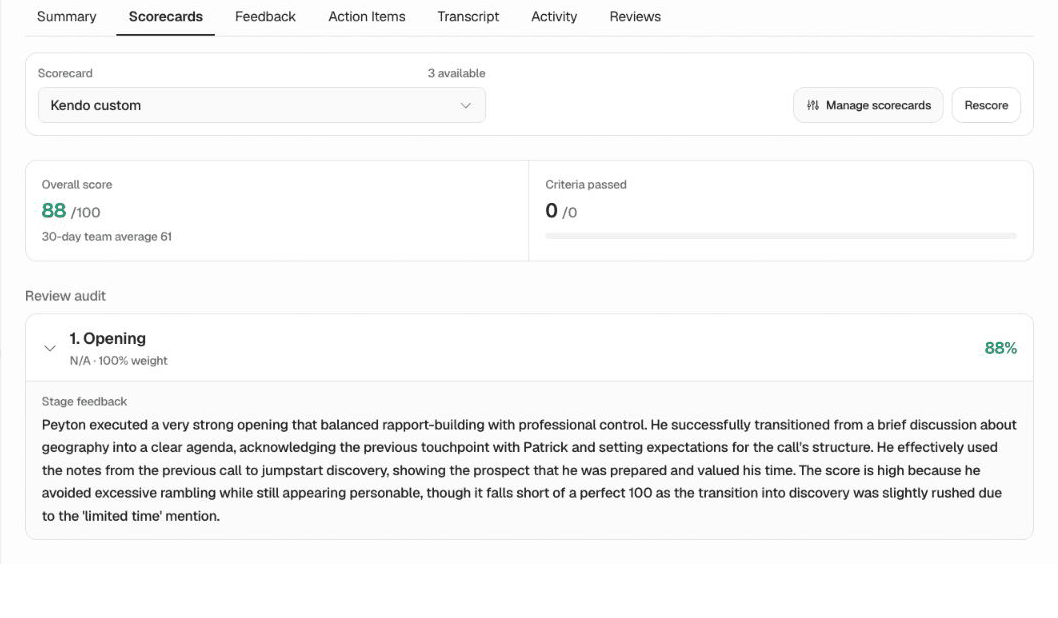
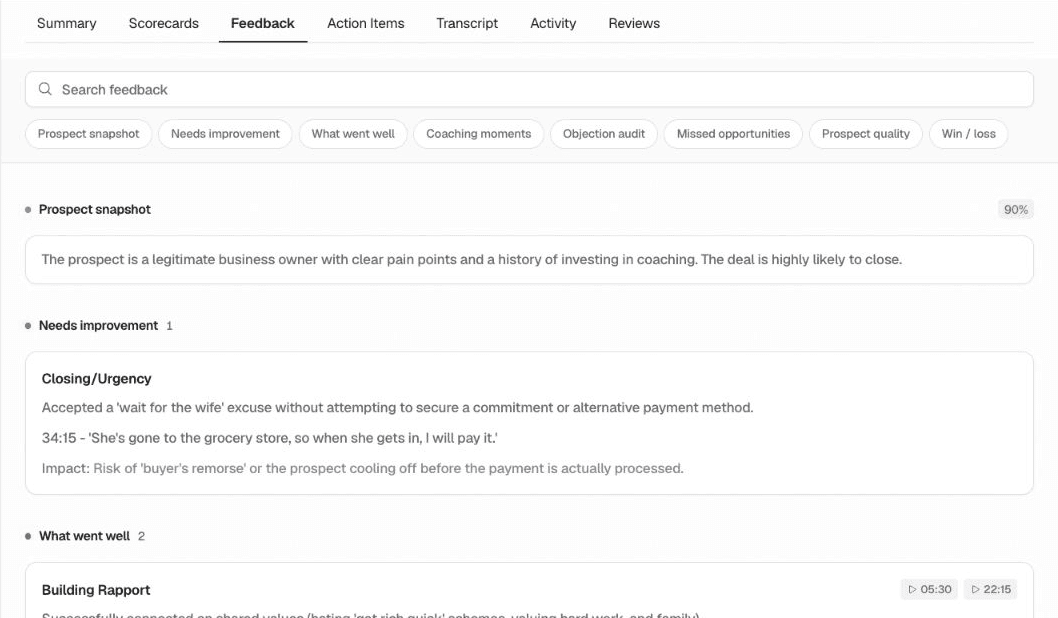
Stop sampling calls. Kendo reviews them all.
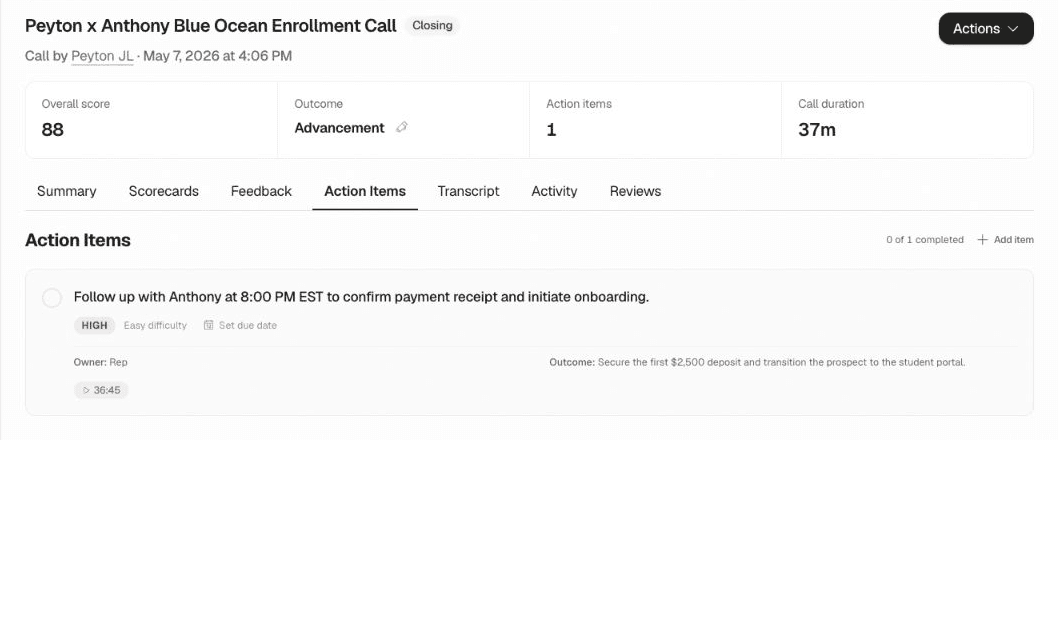
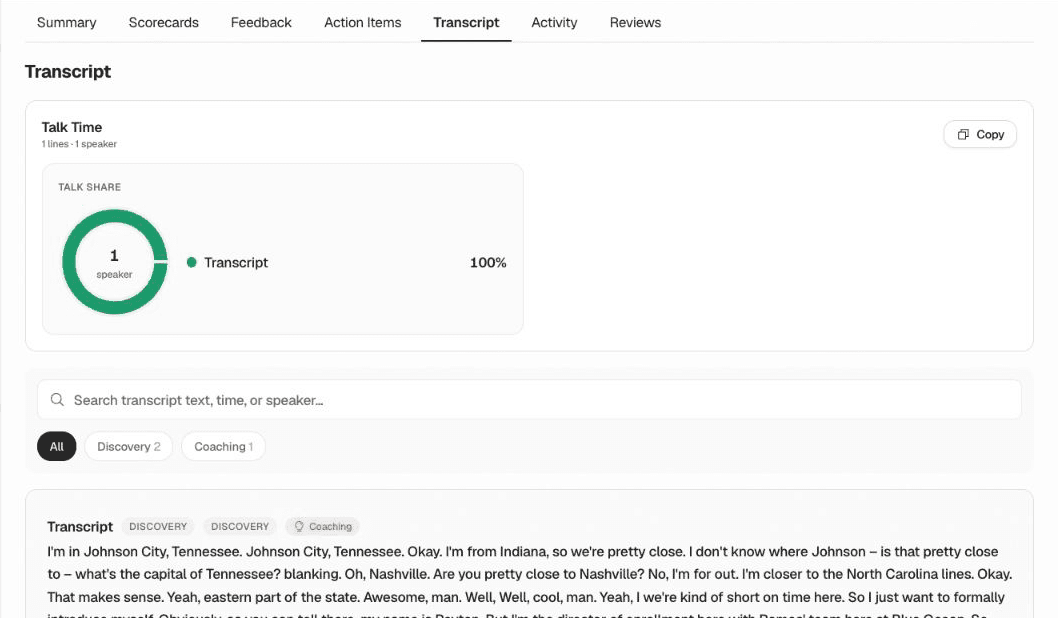
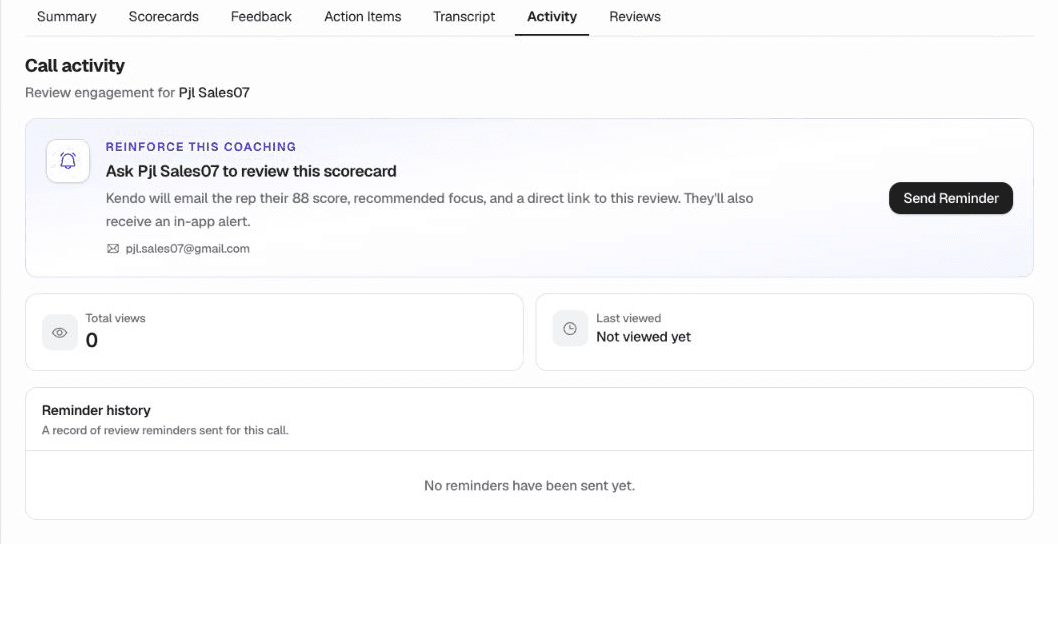
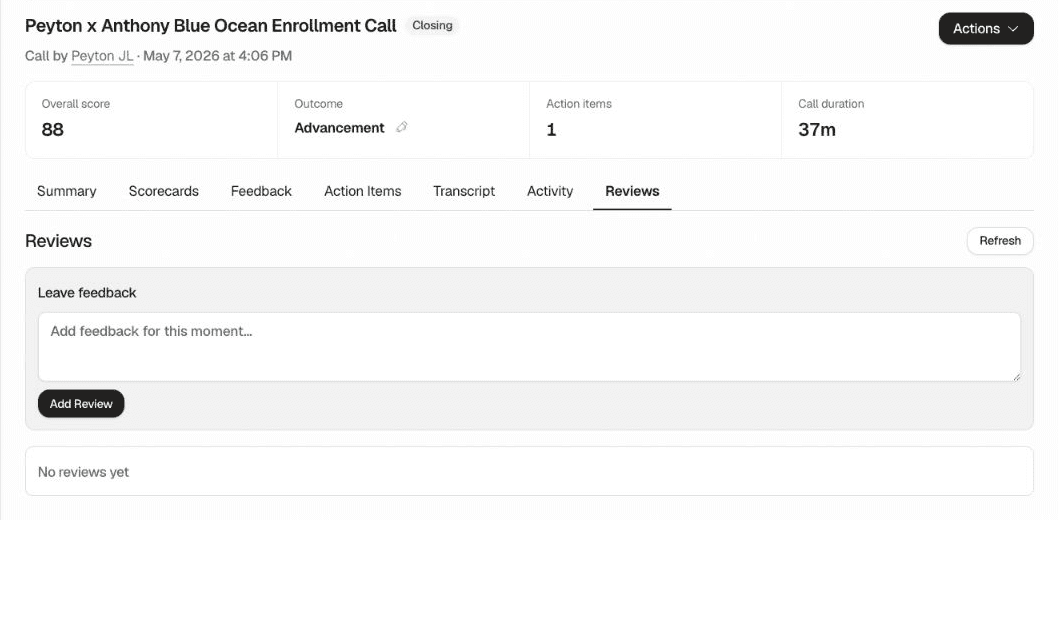
Minutes after any rep's call ends, Kendo writes the review you would have, on every call, not a sample.
- Summary, strengths, weaknesses on each call
- Customer response and outcome captured
- Same rubric for live calls and roleplays
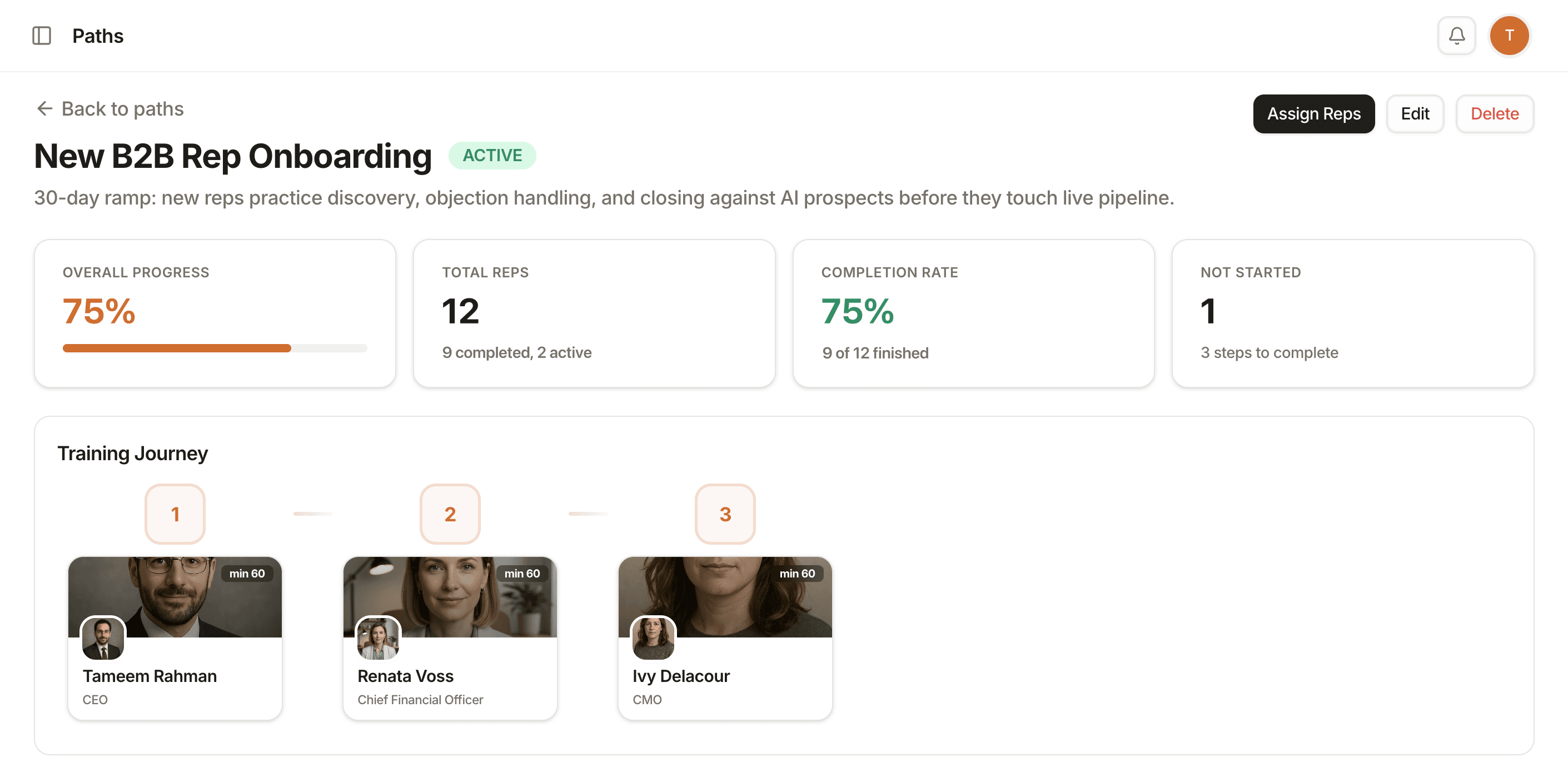
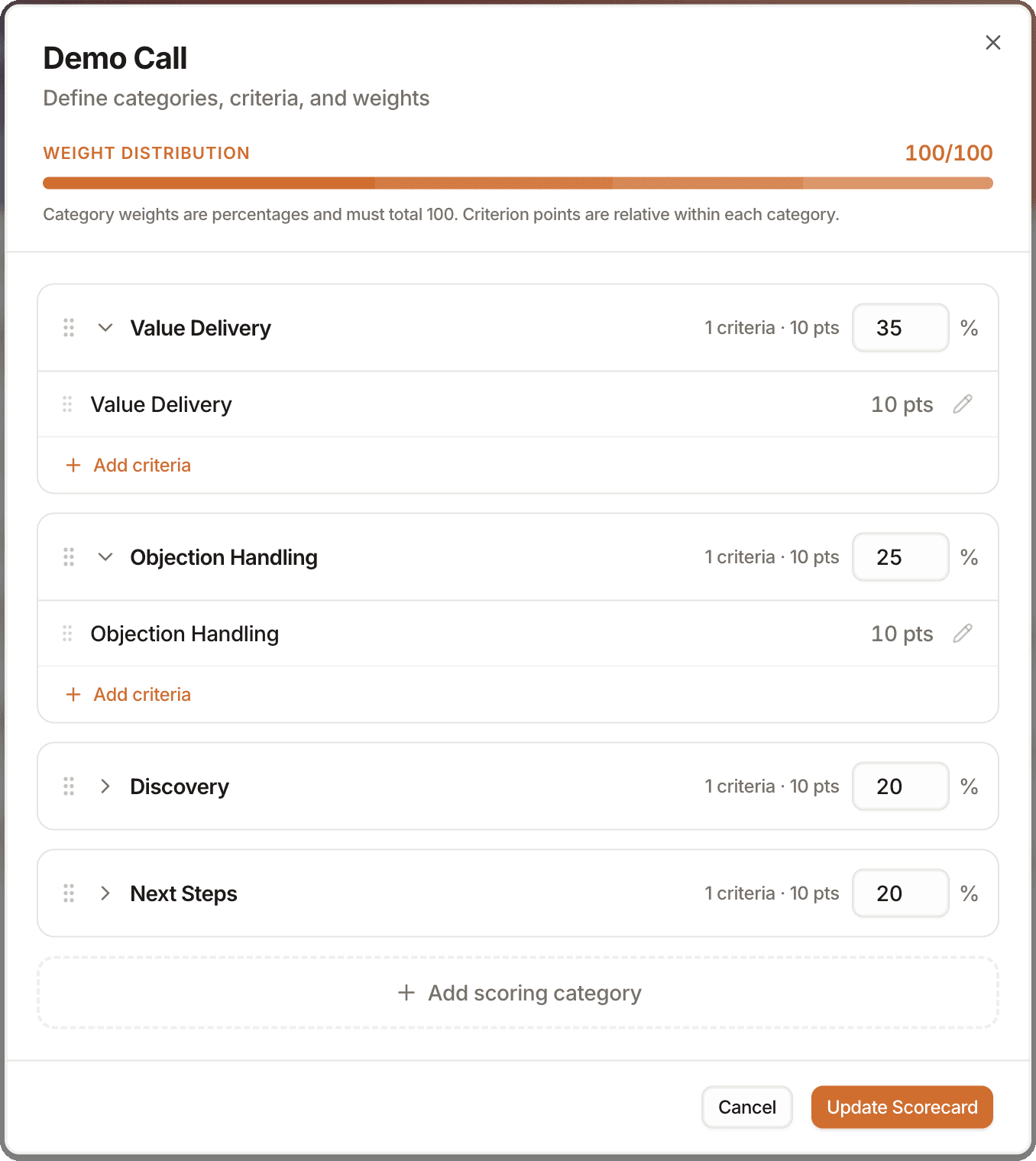
From live-call weakness to assigned training, in one loop
Kendo turns what a rep struggled with on real calls into the learning path and scorecard that fix it.
- Training paths against CEO, CFO, and CMO AI prospects
- Weighted scoring categories you set: Value Delivery, Objection Handling, Discovery, Next Steps
- Create with AI from a plain-language description
One loop, start to finish
Ask Kendo. It already reviewed every call.
Sales managers ask about performance, gaps, or a rep by name. Kendo answers from the team's real calls and scores, then builds the fix.

Your sales performance coach. Ask anything about your team's calls, metrics, and coaching.
- Answers from your calls, not generic advice
- Spots who needs coaching and why
- Builds and assigns training right in chat
One of these you can budget today
Kendo publishes per-seat rates. Hyperbound publishes 45 free roleplays and its license structure, but paid Practice and Perform rates require a quote.
Public, self-serve pricing
- AI roleplay + AI call reviews for live calls
- AI sales manager & coach
- Advanced data & metrics
- All integrations + email support
45 free roleplays, then per-user quotes
- Free: 45 prebuilt AI roleplays and example scorecards
- Practice Enterprise: custom roleplays, scorecards, coaching, analytics, and Kota
- Perform Enterprise: adds real-call scoring, deal coaching, CRM intelligence, and call capture
- Discounts: volume and multi-year savings are available; thresholds are not published

"A week after we got Kendo AI set up, our sales doubled. Can't recommend them enough."
Brian Moran · Founder, SamCart Request a walkthroughMap Kendo to your revenue stack
Native ingestion covers common call sources. Use the Push API for additional systems, and validate required fields, authentication, volume, and ownership before rollout.








Webhooks and the open Push API can extend the data flow; confirm the production integration design during technical discovery.
"Kendo reshaped how I hire my reps. I used to spend hours reviewing calls and doing role plays with candidates. Since Kendo, the reps I've brought on I've felt way more confident in, it took a fraction of the time, and immediate rep performance jumped."
John Mau · Kendo customer See how screening worksWhich platform fits your operating model?
The right choice depends on who owns the outcome, how performance is measured, and what your environment requires.
Sales leadership is accountable for rep performance
Kendo centers the workflow on live-call review, diagnosed skill gaps, targeted practice, and measurable behavior change.
The business needs evidence before a broad rollout
Published pricing and configurable scorecards make a representative pilot easier to scope against agreed KPIs.
RevOps needs flexible call ingestion and clear ownership
Native sources, webhooks, and the Push API create options; identity, data flow, and support requirements still belong in technical discovery.
Enablement needs complex simulation and formal learning
Hyperbound is the stronger documented fit for multi-party roleplays, screen-aware demos, certification, broad LMS connections, and completed public certifications. Validate admin depth and exact integration behavior at your scale.
Questions buyers usually ask
How much does Hyperbound cost, and what do the 45 free roleplays include?
Paid rates are not public. Hyperbound's pricing page lists 45 prebuilt AI roleplays and example scorecards for free. Practice and Perform are separate per-user enterprise licenses sold by quote, with volume and multi-year discounts.
What is the difference between Hyperbound Practice and Perform?
Practice is rehearsal; Perform is the real-call layer. Practice covers custom roleplays, scorecards, coaching, and analytics. Perform adds real-call scoring, deal coaching, conversation intelligence, call capture, and bite-sized practice. Hyperbound says the products can be licensed separately and work best together.
Which platform fits a small team, a global rollout, or a formal learning program?
Kendo is easier to budget and evaluate self-serve. Its published plans suit teams that want roleplay, live-call review, and manager workflow together. Hyperbound is the stronger documented fit when multi-party practice, screen-aware demos, formal certification, SSO/SCIM, or broad LMS administration are mandatory.
Can both turn real-call gaps into targeted practice?
Yes. Kendo reviews ingested calls, surfaces rep gaps, and lets managers assign practice on the same rubric. Hyperbound Perform scores real calls and generates bite-sized roleplays from deal signals. Compare the trigger, assignment, rescore, and reporting steps.
How well do they handle unexpected questions and complex objections?
Test your hardest scenario. Both vendors claim adaptive, realistic buyers. Hyperbound documents multi-party and screen-aware formats, while one anecdotal Reddit thread and some G2 feedback question realism in complex or off-script turns. Vendor copy cannot settle this.
Can reps game the score, and can scoring follow our methodology?
Both support custom methodology scorecards across practice and real calls. Hyperbound describes concept-based scoring with explanations and transcript evidence. Kendo supports weighted criteria mapped by call type. Ask both vendors to score the same edge-case call, explain the result, edit the rubric, and rescore it.
How much setup and ongoing administration does each require?
Hyperbound says a first bot can be created in under ten minutes, while a full rollout averages about two weeks and targets value in 30 days. Kendo can start with a call source, scorecard, and prospect, with done-for-you configuration available for larger teams. Validate owner hours after launch, not only implementation time.
Which connects to our CRM, recorder, dialer, and LMS?
Kendo documents Zoom, Fathom, Fireflies, Slack, Zapier, webhooks, and a public Push API. Hyperbound publishes a broader named directory across CRM, recorders, dialers, LMS, identity, and communications. Its plan matrix places CRM and recorder connections in Perform, while LMS and SSO/SCIM start with Practice.
How do language and voice options compare for global teams?
Kendo publishes 40+ languages and 15+ voice models. Hyperbound's current pages conflict: its homepage and pricing materials say 25+, while the Practice page says 30+. Confirm your required languages and accents in writing, then test them.
Does AI replace managers, or augment them?
It should augment them. Both platforms automate call coverage, scoring, gap detection, and practice recommendations. Managers still own judgment, context, sensitive feedback, and the coaching conversation. If a rollout only produces generic score reports, the operating model is wrong.
How do we drive adoption without creating a surveillance culture?
Make the rules visible. Tell reps which calls are scored, who sees results, how scores affect decisions, how errors are challenged, and how long data is retained. Start with coaching use cases, involve frontline managers, and measure whether practice helps reps win, not only whether they complete it.
What should a pilot and security review prove?
Use representative calls and a fixed baseline for adoption, manager time, score movement, ramp, and one revenue signal. For security, Kendo documents Vercel hosting, Google Cloud/Firebase storage, TLS 1.3, AES-256, and SOC 2 Type II in progress. Hyperbound publishes completed SOC 2 Type II and ISO 27001 credentials. Request current reports, retention terms, subprocessors, DPA scope, SSO/SCIM, and any required BAA.
See why teams choose Kendo over Hyperbound
Put both platforms against representative calls, agreed scorecards, and a fixed baseline. See which one makes coaching easier to run, measure, and expand.
Platform scale and customer outcomes are reported across named Kendo case studies. Results vary by team, baseline, and use case; review each source for definitions.
Pricing, integrations, languages, security claims, ratings, and review counts, rechecked before publication.
Every customer outcome is tied to a named customer and its source case study.
Hyperbound's multi-party roleplay, screen comprehension, LMS, identity, and certification advantages are stated plainly, not buried.