
12 Best Virtual Sales Training Programs for 2026
A side-by-side look at the leading virtual sales training programs, rated on what actually moves the needle for remote and distributed teams: async vs live delivery, on-camera reps, AI roleplay practice, and coaching at a distance. With verified pricing and who each one fits.
Most "virtual" sales training is just classroom training piped through a webcam. A trainer lectures, reps half-watch with Slack open in the next tab, and everyone logs off no better at handling a live objection than they were that morning. The webinar replaced the lecture, but nothing replaced the reps.
So we re-rated 12 of the leading programs on the one question the generic lists skip: not "is it available over Zoom," but does it actually build skill that sticks when your team is remote. Pricing and formats verified against each provider's own site in June 2026.
Why Remote Sales Training Is a Different Problem
Before the rankings, name the problem. Selling skill is built by reps, and remote work quietly removed most of them. Three things break when the team goes distributed:
- The roleplay disappears. In an office, a manager grabs a rep for a five-minute mock call between meetings. Remote, that practice has to be scheduled on someone's calendar, so it mostly does not happen. Reps go live under-rehearsed.
- Coaching does not travel well. A manager who used to coach by walking the floor now sees a rep's calls days later, if at all. By the time feedback lands, the lead is gone and the rep has repeated the same mistake ten times.
- Skill decays in isolation. Without a place to apply what they learned, reps forget most of a course within weeks. Spread that across time zones and a one-time webinar fades before it ever turns into a habit.
This is the knowing-doing gap, and remote makes it wider. RAIN Group's research on virtual selling found that many sellers overestimate how well they actually connect with buyers on camera, and that the skills buyers care about most are exactly where remote reps are weakest. [Source: RAIN Group, Virtual Selling Skills & Challenges]
The fix is not to drop training. It is to make sure remote reps have a place to practice on their own schedule, plus coaching that reaches them where they already work. For phone-heavy teams, that often means a training system designed around repeated calls rather than scheduled workshops. That is the lens we used to rank every program below.
Best Virtual Sales Training Programs for 2026: Comparison Table
| # | Program | Best For | Remote Fit | Format | Starting Price | AI Roleplay |
|---|---|---|---|---|---|---|
| 1 | Kendo AI RECOMMENDED | Remote rep practice & ramp | Async-native | On-demand AI roleplay + scoring | $55/seat/mo | Yes |
| 2 | Highspot | Enterprise enablement at scale | Strong | Enablement platform + AI roleplay | Custom* | Yes |
| 3 | RAIN Group | Consultative selling, on camera | Strong | Self-paced + facilitated virtual | $199/mo | No |
| 4 | Corporate Visions | Messaging + buyer psychology | Strong | Virtual ILT + AI coaching | Custom* | AI coach |
| 5 | Sandler Training | Prospect resistance, reinforcement | Moderate | Live + on-demand reinforcement | Custom* | Coaching |
| 6 | Richardson | Structured consultative selling | Moderate | Virtual workshops + digital | Custom* | Practice |
| 7 | Challenger | Insight-led, status-quo busting | Moderate | Virtual workshops (Richardson) | Custom* | No |
| 8 | ASLAN | Other-centered, account growth | Moderate | Virtual workshops + ASLAN+ | Custom* | AI reinforce |
| 9 | Integrity Solutions | Values-based, trust selling | Moderate | Blended virtual + live coaching | Custom* | AI reinforce |
| 10 | JB Sales | Tactical plays, self-serve | Strong | On-demand + live workshops | $365/yr | No |
| 11 | Dale Carnegie | Soft skills & presence | Moderate | Live-online cohorts | $799/yr* | No |
| 12 | Salesforce Cert | CRM fluency, credentialing | Self-paced | Self-paced Trailhead + exam | $75 exam | No |
Pricing and formats verified against each provider's own site in June 2026. *Programs marked with an asterisk do not publish full pricing and require a quote; figures from third-party sources are cited inline in brackets. "Remote Fit" rates how well the program builds skill for a distributed team, not just whether it streams over video. Want the wider lens? See our best sales training programs roundup.
Kendo AI
★ Best for remote practiceThe practice layer remote teams are missing: unlimited, on-demand AI roleplay with automatic scoring, no manager required.
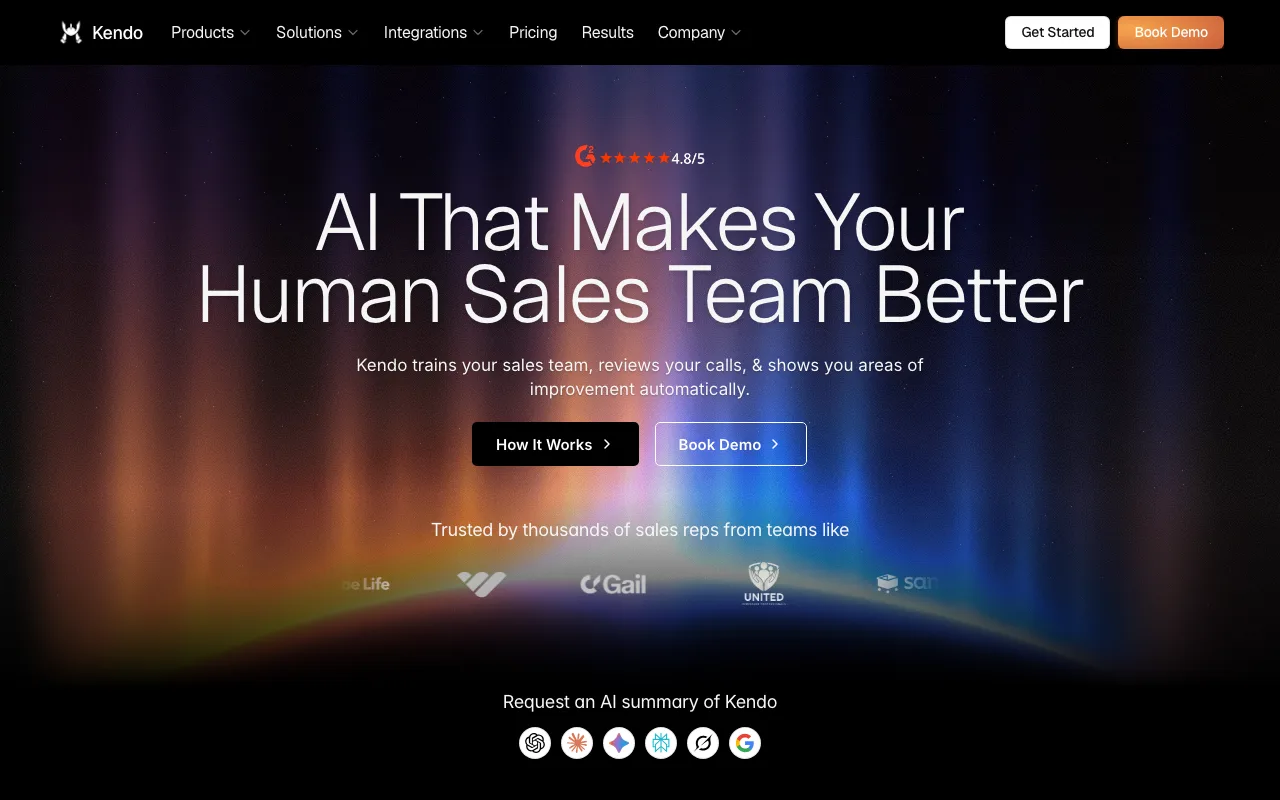
Full disclosure: we built Kendo, so we are biased. We built it because every other program on this list teaches reps what to say, then leaves a distributed team with nowhere to practice it. Kendo is where the reps happen. Instead of a manager-led roleplay nobody can schedule across time zones, every rep gets on-demand AI roleplay, real-time AI coaching, and an automatic score after every session.
That async, do-it-anytime model is the whole point for remote teams. A rep in a different time zone does not wait for a live session. They spin up a buyer at 7am, run the call, and get scored before standup, while their manager reviews the results later from wherever they are. Onboarding, coaching, and performance visibility live in one place with Kendo for revenue teams.
The remote angle that matters most is onboarding. New hires who used to absorb the room now sit alone on day one, so they need reps fast. Kendo turns a quiet home office into a practice floor, with AI buyers that push back exactly like the prospects a rep is about to call. It does not hand you a deal methodology, so pair it with one of the framework picks below.
This is what practicing on Kendo looks like. The AI buyer pushes hard on SOC 2, ISO 27001, and proof the tool cuts compliance work, and the rep has to handle it on the spot, before any of it lands on a live deal.
Kendo vs. Traditional Virtual Training
| Dimension | Kendo AI | Webcam Workshops |
|---|---|---|
| When reps practice | Any hour, across time zones | Only during the scheduled live session |
| Reps per rep | Unlimited, on demand | Whatever fits one Zoom call |
| Feedback | Automatic scoring, immediate | Subjective, if the trainer gets to you |
| Manager load | Reviews results async | Must run every practice live |
| Reinforcement | Built in, daily | Usually a one-off event |
Key Features
- Custom Prospect Builder. Create AI buyers that match your exact ICP by role, industry, and personality in seconds from a plain-language prompt. Borrow from 20+ pre-built sales roleplay scenarios, from cold-call openers to late-stage negotiations.
- Voice-based, low-latency roleplay. Prospects respond to a rep's tone, logic, and hesitation in real time, so distributed reps rehearse the actual pressure of a live call, not a chatbot reading a script.
- Automated call scoring. Every practice and live call gets an objective scorecard on discovery depth, talk-to-listen ratio, and objection handling, no manager grading required. See how AI call reviews work.
- AI sales manager. Ask plain questions about team performance, metrics, and trends and get answers instantly, which is how a remote manager keeps a pulse without sitting on every call.
- 40+ languages. Multi-language simulations for genuinely global, distributed teams.
This is deliberate practice for people who do not share a room: state-of-the-art voice AI, prospects that express real buying hesitation, and a setup that takes seconds rather than a calendar invite. By the time a rep dials a real lead, they have already navigated the toughest objections.
"Not only has my team's production started to increase but they are becoming more confident on the phones and getting quicker at overcoming objections."
KCKendo customer · Remote sales leaderTry Kendo with a Free Roleplay, Pricing Starts at $55/mo
Kendo's per-seat plans include monthly AI training minutes with transparent overages. Teams typically report a 5 to 15% lift in close rates, making it ROI-positive within the first month of consistent use. See full per-seat pricing.
| Pro $55/mo per seat | Max $100/mo per seat | Enterprise Custom |
|---|---|---|
| AI roleplay, AI call reviews, advanced analytics, AI sales manager + coach, 180 roleplay minutes/seat per month | Everything in Pro, 480 roleplay minutes/seat per month, for teams that want maximum usage | Teams of 10+, custom AI models, custom scoring, DFY setup, dedicated account manager |

A distributed insurance team nearly doubled close rates with daily AI reps
Jess Chang's Globe Life team was spending hours on manual roleplays and watching brand-new agents start around 30% close rates. After moving daily practice into Kendo, those agents climbed toward 60% without a manager running every session.
"Before agents ever talk to a real lead, they have already run the call a dozen times. The confidence shows up on the first dial."
Globe Life team, Kendo customer storyHighspot
Best for enterprise scaleA unified enablement platform that puts content, training, and AI role-play in one place for large distributed orgs.
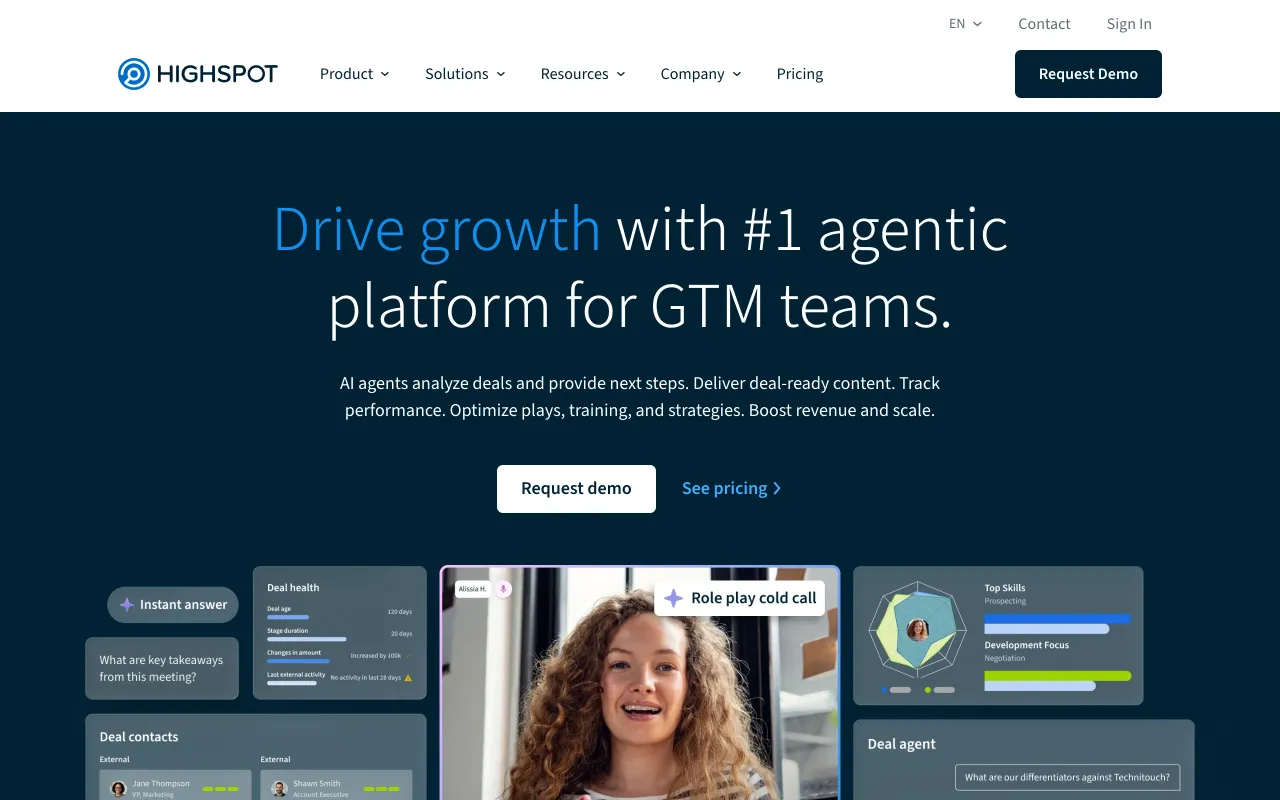
Highspot positions itself as a unified GTM enablement platform, folding sales content, training modules, analytics, and an AI role-play feature into one system, a full-stack take on sales enablement strategy. For a large, distributed org, that single-pane approach is the real draw: reps find the content, take the course, and practice without bouncing between four tools.
Its AI role-play delivers scenario-based practice with AI avatars that pose common questions and objections, which genuinely helps remote reps rehearse. The honest caveat: role-play is one feature inside a broad suite, not the center of gravity, so teams that want practice-first depth will feel the difference.
Key Features
- Adaptive learning paths tailored to a rep's role and experience level, useful for onboarding scattered new hires.
- AI Role Play with avatars that surface common objections for scenario-based practice.
- Sales content hub with usage analytics, so remote reps pull the right deck without pinging the team.
- Coaching analytics tying content use to deal outcomes.
Consider before choosing
- Practice is a module, not the mission. The AI role-play is solid, but teams focused specifically on intensive, scored repetition will find more depth in a dedicated platform, as our Highspot alternatives breakdown lays out.
- No public pricing. Highspot routes pricing through a custom enterprise quote, and it is scoped for larger organizations. [Source: highspot.com, June 2026]
Need this level of infrastructure for ramping new hires? See our best sales onboarding software roundup.
RAIN Group
Best for consultative sellingInsight-led consultative training with a self-paced Virtual Selling course built specifically for the camera.
RAIN Group teaches insight selling: helping reps earn trust by bringing buyers a point of view, not just questions. What earns it a high remote rating is a dedicated Virtual Selling course built around the skills that actually change on camera, from holding attention over video to running discovery when you cannot read the room. It is one of the few methodology shops that treats remote as its own discipline.
The 45-plus-lesson self-paced track is genuinely async-friendly for distributed teams, with certification at the end, and it scales up to facilitated virtual workshops. This is the consultative-selling backbone many remote B2B teams are searching for, the framework behind the "best AI roleplay for building consultative selling skills" question. It teaches the method well; it just does not give reps an AI buyer to drill it against, which is where a practice layer comes in.
Key Features
- RAIN Selling workshop on engaging buyers with insight, discovery, and differentiation for complex deals.
- Virtual Selling course covering on-camera presence, attention, and remote discovery, self-paced with certification.
- Execution coaching that trains managers to embed the methodology into daily remote workflows.
- Negotiation and strategic account management modules for expanding key relationships.
Consider before choosing
- No live AI practice. The curriculum is strong and remote-aware, but reps still apply it on real calls rather than rehearsing against a simulator first.
- Verified pricing. Self-paced Virtual Selling and Sales Management run $199/month per learner; custom enterprise programs are quote-based, with group discounts at five or more seats. [Source: rainsalestraining.com, June 2026]
Pair the framework with reps that stick using the best sales coaching software.
 Across Kendo customers: 5-15% higher close rates, 70% faster ramp, and $3,000+ saved per rep.
See the results →
Across Kendo customers: 5-15% higher close rates, 70% faster ramp, and $3,000+ saved per rep.
See the results →
Corporate Visions
Best for messagingBehavioral-science-based messaging training with virtual delivery the company claims beats the in-person classroom.
Corporate Visions builds training around behavioral science: what messages actually move a buyer to change, defend a status quo, or expand. The remote story is unusually credible here because the company designs virtual and AI-powered coaching as a first-class delivery mode, not a downgrade from the classroom, with reps practicing against real customer scenarios and applying skills to live deals.
For distributed teams, the AI coaching and message-accountability layer is the part that travels: reps rehearse the pitch and get feedback without a trainer in the room. The tradeoff is that the value is concentrated in messaging and conversation skills, so it is a complement to a full-cycle methodology rather than a replacement.
Key Features
- Evidence-based messaging frameworks for why-change, why-now, and why-you conversations grounded in decision science.
- Virtual, onsite, or hybrid delivery so distributed teams practice with real customer scenarios.
- AI-powered coaching and reinforcement that gives remote reps feedback and keeps messaging consistent after the session.
Consider before choosing
- Messaging-first, not full-cycle. It sharpens what reps say and when, but prospecting mechanics and deal management sit largely outside the core.
- Pricing varies by module. Corporate Visions scopes pricing to the programs selected and team size rather than a public price. [Source: corporatevisions.com, June 2026]
Sandler Training
A globally recognized behavioral methodology with the reinforcement model that survives the move to remote.
Sandler breaks a deal into clear stages, with hallmark concepts like Up-Front Contracts and the Pain Funnel, so reps qualify hard before they ever present. The reason it ports to remote better than most legacy methodologies is its ongoing reinforcement model, recurring sessions instead of a single workshop, which is exactly the cadence a distributed team needs to keep a skill alive. For the framework in depth, see our guide to the Sandler sales methodology.
Where it shows its age is practice. The reinforcement is human-led and scheduled, so the volume of reps a remote team can actually get is capped by trainer and manager time. The behavior change is real; the rehearsal does not scale on its own.
Key Features
- Consultative, pain-first approach that builds trust by uncovering the root cause of a prospect's problem.
- Up-front contracts to qualify hard and filter for high-value opportunities early.
- Continuous reinforcement through ongoing live and on-demand sessions, not a single event.
Consider before choosing
- Reinforcement is people-powered. The model assumes recurring coached sessions, so practice volume depends on trainer and manager availability rather than scaling on demand.
- Custom pricing and franchise variability. Pricing is quote-based and instruction quality can vary by trainer or location. [Source: sandler.com, June 2026]
You can give Sandler stages somewhere to live by building AI roleplay scenarios that force reps to clear each compartment before the close.
Richardson Sales Performance
Structured consultative selling with virtual workshops designed to get reps practicing live on camera.
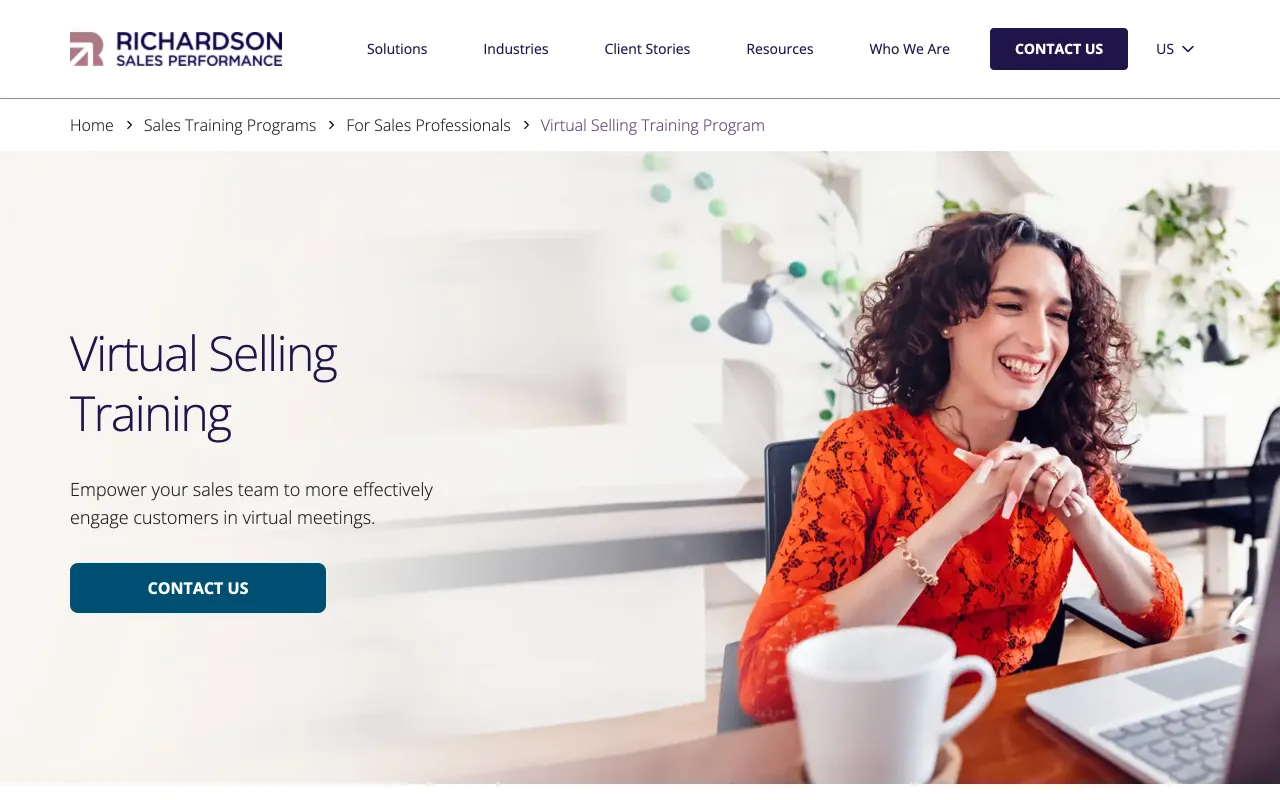
Richardson runs a customer-centered methodology built around collaboration over pitching, and its Virtual Selling program is explicitly about getting reps comfortable on camera, practicing the skills that drive credibility and connection in a remote meeting. That live-practice emphasis is what separates it from a pure lecture, and it pairs the workshops with digital reinforcement between sessions.
It is a strong, structured choice for mid-market and enterprise teams that want a repeatable consultative motion. The practice is facilitator-led, though, so the rep-by-rep volume still depends on scheduled virtual sessions rather than on-demand drilling.
Key Features
- Consultative selling frameworks for collaborative, customer-centered deal progression.
- Sprint Selling for accelerating complex B2B cycles.
- Virtual Selling training focused on on-camera presence and remote engagement, with digital reinforcement.
- Value-based negotiation to protect margin while closing.
Consider before choosing
- Facilitator-led practice. On-camera reps are built in, but they happen in scheduled sessions rather than unlimited self-serve repetition.
- No public pricing. Richardson quotes by participant count, delivery method, and duration. [Source: richardson.com, June 2026]
Challenger (by Richardson)
Insight-led selling that teaches reps to challenge the status quo, now part of Richardson.
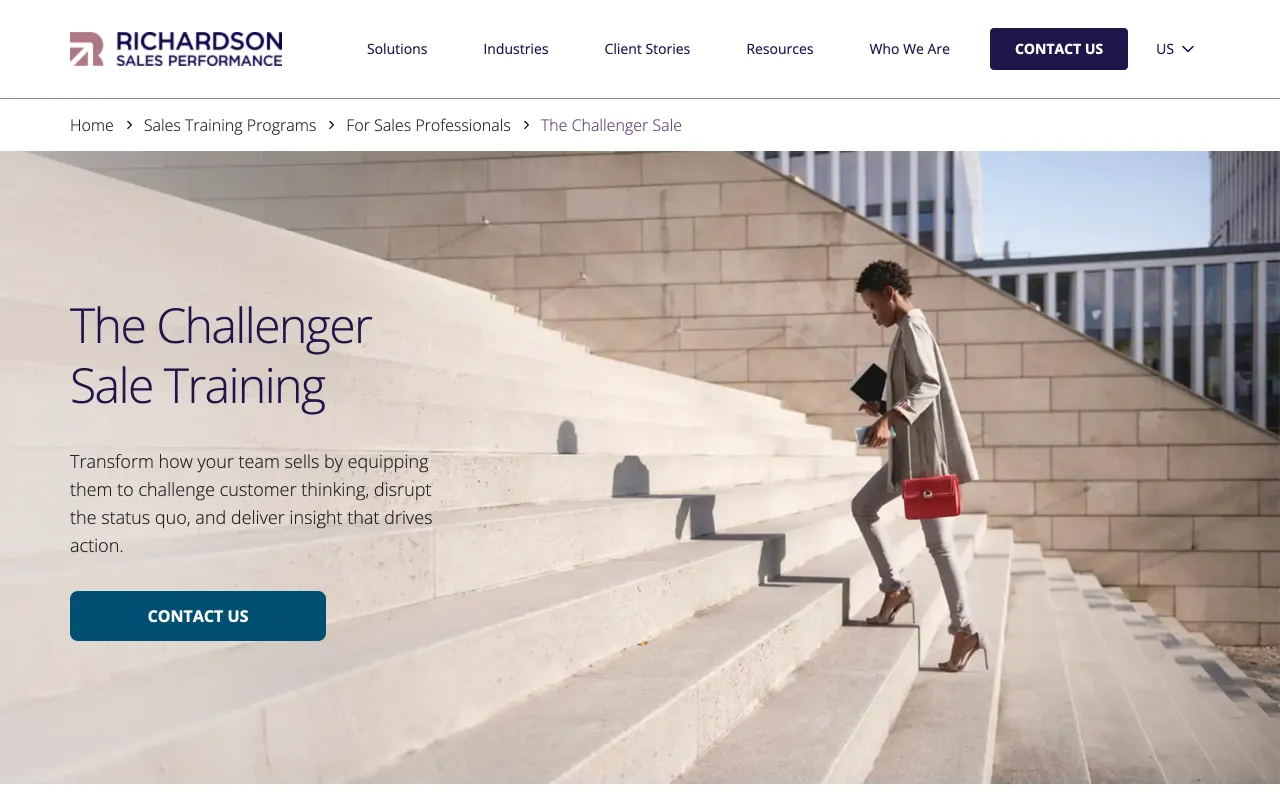
Heads up: Challenger is now part of Richardson. Richardson acquired Challenger in September 2024, and "The Challenger Sale" is now delivered under the Richardson banner. [Source: Richardson press release, Sept 2024] The methodology is unchanged: teach, tailor, and take control, equipping reps to reframe a buyer's thinking and disrupt the status quo rather than respond to a stated need.
For complex, multi-stakeholder remote deals, the insight-led approach travels fine over video because it is about the substance of the conversation, not the room. The gap, like its parent, is scalable practice: the workshops teach the mindset, but there is no built-in simulator for a rep to rehearse a challenger pitch against a skeptical AI buyer.
Key Features
- Teach-tailor-take-control model for leading buyers to a new point of view.
- Commercial insight training that reframes how a prospect sees their problem.
- Richardson delivery through virtual workshops with the broader Richardson curriculum behind it.
Consider before choosing
- No scalable AI practice. The insight model is powerful, but reps practice it live on real deals rather than against a simulator first.
- Custom pricing. Now quoted through Richardson by scope and team size. [Source: richardson.com, June 2026]
ASLAN Training & Development
Other-centered selling with an AI-enabled reinforcement platform built to make remote adoption stick.
ASLAN teaches "other-centered" selling, lowering a buyer's resistance by leading with their interests first, and it delivers the same content in digestible virtual sessions with breakouts, roleplays, and real-time coaching. What lifts its remote rating is ASLAN+, a platform that adds coaching, practice, and AI-enabled reinforcement so the behavior change does not evaporate once the workshop ends.
That reinforcement layer is the right instinct for a distributed team, and ASLAN cites a 44% performance improvement for clients who adopt its model. [Source: aslantraining.com, June 2026] The reps still center on the methodology, so treat the AI reinforcement as a retention aid rather than a full standalone practice platform.
Key Features
- Other-centered selling that creates receptivity by leading with the buyer's agenda.
- Virtual workshops with breakouts, roleplays, and live coaching for distributed teams.
- ASLAN+ platform adding coaching, practice, and AI-enabled reinforcement after the session.
Consider before choosing
- Reinforcement, not a practice engine. The AI layer keeps skills warm, but it is built around the ASLAN methodology rather than open-ended, scored repetition.
- Custom pricing. ASLAN quotes by program and team size. [Source: aslantraining.com, June 2026]
Integrity Solutions
Values-based, trust-first selling delivered as a blended virtual experience with live coaching.
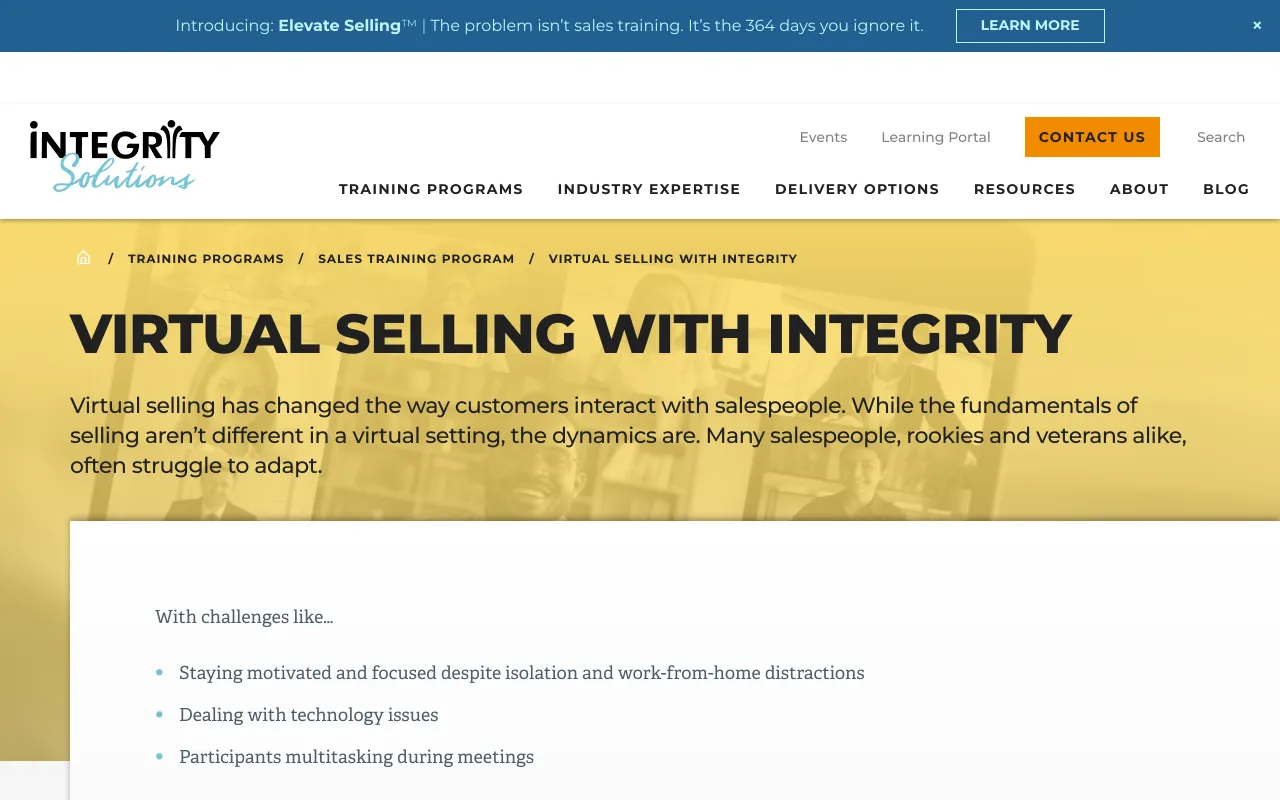
Integrity Solutions names the remote problem directly. Its Virtual Selling With Integrity program is built around what changes when the room disappears: staying focused despite work-from-home distractions, handling buyers who multitask on camera, and keeping trust intact through a screen. The delivery is a blended mix of virtual content, deal-based exercises, and live coaching with real Integrity advisors.
It also ships an Elevate reinforcement layer with microlearning and AI-powered roleplay aimed squarely at the 364 days teams usually ignore training after a workshop. For a remote team that wants a values-based, trust-first approach, it is a thoughtful fit; just know the AI roleplay is reinforcement for the Integrity method, not a general-purpose practice platform.
Key Features
- Values-based selling that trains the whole person around trust and buyer outcomes.
- Blended virtual delivery pairing self-paced content with live advisor coaching.
- Elevate reinforcement with microlearning and AI-powered roleplay to sustain skills between sessions.
Consider before choosing
- Method-specific practice. The AI roleplay reinforces Integrity Selling rather than open scenarios across any sales motion.
- Custom pricing. Integrity Solutions quotes by program details and team size. [Source: integritysolutions.com, June 2026]
JB Sales (John Barrows)
Best for self-serve tacticsTactical, high-energy training built for reps who want a play they can run on the next call.
JB Sales earns a high remote rating for a simple reason: it is genuinely self-serve. The on-demand library, flagship programs like "Filling the Funnel" and "Driving to Close," weekly group coaching, and SalesGPT tools all reach a distributed rep without a scheduled cohort. For a remote individual contributor closing a known gap, $365 a year is hard to argue with.
Where it stops is repetition. The tactics are sharp and current, but results hinge on the rep actually doing the reps, and there is no AI buyer to drill against, so the practice is on you.
Key Features
- On-demand programs on prospecting, objection handling, and deal control, with certifications for core courses.
- Weekly group coaching calls plus daily accountability, so remote reps get live touchpoints.
- SalesGPTs for folding AI into research and messaging.
Consider before choosing
- Watching is not practicing. The content is rich, but it builds knowledge, not muscle memory, unless the rep applies it deliberately.
- Verified pricing. The individual membership is $365 per year ($1/day); team training is delivered as remote sessions or onsite with custom quotes. [Source: jbarrows.com, June 2026]
Dale Carnegie
A century-old name for communication, presence, and relationship skills, now in live-online cohorts.
Built on the principles of "How to Win Friends and Influence People," Dale Carnegie develops the human side of selling: rapport, active listening, executive presence. The live-online cohorts translate that to remote reasonably well, since the whole point is interpersonal skill, which a good facilitator can coach over video.
For a remote rep who freezes on camera or struggles to build trust through a screen, it is a real fix. Just be clear on scope: this is presence and communication, not a sales methodology or a practice simulator, so it sits alongside a system rather than replacing one.
Key Features
- Human relations training on rapport, listening, and influence in sales conversations.
- Relationship-based selling for building trust and presenting with confidence.
- Live-online cohorts and a subscription option for ongoing development.
Consider before choosing
- Soft skills, not a sales system. Excellent for presence and communication, but it does not cover deal mechanics or include scored practice.
- Verified pricing. The Sales Essentials online subscription is about $799/year, instructor-led courses run around $2,195, and some locations offer a $299/month all-access subscription. [Source: dalecarnegie.com, June 2026]
Salesforce Certified Sales Foundations
A self-paced, low-cost credential for CRM fluency, perfect for remote self-study, light on selling skill.
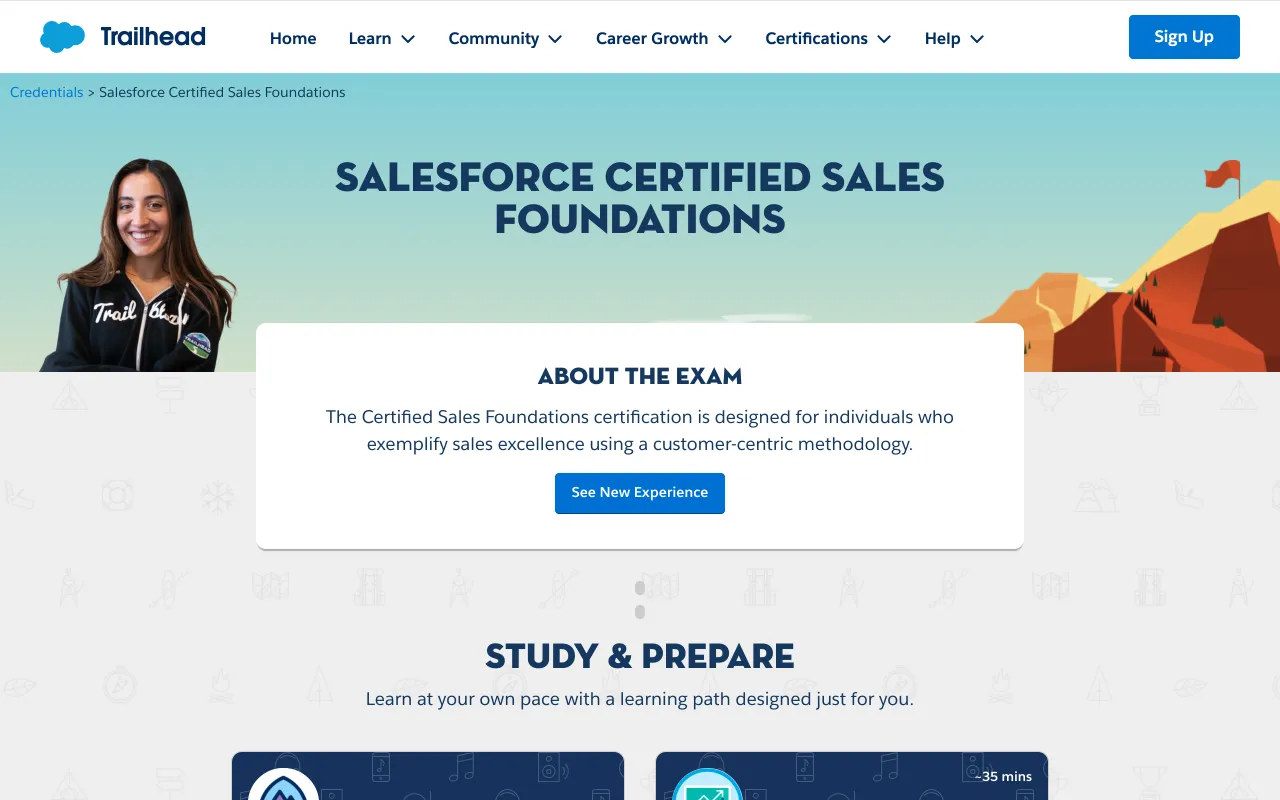
Heads up: this credential is now "Salesforce Certified Sales Foundations," the renamed version of the old Sales Representative certification, and the exam price dropped from $200 to $75 in mid-2025. [Source: Salesforce Trailhead, June 2026] Prep is free and fully self-paced on Trailhead, which makes it about as remote-friendly as training gets.
Set expectations, though. It validates a customer-centric understanding of the sales lifecycle and platform fluency, which is useful for reps who live in Salesforce, but it is system knowledge and a resume line, not live selling practice. No roleplay, no objection drills, no feedback on a real conversation.
Key Features
- Self-paced Trailhead path with free prep modules and a learning mix anyone can do remotely.
- Customer-centric sales lifecycle coverage grounded in the Salesforce platform.
- Recognized credential that signals CRM fluency to employers.
Consider before choosing
- Knowledge, not practice. It teaches concepts and platform skills, with no live conversation reps or feedback.
- Verified pricing. The exam is $75 (retake $50) with free Trailhead prep, after a July 2025 price cut from $200. [Source: Salesforce Trailhead, June 2026]
The Missing Piece: Why Knowledge Without Reps Fails Remotely
Look back at the list and a pattern jumps out. Almost every program is good at teaching over video. Far fewer give a remote rep a place to do the thing, repeatedly, until it is a habit.
That is the knowing-doing gap, and distance makes it worse. A rep can finish a flawless virtual workshop on Friday and still freeze on a live objection Monday, because watching a module is not the same as running the call. Skill is built in the reps, and remote work quietly took the reps away.
The cost is not abstract. Average SaaS ramp time hit 5.7 months in 2025, up 32% since 2020, with poor onboarding the usual culprit, and median annual sales turnover now runs at 32%, leaving the average rep on the team just 2.2 years. [Source: The Bridge Group, SaaS Inside Sales Metrics] That ramp math is why software teams in particular lean on structured SaaS sales training programs rather than one-off webinars. A widely cited Brandon Hall Group study finds structured onboarding can boost retention by 82% and productivity by over 70%. [Source: Brandon Hall Group, via Glassdoor] Structure and practice are the difference, not location.
What "Practice" Actually Means for a Distributed Team
For an in-office team, practice was ambient: you overheard the rep next to you, a manager grabbed you for a mock call, you learned by osmosis. None of that survives the move to remote by default. You have to rebuild it on purpose.
- Async by default. Reps across time zones cannot all make the same live session. The practice has to be available at 6am and 10pm, on the rep's clock.
- Unlimited reps. One manager cannot run enough roleplays for a remote team. A rep should be able to drill the same objection twenty times without booking anyone.
- Objective feedback. Without a manager in the room, scoring has to be built in, so a rep knows their talk-to-listen ratio or discovery depth without waiting days for a review.
- Coaching that travels. The manager's limited live time should go to what the data flags, delivered over the tools the team already uses.
This is the exact gap Kendo's AI roleplay is built to fill, and why we put it at the top of a list full of programs we genuinely respect. They teach the play. Something has to make remote reps run it.
How to Choose the Right Virtual Sales Training Program
One decision comes before the rest: are you buying instruction or practice? Most teams need both, but they are not the same purchase, and confusing them is how remote teams overspend on a workshop that fades in a month.
Instruction gives your team a shared methodology and language. Over video, RAIN Group, Sandler, Richardson, Challenger, Corporate Visions, ASLAN, and Integrity Solutions all do this well, each with a different center of gravity, from consultative discovery to messaging to trust.
Practice is where remote teams are actually short. Kendo is built for it; Highspot, Corporate Visions, ASLAN, and Integrity Solutions add AI reinforcement on top of their content, part of a wider wave of AI sales tools now spanning prospecting, coaching, and forecasting. If your reps know the theory but freeze on live calls, that is a practice problem, not a curriculum problem. If practice is the gap you are closing, the dedicated best AI sales roleplaying tools roundup compares the platforms built purely for that.
Match the program to your gap, not the loudest brand:
| Your Remote Gap | What to Prioritize | Strong Options |
|---|---|---|
| Reps know the theory but freeze on live calls | Unlimited reps, objective scoring | Kendo AI, Highspot |
| New remote hires ramp too slowly | On-demand onboarding practice | Kendo AI, Highspot |
| No shared consultative method across the team | A common framework and language | RAIN Group, Sandler, Richardson |
| Reps struggle on camera and lose the room | On-camera presence and messaging | Corporate Visions, Dale Carnegie, RAIN Group |
| Insight-led, multi-stakeholder enterprise deals | Status-quo-busting methodology | Challenger, Corporate Visions |
| Self-serve learning for an individual rep | On-demand, low cost | JB Sales, Salesforce Cert |
One pattern holds across every option: programs that add practice and reinforcement after the lesson retain far more than one-off webinars. For a distributed team, that reinforcement has to run on the rep's schedule, which is exactly why an AI practice layer pairs so well with any methodology here. For the platforms purpose-built around that practice layer, our roundup of the best sales training software goes deeper.
Want the wider view beyond virtual-only? Our best sales training programs guide zooms out, and to ramp remote hires faster, see our playbook on how to reduce sales ramp time.
The Verdict: Which Virtual Sales Training Should You Pick?
The best virtual program is the one your remote team will actually use, with practice that makes the lessons stick. Most distributed teams need two things working together: a methodology and a way to rehearse it on their own schedule.
- Best for the practice layer: Kendo AI gives remote reps unlimited, on-demand AI roleplay and objective scoring from $55 per seat per month, the reps a distributed team can no longer get in person.
- Best for enterprise scale: Highspot unifies content, training, and AI role-play for large distributed orgs in one platform.
- Best for consultative selling: RAIN Group, Sandler, and Richardson give remote teams a shared, rigorous framework, with RAIN and Richardson built around on-camera practice.
- Best for messaging and presence: Corporate Visions and Dale Carnegie sharpen what reps say and how they show up on camera.
- Best for self-serve tactics: JB Sales delivers plays a remote rep can run this week for $365 a year.
Methodology teaches the play. Practice wins the deal. If you want remote reps drilling real objections before they ever touch a live lead, start a free Kendo roleplay or book a demo.
Bridge the Remote Training Gap with Kendo AI
The programs above supply the methodology. Kendo makes sure those skills survive contact with a real call. By giving distributed reps a low-stakes place for unlimited repetition on their own schedule, it closes the gap between learning a strategy on Zoom and closing a deal from a home office.
Ready to make remote practice measurable? Try Kendo AI and see how realistic AI roleplay scales your distributed team's performance.
Frequently Asked Questions
What is the best virtual sales training program for remote teams in 2026?
It depends on the gap you are closing. For methodology delivered live over video, RAIN Group, Sandler, Richardson, and Corporate Visions lead. For the practice layer remote reps are missing, Kendo AI lets distributed reps drill objections and discovery against realistic AI buyers on their own schedule, with automatic scoring, starting at $55 per seat per month. Most distributed teams pair one methodology with a practice platform.
What is the best AI roleplay for remote sales team onboarding?
Kendo AI is built for it. New remote hires get unlimited, on-demand AI roleplay against buyers that match your real ICP, with automatic call scoring and coaching after every session, so a manager does not have to sit on a Zoom call to run practice. Teams have cut new-rep ramp from 45 days to 14 days using daily AI roleplay. Highspot and the AI reinforcement layers inside Corporate Visions, ASLAN, and Integrity Solutions also add roleplay, but Kendo is practice-first rather than a module bolted onto a content suite. If you are weighing dedicated practice tools against a communication-coaching app, our roundup of Yoodli alternatives compares the options sales teams shortlist most.
What is the best AI roleplay for building consultative selling skills?
Consultative selling lives or dies on discovery and objection handling, which are exactly the reps you cannot get enough of remotely. Kendo lets you build AI buyers that withhold information, push back, and force reps to earn the next question, then scores discovery depth and talk-to-listen ratio. Pair it with a consultative methodology like RAIN Group, Sandler, or Richardson, and use Kendo to rehearse the live calls those frameworks describe.
Does virtual sales training actually work for distributed teams?
Yes, when it is structured and includes practice, not just lectures over video. Research shows reps forget most of what they learn without reinforcement, and structured onboarding can boost retention by 82% and productivity by over 70% [Source: Brandon Hall Group, via Glassdoor]. The programs that work remotely add live practice, on-camera reps, or AI roleplay; the ones that struggle are passive webinars with no place to apply the skill.
How is virtual sales training different from in-person training?
The content overlaps, but the dynamics change. Remote reps lose hallway coaching, in-person roleplay, and the energy of a live room, and they often sit across time zones, so synchronous-only training leaves gaps. Effective virtual programs lean on async self-paced modules, recorded video review, and AI roleplay reps can run any hour, plus manager coaching that travels over the same tools the team already uses, like Slack and Zoom.
How much do virtual sales training programs cost?
Self-paced options are cheapest: the Salesforce Certified Sales Foundations exam is $75 with free Trailhead prep, RAIN Group self-paced Virtual Selling is $199 per month, and JB Sales is $365 per year. Live methodology programs from Sandler, Richardson, Corporate Visions, ASLAN, and Integrity Solutions are quote-based and typically run into four, five, or six figures. Software-based practice platforms like Kendo start at $55 per seat per month.
Can AI roleplay replace live manager coaching for remote reps?
It replaces the volume problem, not the relationship. A remote manager cannot run enough 1-on-1 roleplays for a whole team, so reps go under-practiced. AI roleplay gives every rep unlimited reps and objective scoring, then frees the manager to spend their limited live time on the highest-leverage coaching the scorecards surface. The two work together: AI handles repetition, the human handles judgment.

Luke Alexander is the founder of Kendo AI, where he's helped train more than 5,000 sales reps. He started in sales as a frontline closer, scaled a high-ticket sales-training company, and founded Closer Cartel and co-founded Closify before building Kendo to fix the tools he wished he'd had: realistic AI roleplay and automated call review for fast-moving, often-remote sales teams. He writes about sales training, ramp speed, objection handling, and applying AI across the revenue org.