Softwares
Learn how the MEDDPICC sales methodology helps modern teams qualify deals more effectively, avoid stalled pipelines, and use AI roleplay to sharpen high-stakes sales conversations.

Sales leadership expert with 10+ years in B2B training and team development
5 Min
If your sales pipeline is full of deals that stall or ghost you at the finish line, the problem is rarely your pitch. More often, the real issue is a weak qualification process.
The MEDDPICC Sales Methodology fixes this by giving your team a clear, repeatable plan to spot deal-breakers before they cost you months of effort.
To master these high-stakes conversations, many top teams now use AI sales roleplay to practice their skills and get instant feedback in a safe environment.
In this article, we'll cover:
The eight pillars of the MEDDPICC framework.
Simple steps to start using it with your team today.
How AI coaching helps your staff learn the method faster.
Read on to stop wasting time and start winning more deals.
MEDDIC vs. MEDDICC vs. MEDDPICC: Which fits your deal?
Before diving in, identify which "flavor" of the framework your team actually needs.
The right version depends on your deal size and how many people are involved in the buying process. If your deals involve legal reviews or InfoSec approvals, the full MEDDPICC is usually the best choice.
| Version | Core Elements | Best For |
|---|---|---|
| MEDDIC | Metrics, Economic Buyer, Decision Criteria, Decision Process, Identify Pain, Champion. | Mid-market sales where competition and procurement are simple. |
| MEDDICC | Adds Competition. | Competitive SaaS markets where buyers always compare multiple vendors. |
| MEDDPICC | Adds Paper Process. | Enterprise sales where legal, security, and administrative steps can kill deals. |
Use MEDDIC if you sell to small businesses with a single decision-maker.
Use MEDDICC if you often lose deals to a specific competitor or the "build vs. buy" debate.
Use MEDDPICC if your average contract value (ACV) is high and involves multiple departments like Legal and Procurement.
Not sure which methodology fits your sales motion? Our guide to AI sales training in 2025 compares how modern teams pair frameworks like these with technology.
What Is MEDDPICC?
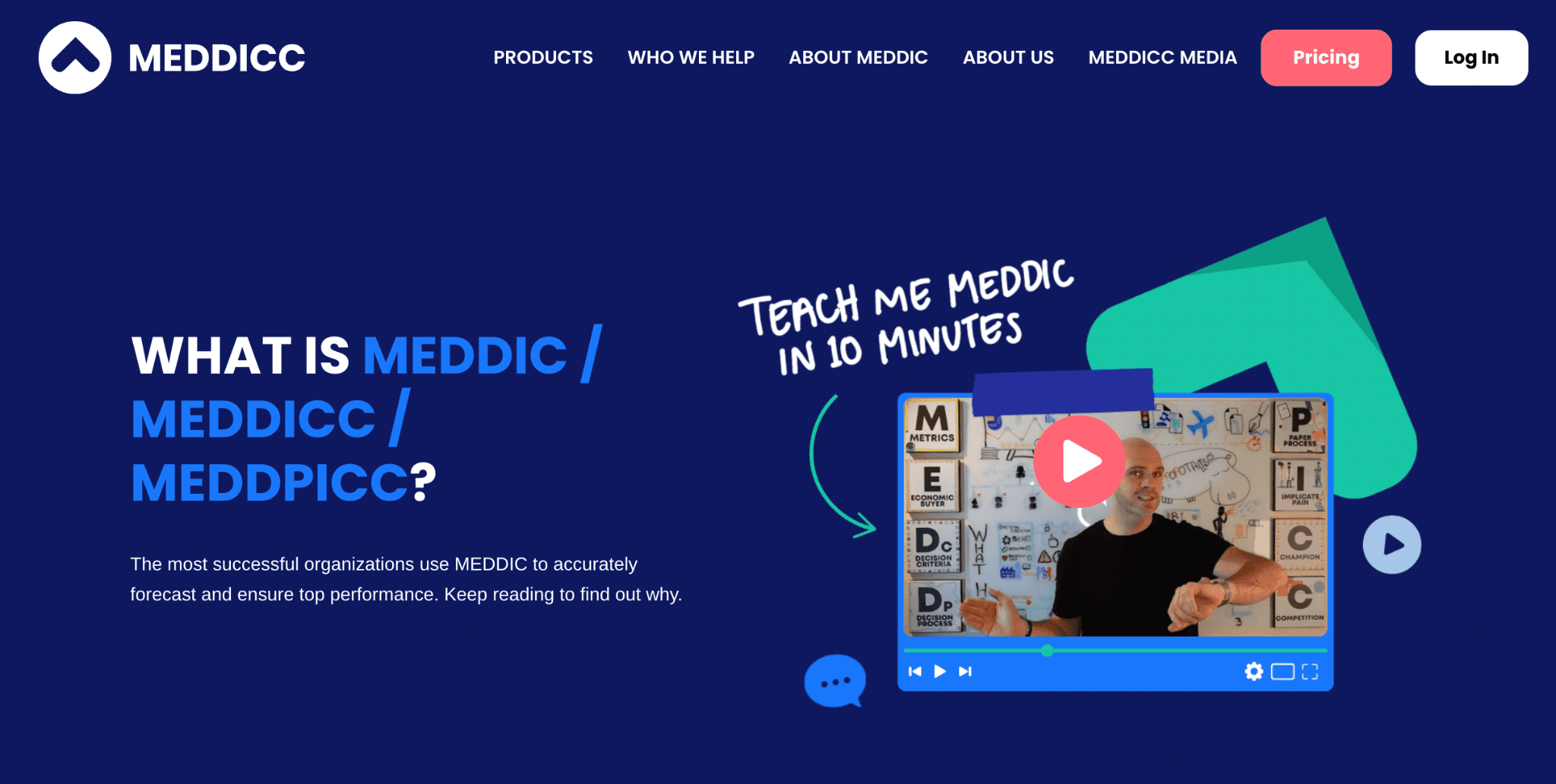
MEDDPICC is a B2B sales qualification methodology that helps sellers evaluate opportunities by examining eight critical dimensions of every deal. The acronym stands for:
M — Metrics
E — Economic Buyer
D — Decision Criteria
D — Decision Process
P — Paper Process
I — Implicated Pain (or Identify Pain)
C — Champion
C — Competition
Unlike methodologies that focus on how to run a sales conversation (like SPIN Selling or the Challenger Sale), MEDDPICC answers a more fundamental question: Should we be in this deal at all? It forces sellers to move beyond gut feelings and subjective optimism and instead qualify opportunities using objective, evidence-based criteria.
The framework is especially effective for enterprise sales environments where deal cycles are long, buying committees are large, and the cost of chasing the wrong opportunity is enormous.
The 8 Pillars of MEDDPICC Explained
1. Metrics (M)
The quantifiable proof of value.
The Goal: Move from soft benefits to hard dollars. Uncover the specific business outcomes the prospect needs to justify the spend.
Golden Question: If this project succeeds, what specific KPI shows up on your board report, and what is its current baseline?
The Red Flag: The prospect uses vague language like better alignment or more efficiency.
The Risk: Without a hard Metric, your deal is the first to be cut when the CFO looks for unnecessary expenses.
Pro Tip: Reps often struggle to calculate ROI on the fly. Use Kendo to practice The CFO Drill—forcing reps to defend their ROI numbers against an AI that says your numbers look like a generic marketing estimate.
2. Economic Buyer (E)
The person with the final yes and the budget.
The Goal: Establish a direct relationship with the person who has the power to spend money, even if they aren't your daily point of contact.
Golden Question: When a purchase of this size was made last year, who had the final sign-off, and what was their primary concern?
The Red Flag: Your contact says they have everything they need to make the decision, but they don't have P&L responsibility.
Pro Tip: Practice The Bridge. Use Kendo AI roleplay to rehearse how to ask a Champion for an introduction to the EB without making the Champion feel undervalued or bypassed.
3. Decision Criteria (D)
The technical and business requirements.
The Goal: Influence the scorecard. If you know they need X, Y, and Z, make sure your solution is the gold standard for those specific points.
Golden Question: How are you weighting ease of use against total cost of ownership in your final evaluation?
The Red Flag: The criteria seem perfectly written for a competitor’s feature set.
The Risk: You are being used as column fodder to satisfy a three-quote requirement for a deal a rival has already won.
4. Decision Process (D)
The internal steps to get to a signature.
The Goal: Map the board. Who evaluates, who tests, and who gives the final stamp of approval?
Golden Question: After the technical team says yes, what exactly happens next? Is there a board review or a purchasing committee?
The Red Flag: The prospect says they just buy it once they like it. In enterprise SaaS, this is almost never true.
5. Paper Process (P)
The paper process is the often-underestimated administrative and legal pathway a deal must travel — contract redlining, procurement reviews, security questionnaires, legal approvals, and more. This is the "P" that distinguishes MEDDPICC from the original MEDDIC, and it exists because a significant percentage of verbally agreed deals die in procurement.
The Goal: Identify the legal, security, and procurement red tape before you get to the finish line.
Golden Question: Does your legal team usually use your MSA or the vendor's? And how long does a typical security review take?
The Red Flag: You haven't spoken to Procurement by the time you're ready to sign.
Pro Tip: Most reps ignore the P because it feels administrative. Kendo’s Procurement Gauntlet mission trains reps to treat the Paper Process as a strategic milestone, not a post-sale chore.
Reps who master the Paper Process early tend to close faster. For a deeper look at the coaching data behind this, read AI sales coaching, performance & data science.
6. Implicated Pain (I)
The Goal: Identifying the pain is step one; implicating it is making them realize that doing nothing is more expensive than buying your software.
Effective pain implication works on three levels:
Technical pain: The operational problem itself (e.g., "Our reps are spending 10 hours a week on manual data entry").
Business pain: The financial impact (e.g., "That's $500K a year in lost selling time across the team").
Personal pain: The career implications (e.g., "Your board is asking why quota attainment dropped 20% this quarter").
Golden Question: What happens to your project roadmap if this problem persists for another six months? How does that impact your personal goals?
The Red Flag: The prospect agrees there’s a problem but isn't in a hurry to fix it.
Pro Tip: Use Kendo to practice Pain Expansion. Most reps stop at the first problem mentioned. Kendo’s AI pushes back, forcing the rep to connect that problem to the prospect's career trajectory.
This layered discovery technique is also central to Sandler-style selling. For more roleplay drills that target pain conversations, explore these sales role-play scenarios.
7. Champion (C)
The Goal: Develop a person inside the account who sells for you when you aren't in the room.
Golden Question: What can I do to help you look like a hero when you present this to the executive team next Tuesday?
The Red Flag: Your Champion won't give you any inside baseball information or introduce you to the Economic Buyer.
The Risk: You have a Coach (someone who likes you) instead of a Champion (someone who can move the needle).
8. Competition (C)
The other options, including doing nothing.
The Goal: Understand your true competition, which is often the prospect's internal DIY solution or simply staying as they are.
Golden Question: If we weren't in the picture, what would the internal alternative be? Build it or stick with the current manual process?
The Red Flag: The prospect claims they aren't looking at anyone else.
The Manager’s Strategy: Running a High-Impact Pipeline Review
The biggest mistake is treating MEDDPICC as a CRM checklist. To drive revenue, move your 1-on-1s from status updates to an Evidence-Based Framework:
1. The Evidence Check: Verify the Champion
Stop asking if a rep has a Champion. Instead, ask for proof of influence.
The Question: What has the contact done this week to move the deal forward?
The Proof: Look for ghost-written internal memos, introductions to the Economic Buyer, or shared budget ranges.
The Reality: No action means you have a Coach (a friend), not a Champion (power).
2. The Missing Letter Diagnosis
If a deal stalls, a pillar has likely crumbled. Use this guide to troubleshoot:
Stuck in Evaluation? Gap in Decision Criteria (D). The buyer doesn't know how to choose.
Verbal Yes but no contract? You ignored the Paper Process (P). You are now at the mercy of the legal backlog.
Ghosted after a demo? Failed to Implicate Pain (I). The cost of doing nothing isn't high enough to trigger a purchase.
If these patterns keep recurring, the issue might not be skill — it might be visibility. Proper sales call tracking surfaces these gaps before they become lost deals.
3. Objective Scoring: Stop Happy Ears
Quantify deal health to remove subjectivity from your forecast:
| Score | Certainty | Requirement |
|---|---|---|
| 1: Assumed | Low | Rep feels it is true; no proof. |
| 2: Confirmed | Medium | Prospect verbally stated it on a call. |
| 3: Verified | High | Hard evidence exists (shared docs or EB meeting). |
Strategic Note: Any deal scoring below 16/24 is high-risk. Flag it for coaching or move it out of the current quarter.
Why Training Fails: The Muscle Memory Gap
Traditional sales training has an 80% forgetting rate within weeks. Reps don't lack intelligence; they lack Muscle Memory.
The Knowledge Gap: Knowing what the acronym stands for is easy.
The Execution Gap: Having the stamina to stay disciplined when a prospect pushes back is hard.
The Habit: Without practice, reps revert to old habits during the 30 minutes that actually matter.
The fix isn't more classroom hours — it's structured repetition. Here's a practical breakdown of how to reduce sales ramp time using AI-assisted practice loops.
How Kendo AI Fixes the Gap
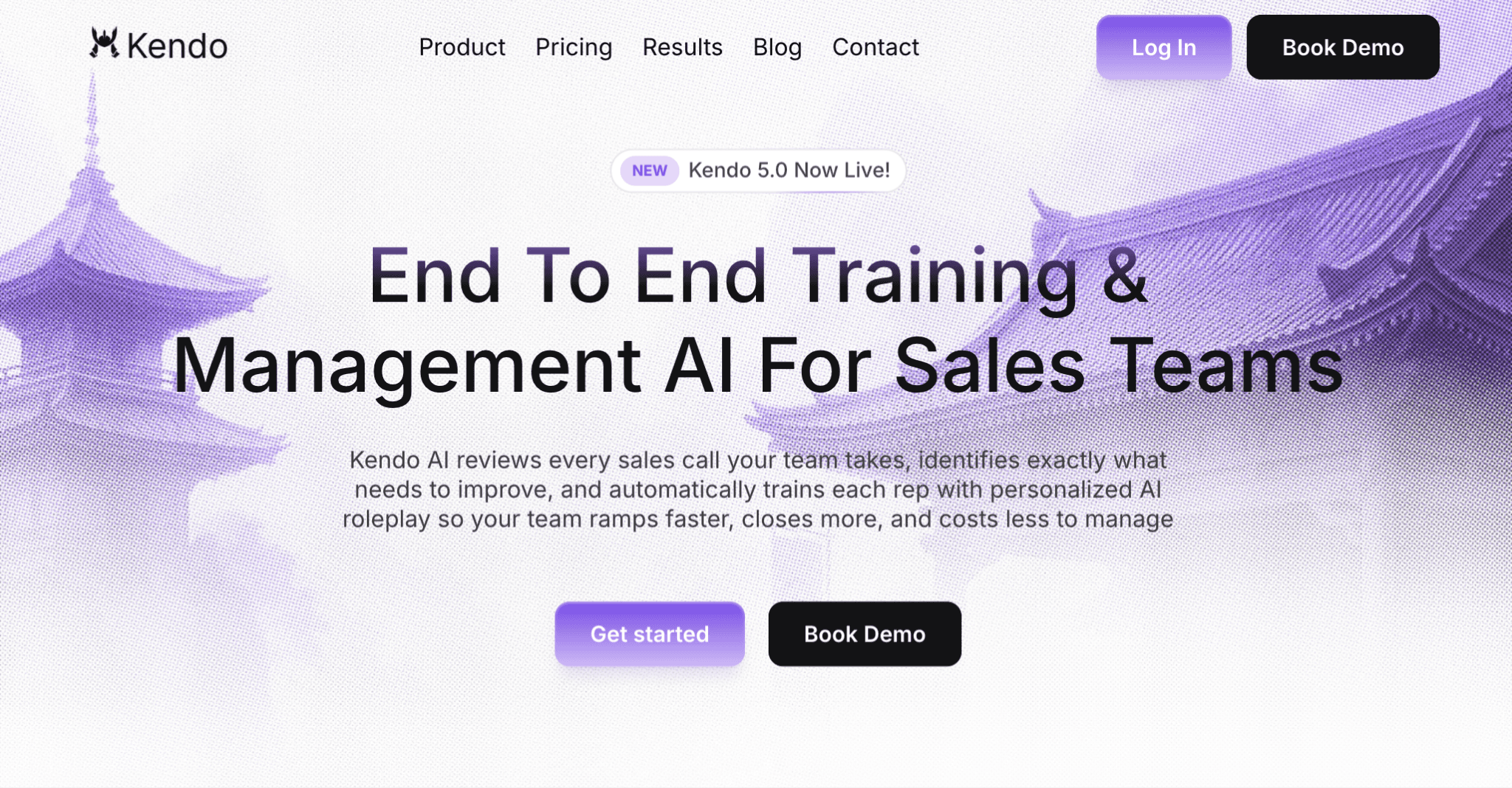
Kendo AI is the Flight Simulator for your sales team. Just as pilots build life-saving reflexes in simulators before flying a real plane, your reps should build their discovery skills against AI before touching a high-value lead.
1. Custom AI Sales Roleplay: High-Stakes Discovery Missions
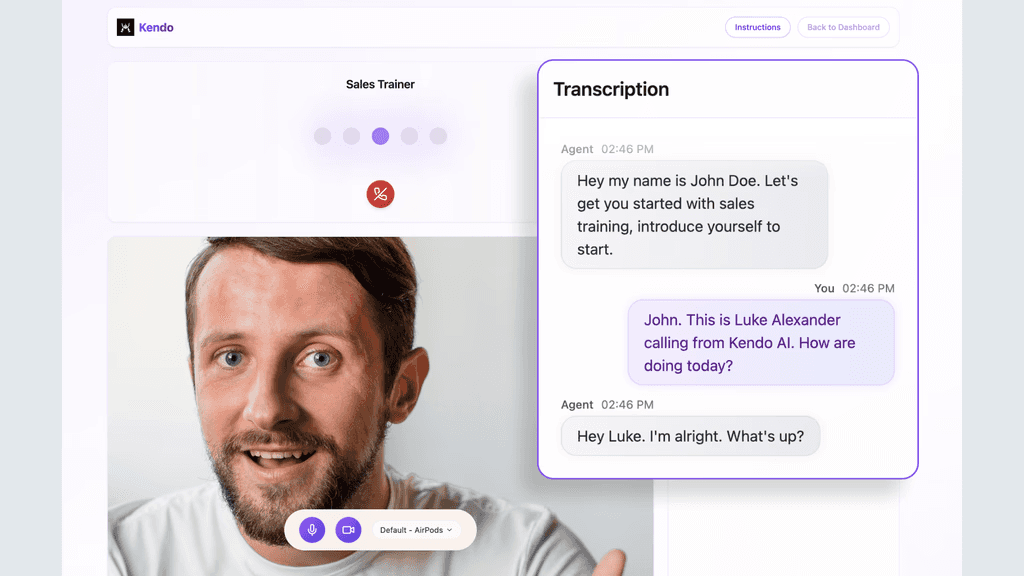
Standard roleplay feels forced and repetitive. Kendo transforms practice by placing reps in dynamic, high-pressure environments tailored to your specific market.
The Challenge: Reps battle AI Personas programmed with real-world skepticism. These prospects do not simply hand over the Decision Process or grant access to the Economic Buyer because a rep asked.
The Logic: To win the mission, the rep must earn the right to advance. They must successfully uncover Metrics and prove they understand the prospect's Implicated Pain. This forces reps to stay disciplined instead of rushing to the pitch.
For a step-by-step playbook on designing these sessions, check out our sales roleplay best practices guide.
2. Automated Call Scoring & Gap Analysis
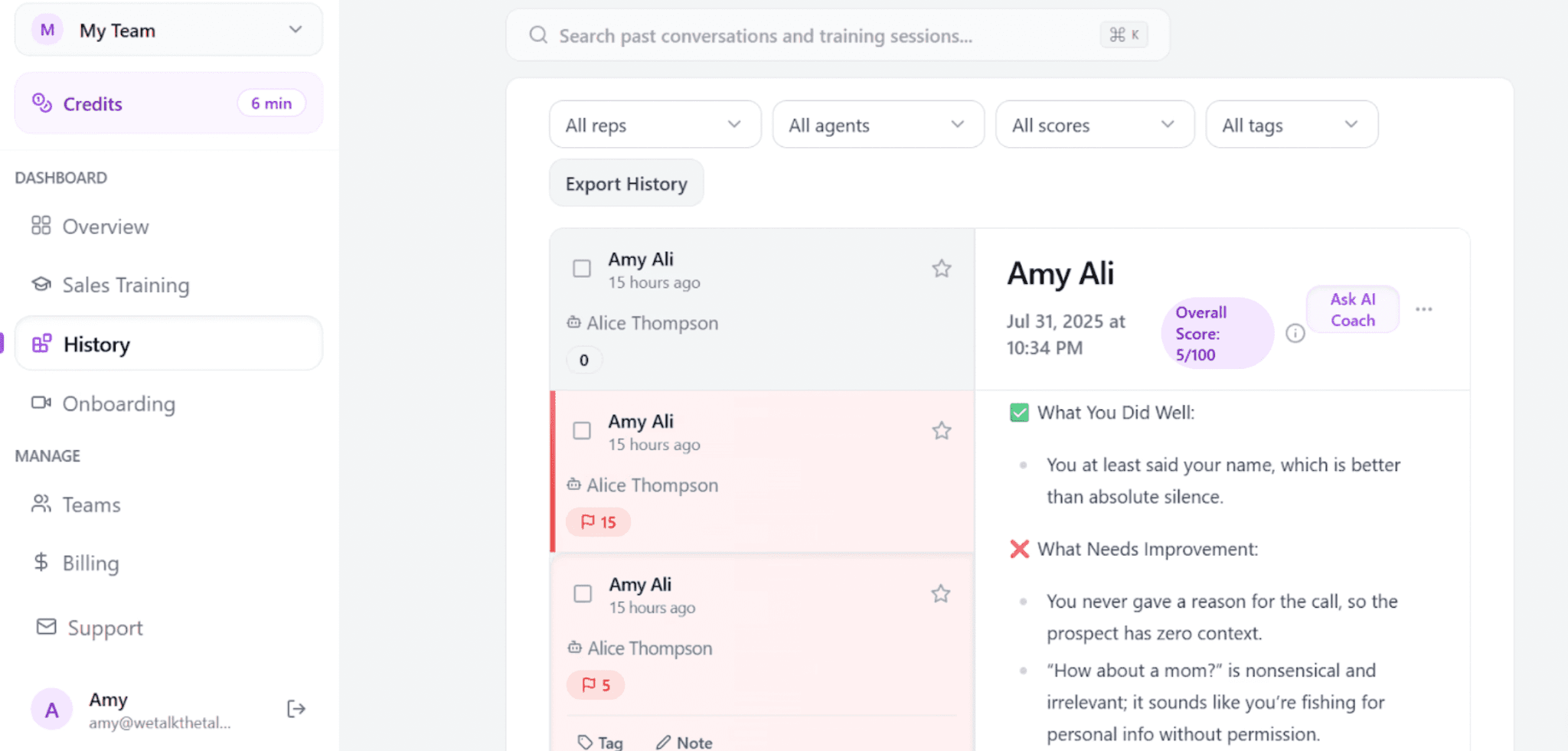
MEDDPICC only works if it actually happens on the call. Kendo removes the guesswork for managers by automatically auditing every conversation for methodology adherence.
The Insight: The AI identifies exactly where a rep succeeded or missed a pillar—such as failing to validate the Paper Process or forgetting to test a Champion.
The Coaching: Instead of a manager spending hours listening to call recordings, Kendo provides instant, actionable feedback. This turns every real-world interaction into a data-driven coaching moment, ensuring no deal-killer goes unnoticed.
3. Onboarding at Scale
The traditional three-month ramp time creates a massive cost for sales organizations. Kendo compresses this timeline by replacing passive observation with active participation.
The Method: New hires use the Analytics Suite to track their progress while running dozens of simulated discovery sessions in their first few days. They encounter common objections and learn to navigate Decision Criteria before their first live meeting.
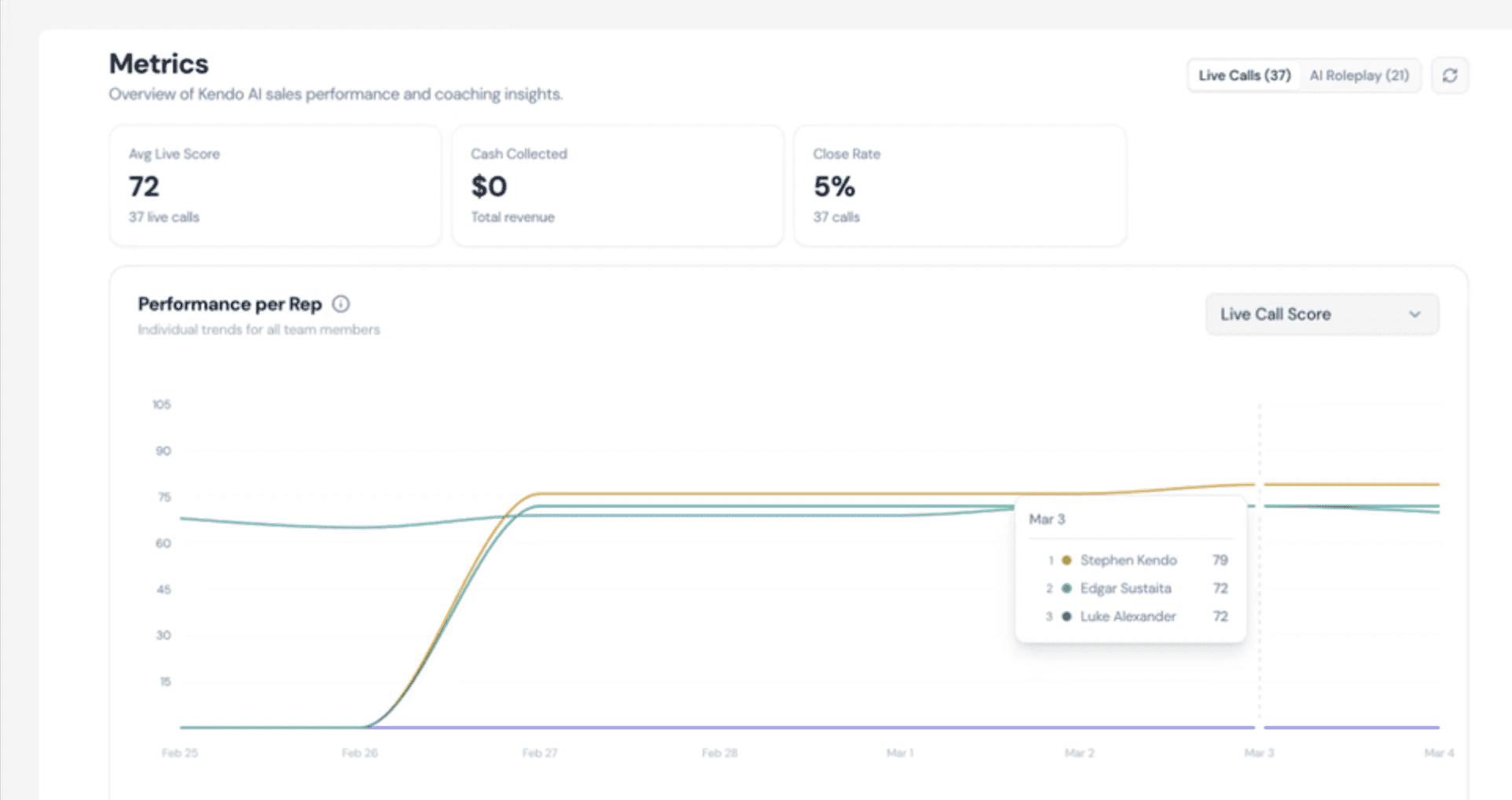
The Result: New hires reach full productivity 75% faster. They hit the floor with the muscle memory and confidence of a veteran, significantly reducing the risk of burning leads during the learning curve.
Master the Win: From Theory to Execution
MEDDPICC transforms sales forecasting from fiction into fact. It enforces disciplined qualification across every deal. However, a methodology only works if your team executes it under pressure. Knowing the theory marks the starting line; building the reflex to use it marks the finish line.
Combine the structural rigors of MEDDPICC with the real-time practice environment of Kendo AI to stop guessing and start winning. You no longer hope a deal closes—you possess the data and the trained skills to ensure it does.
Bridge the gap between knowing and doing.
Try Kendo AI today or request a demo to build the discipline your pipeline is missing.
Luke Alexander is a sales leadership expert with over a decade of hands-on experience in B2B sales management, team training, and revenue growth strategies. He specializes in building high-performing sales teams through data-driven coaching methodologies.
Related Articles
View all