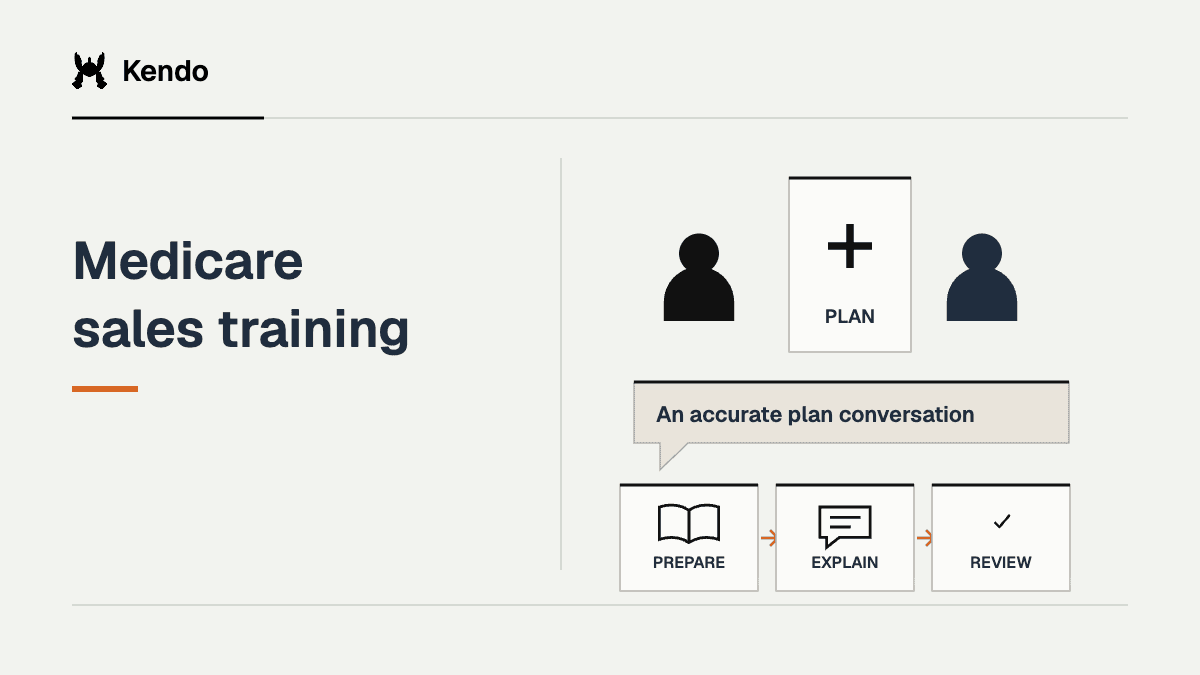

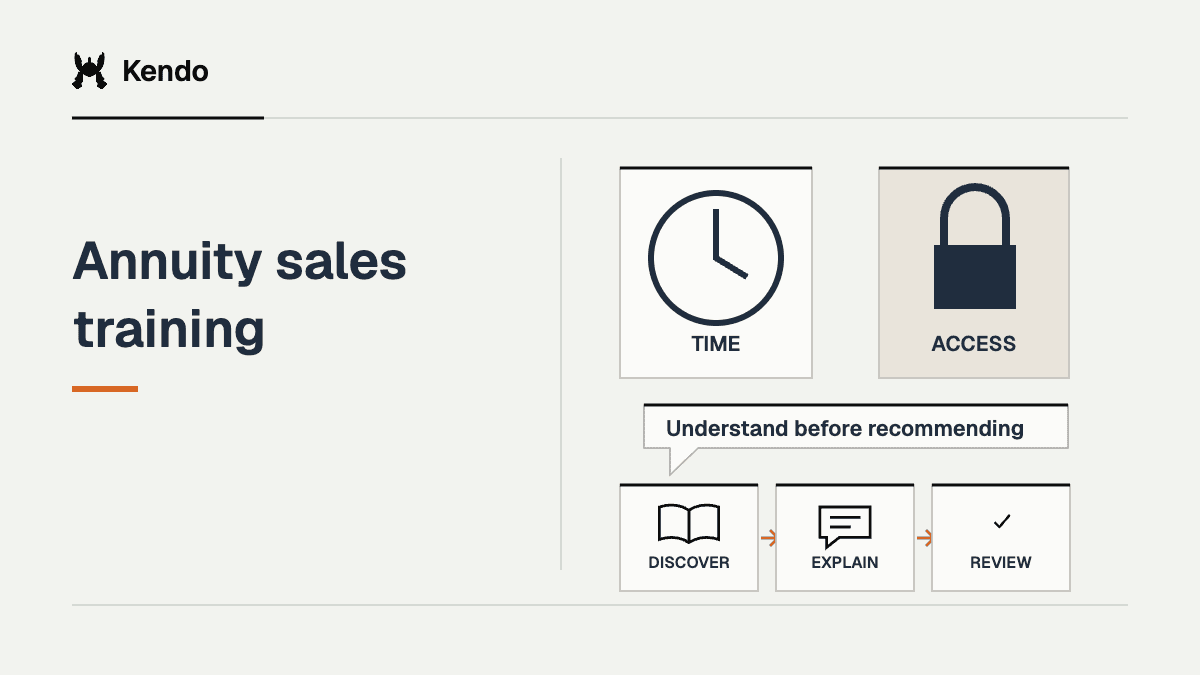

Annuity sales training has four parts: the required courses, product knowledge, conversation practice and a manager's review. A finished course does not prove an agent can explain the product. A smooth conversation does not prove the recommendation fits the client.
Leaders need proof of each, with a qualified person checking the real work. The job is to get agents asking good questions, explaining what the contract actually says and admitting when they are not sure. Good rehearsal shows the gaps before they turn into confident statements to a client.
- $464.1B
- US annuity sales in 2025, a recordLIMRA, 2025 final sales release
- 7%
- Growth over 2024, when sales were $434.1BLIMRA, 2024 final sales release
- 48 states
- Have adopted the NAIC best interest revisions, each with its own training detailsNAIC, Annuity Suitability and Best Interest Standard
Every one of those sales started as a conversation an agent had to get right.
Separate four layers of readiness
Keep two things separate in the training record: what the agent is allowed to do, and how well they handle the conversation. This table is a management worksheet, not a legal checklist.
| Training layer | Source or owner | Completion evidence | What it does not prove |
|---|---|---|---|
| Applicable authorization and education | Regulator, firm and qualified reviewer | Confirmed requirements and records | Competence with every product |
| Carrier and product knowledge | Current approved carrier material | Product learning and source-based assessment | An appropriate recommendation for a client |
| Discovery and explanation | Approved agency process | Observed practice with feedback | Legal compliance or suitability |
| Supervised assessment | Qualified human reviewer | Reviewed work and remediation record | Future accuracy without ongoing oversight |
Keep each row's status separate instead of collapsing them into one “ready” badge.
For example, an agent may have finished the required courses but still struggle to explain what happens if a client needs money sooner than expected. The next assignment should work on that explanation and on finding the answer in the contract, not repeat the course.
Newer agents often finish the required courses and still ask how to connect what they learned to a real client's needs. Experienced agents give the same answer every time: fact-finding first, then supervised practice. The real question is what an agent must demonstrate after the classroom work is finished.
Check the applicable requirements before choosing the course
The NAIC Annuity Suitability Working Group publishes the model rule and tracks how states put it in place. A shared model does not mean every state has identical requirements.
Have your compliance reviewer pin down four things: the state, the activity, the products and the agent's license status. Then confirm the required course and sign-off with the state and the firm. A national outline is not a universal hour count.
California's Department of Insurance publishes its own annuity training questions, course lookups and completion checks. It shows why each state needs its own check.
Each line needs its own approved reference, and an agent cleared for one is not cleared for all.
US sales by product type, 2025. Indexed and index-linked products together are about 45% of the total (our math from LIMRA's table).
Name the product type too. Training for one kind of annuity does not cover every annuity. If securities rules may apply, get a specialist to check instead of guessing from a course title.
Keep a short record of the source checked, who confirmed it and the review date. If a requirement is still open, label it unresolved. A training manager should never have to guess authorization from a completion email.
Buy the required course for the box it ticks. Buy sales training for the skill it builds. They are two different decisions.
Match the training route to the missing capability
Official and approved education addresses required preparation
Use the state and firm-approved routes to find out which course applies. Confirm the exact course and the proof of completion before you pay. A provider calling something “annuity training” does not make it the approved course for your agent.
Store the completion record where compliance records live. Keep the manager's practice notes somewhere else so nobody mixes them up.
Carrier education addresses the actual product
Ask the product specialist which current approved material agents should use. Training should include finding the right terms in it, not only remembering a simple version.
The test: can the agent find the answer to a specific question and say what is still unclear? Knowing the product name is not enough when the terms or versions differ.
- 10 to 30 days
- Typical free-look window, set by each stateFINRA, Annuities
- 8+ years
- Surrender periods on some variable annuitiesFINRA, Annuities
- 59½
- Age before which withdrawals may face a 10% federal tax penalty on the taxable portionIRS, Topic 558
The exact numbers live in the contract and the client's situation. The training goal is that the agent knows to look, not that they recite these.
Specialist instruction develops understanding
An instructor or experienced supervisor can work through new ideas and fix misunderstandings before the agent practices alone. Check what the instructor is qualified to teach and how they handle questions.
Ask for a sample explanation of a hard topic. A good instructor makes the point clearer without dropping the conditions. A slogan-length answer is a warning sign.
Rehearsal makes delivery gaps observable
Practice shows whether the agent listens, checks understanding and stays inside the approved information. It works best once the source material is in place.
For a broader comparison of instruction, coaching and software, use the insurance training provider comparison. A generic sales course cannot sign off an annuity recommendation. A qualified reviewer still has to.
Rehearsal needs someone to play the client and someone to review the attempt. That is manager time. Jess Chang, Partner at Globe Life, on what practice with Kendo did for her leaders:
Insurance case study: new-agent close rates from about 33% to 60%+
Globe Life's new agents practiced daily with Kendo over about six months, alongside targeted hiring and manager oversight.
“Kendo buys back time for my leaders”
Practice discovery before the product explanation
A useful annuity discovery exercise gives the agent incomplete information. The challenge is to spot what is missing before presenting a solution.
Use made-up clients whose goals, timing, access needs and existing savings are only half known. Do not hand the agent a model recommendation and ask them to justify it.
Managers can grade question quality with five simple tests:
- Open: invites the client to explain what matters.
- Relevant: connects to a fact the approved process needs.
- Neutral: does not lead the client toward the agent's preferred answer.
- Responsive: follows what the client actually said.
- Complete enough to review: names the missing information instead of hiding it.
Pushes toward the answer
“You won't need this money soon, right?”
- Leads the client
- Gets a yes
- Learns nothing
Finds out
“What might change your need to get at this money?”
- Open
- Neutral
- Gives the reviewer something to check
Only one of these turns up the expense the client was not sure about.
Have a qualified reviewer adapt both to the conversation your agents are allowed to have.
A good follow-up is often more valuable than another prepared question. If the client mentions an uncertain expense, the agent should dig into it through the approved process instead of moving on because the question list is done.
Then check the summary: can the agent restate the client's goals without adding a conclusion the client never said?
Rehearse the question about access to money
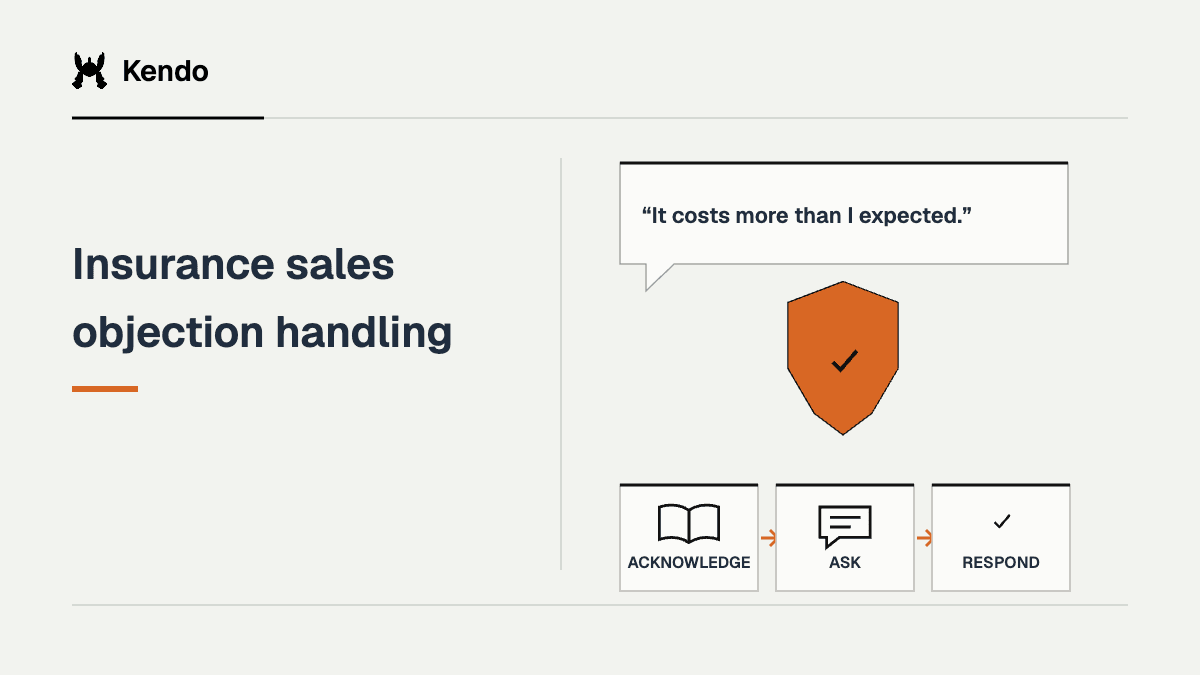
When a practice client asks “What if money is needed next year?”, the agent's job is not a one-size answer. It is to tie the question to the actual contract terms and what the client said they need. More client pushback follows the same pattern, so see how to handle common insurance sales objections.
“Totally flexible.”
“Here are the conditions that apply in year one. Let me confirm the rest before I say more.”
Practice finds the gap before a client does.
Original coded illustration; fictional dialogue.
Give the agent the approved product document during the exercise. Ask them to find the conditions that apply, explain only what the document supports and flag anything that needs a specialist.
Clients watch clips like this before the appointment. Use it as the practice prompt: can the agent answer all three from the approved document, without a projection?

Retry prompt for the reviewer: change the client's timing and ask the agent to answer question two again from the document.
Do not score on confidence. A confident “you can always get your money out” is worse than a careful “let me check the surrender terms.”
For the retry, change the client's timing or ask about a different feature in the document. That tests whether the agent learned to check the source, not a memorized answer.
Keep illustrations and guarantees distinct
Run a separate exercise on the actual approved illustration or product document. The reviewer marks which statements it supports, which conditions must stay in the explanation and which questions get escalated.
Never ask a practice tool to invent a rate, project a return or decide whether a guarantee applies. Those answers come from the contract and a qualified reviewer.
The same line the reviewer should hold during the illustration exercise: explain what the contract will do, not what a backtested number says it might do.

Scoring rule for the practice session: a supported condition beats a confident projection every time.
Tax questions get the same treatment. Train the agent to spot where the allowed explanation ends and to use the approved referral. A practice call should never turn into personal tax or investment advice.
Check understanding without steering the answer
Have the agent ask the client to explain it back in their own words. “Does that make sense?” gets a yes and hides the misunderstanding.
Client: “Sure.”
Client: “The part about the first year.”
Agreement is not understanding. The second question found a real gap.
Original coded illustration; fictional dialogue.
An approved prompt might be: “Which part should I go over again?” The manager then checks whether the agent answers that question or just repeats the pitch.
All of this only works if the practice client pushes back like a real one. Kody Skvarla, an insurance team lead, on realism:
Insurance case study: a 5 to 20% team improvement from realistic practice
Kody's wider team reports a 5 to 20% improvement. One top performer roughly doubled his own baseline.
“Kendo matches or beats a human practice partner. The objections are the exact same as real calls.”
Make remediation specific and supervised
After an assessment, name the exact gap. “Needs confidence” is too vague to train. “Explained access conditions without checking the current document” points to something fixable.
Pick one of three next steps for each miss: relearn the source material, rehearse the explanation or refer the issue to a qualified specialist.
One miss, one of three next steps
A miss in the practice call
Source gap
Relearn
The agent could not find the right answer in the approved material.
Send them back to the source first.
Delivery gap
Rehearse
The source was right, but the explanation was muddled.
Run the scenario again with changed timing.
Scope gap
Refer
The question sits outside the agent's permitted scope.
Hand it to a qualified specialist and record that.
Some attempts need two of these. Write down which.
When a new scoring rubric starts, have two reviewers score the same sample. If they disagree on acceptable wording, settle the standard before holding agents to it.
The record should show the original issue, the fix, the new attempt and the reviewer's decision, plus what stays out of scope. Passing a practice exercise does not make a real recommendation suitable.
For new hires, connect those records to the agent onboarding checklist. A record like that is what makes a ramp measurable. United Insurance Pros defined its own baseline, then tracked how fast new agents reached it.
Insurance case study: time to baseline cut from 45+ days to 14
United Insurance Pros is a 500+ agent organization. Time to its defined baseline went from 45+ days to 14 days.
“If you've got more than five agents, it's a no-brainer.”
Rehearse approved annuity explanations with Kendo
Kendo offers customizable AI prospects, weighted custom scorecards and recorded-call summaries and feedback. They are practice and coaching tools; they do not license an agent or pick a product. Compare the options in the best AI sales roleplay tools.
An agency can set up an approved, made-up scenario, check whether the agent found the missing information and review the answer with a qualified person. The feedback always gets checked against the actual source.
An access-to-money question should slow the conversation down. Give the agent agency-approved fictional context, assign the practice and review how they handle missing terms. The exercise tests the explanation, not whether the annuity is suitable.
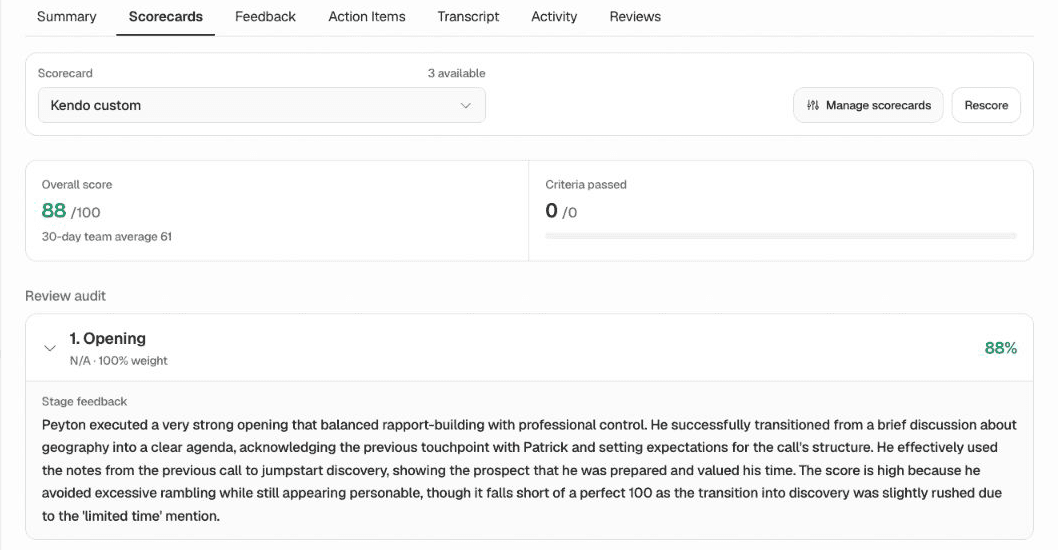
A generic sales scorecard is shown. For annuity practice, the agency writes its own criteria, such as “used the approved source” and “named what still needs checking.”
Kendo's insurance workflow helps when the problem is follow-through: practice happens, feedback lands and the retry gets assigned.
Keep real client details out of practice scenarios. Before any real calls are reviewed, run the organization's privacy, recording and vendor checks. Recordings are not used to train AI models.
If the gap is inconsistent reviews, the sales coaching software comparison shows how feedback tools differ.
Measure what the training changed
Measure what the exercise was meant to change: better questions, correct use of the contract, honest “I need to check” moments and clear follow-up. Practice done is not the same as practice improved.
If you track business results, use the agency or carrier system and define the group and time period. The insurance agency KPI guide helps separate activity from outcomes without assuming all the data lives in a coaching platform.
Do not judge annuity training by sales volume alone. Sometimes the right move is to pause, ask more or escalate. When the approved process calls for that, score it as a win, not a lost sale.
Common training questions
Can one course cover the entire training requirement?
It depends on the state, the product, the agent's role and the firm's rules. Confirm what the exact course covers with your compliance reviewer. The course title alone does not answer it.
Should agents memorize an annuity sales script?
Handle any required wording the way the organization directs. For discovery and explanations, agents also need to listen and answer the actual question. A script cannot fill in missing product information or settle a question it was never written for.
What should a manager do first?
Pick one common client question, find the approved document and ask a qualified specialist to define a good answer and when to escalate. Use that small, reviewed scenario as the first assessment standard.