

The 10 Best Sales Performance Management Software Tools for Operators in 2026
We compared 10 SPM platforms on ICM depth, quota and territory planning, seller visibility, governance, and total cost. Here's the shortlist, a 4-lane fit matrix to narrow it fast, and an honest read on who each tool is actually for.
If you own revenue operations, or you sit in Finance next to a VP of Sales, you already know the quiet chaos that sales performance management software is supposed to fix. A comp plan changes mid-quarter. Reps start keeping shadow spreadsheets because they don't trust the statement. Finance needs clean commission accruals for the ASC 606 audit, and nobody agrees on which system holds the source of truth.
Sales performance management (SPM) software is the category meant to end that. Done right, it runs incentive compensation, models quota and territory, and gives sellers a dashboard they actually believe. If the main goal is motivation and competition rather than comp calculation, that belongs in the gamification layer, not SPM. Done wrong, it's an 18-month implementation that still spits out numbers your CFO questions.
We compared 10 sales performance management platforms for 2026 against six operator criteria: ICM depth, quota and territory planning, seller visibility and audit trails, integrations and data governance, implementation and total cost, and pricing transparency.
Some are enterprise full-suite systems. Some are lean, transparent, and live in a week. Below is the shortlist, a fit matrix to narrow it fast, and an honest read on who each tool is actually for.
Match the tool to your lane, not the logo. Under roughly 100 payees, QuotaPath gives you public pricing and a setup in days. At 50 to 500 payees with plans that change often, CaptivateIQ or Performio fit. Past 500 payees with ASC 606 pressure, the full-suite systems (Varicent, Xactly, NICE, Oracle, SAP) earn the implementation. Anaplan leads when planning comes first. If forecast accuracy rather than compensation is the bottleneck, compare the forecasting layer separately. Kendo isn't on this list, and it isn't trying to be: it's the practice layer that moves the rep behavior SPM measures.
A quick note on the definition before the list, because the category name gets stretched. SPM software is the system of record for how sellers get paid and measured. It combines incentive compensation management (ICM), quota and territory planning, and seller performance reporting, which is how Gartner's SPM market coverage frames the category. It differs from a CRM: the CRM tracks deals, while SPM turns those deals into commissions, quota attainment, and audit-ready comp records.
What SPM Software Actually Does With Your Deals
The clearest way to see the category is to follow one deal through it. A CRM closes the opportunity. SPM takes it from there and turns that raw transaction into a paid, planned, and audit-ready number.
The SPM Data Spine, From Raw Deal to Audit-Ready Payout
A CRM tells you the deal closed. SPM turns that one transaction into a commission, a quota-attainment number, and a record Finance can defend, all on one agreed source of truth.
CRM, ERP, HRIS
Deals, orders, and headcount flow in from the systems you already run.
ICM Engine
Tiers, splits, accelerators, draws, and clawbacks become an exact commission.
Quota & Territory
Territories get carved, quotas get set, and capacity gets modeled.
Seller Statements
Reps see a payout they believe, which kills the shadow spreadsheet.
Audit & ASC 606
Finance traces every number from raw deal to accrual for the audit.
How We Evaluated These SPM Tools
Criteria are the whole game in a category this expensive. A logo list doesn't help you defend a six-figure decision to your CFO. Here's the spine every tool below gets measured against.
- Incentive compensation (ICM) depth. Can it handle real-world plans: tiers, splits, overlays, accelerators, draws, and clawbacks, not just a flat percentage?
- Territory and quota planning. Does it model territories, carve quotas, and plan capacity, or does it only calculate commissions after the fact?
- Seller visibility and audit trails. Do reps get a statement they trust, and can Finance trace every number back to a source for the audit?
- Integrations and data governance. Does it wire cleanly into your CRM, ERP, and HRIS so payouts run on one agreed source of truth?
- Implementation and total cost. How much data work, admin time, and services spend does it take to go live and stay live? License is rarely the biggest line.
- Pricing transparency. Is there a public price you can plan around, or is everything quote-based?
If you want the seller-facing half of this in more depth, our breakdown of sales performance KPIs that actually improve results covers what "good" looks like on the metrics side before you buy the system that reports them.
The 2026 Shortlist at a Glance
Here's the fast version. The category buyers shortlist from is well documented on the G2 sales performance management grid; this table maps 10 of them to who they fit, what they cost, and where they connect. This is the table to screenshot before your next tooling conversation.
| # | Vendor | Best For | Core Strength | Pricing | Notable Integrations |
|---|---|---|---|---|---|
| 1 | Varicent | Global enterprises | Full-suite ICM, planning, and insights | Custom (quote) | CRM, ERP, HRIS |
| 2 | Xactly | Audit-heavy enterprises | Mature ICM and controls | Custom (quote) | CRM, ERP, Salesforce |
| 3 | Salesforce Spiff | Salesforce-native teams | Native ICM, public seat price | $75/user/mo (billed annually) | Salesforce, CRM/ERP connectors |
| 4 | SAP Incentive Management | SAP estates | ICM aligned to SAP CX/ERP | Custom (contact sales) | SAP CX, ERP, HRIS |
| 5 | Oracle SPM | Oracle Fusion users | Quota, territory, and ICM in Fusion | Custom (quote) | Oracle Fusion CX/EPM |
| 6 | CaptivateIQ | Mid-market, changing plans | Flexible plan modeling | Custom (quote) | CRM, ERP, spreadsheets |
| 7 | Performio | Standardizing messy comp | Prebuilt comp components, admin controls | Custom (quote) | CRM, ERP |
| 8 | QuotaPath | SMB and lean RevOps | Transparent pricing, fast setup | $50/user/mo + $800/mo platform fee | HubSpot, Salesforce, sheets |
| 9 | Anaplan | Planning-first orgs | Territory, quota, capacity modeling | Custom (quote) | CRM, ERP, data warehouses |
| 10 | NICE SPM | Large, contact-center-adjacent orgs | Complex crediting at scale | Custom (modular) | CRM, contact-center systems |
Pricing for Salesforce Spiff and QuotaPath is drawn from each vendor's published pricing page, accessed July 22, 2026. Every "Custom" label means the vendor does not publish a price and routes you to sales.
The SPM Fit Matrix: A 4-Lane Decision Model
Most roundups stop at the table. That's where buyers get stuck, because the real question isn't "which tool is best," it's "which class of tool fits my payee count, plan complexity, stack, and governance needs." Four lanes cover almost every SPM decision.
The 4 Lanes of SPM Software
Start from the lane, not the logo. It keeps you from overbuying a full suite you'll never fully deploy, or underbuying a transparent tool that buckles the first time crediting gets complicated.
Choose this lane if you run lean RevOps and want public pricing with setup in days, not a quarter-long implementation.
Choose this lane if plans change often, RevOps owns comp, and you want a modern UI you can edit without a services ticket.
Choose this lane if you lead with territory, quota, and capacity modeling alongside FP&A, and can add an ICM engine underneath.
Choose this lane if you have complex crediting, ASC 606 audit pressure, and data spread across multiple systems.
The lanes aren't rigid walls. Plenty of mid-market teams run Salesforce Spiff, and plenty of enterprises use Anaplan for planning next to a separate ICM engine. The scorecard below turns the lane call into a number.
TCO & Data-Readiness Scorecard
Score one point for each "yes." This is the honest version of a budget request, because license is often the smallest number in the total cost of ownership. Tick the boxes to see your lane.
Tick every "yes." Start ticking to place yourself in a lane.
QuotaPath likely covers you. Don't overbuy a suite you won't deploy.
CaptivateIQ or Performio is your lane. Flexible plans, RevOps owns comp.
Varicent, Xactly, NICE, Oracle, SAP, or Anaplan, plus a named data owner before you sign.
The 10 Best Sales Performance Management Software Tools in 2026
The order runs from the enterprise full-suite heavyweights down through mid-market ICM and the transparent SMB option to the planning-led and contact-center-adjacent specialists. Read it against your lane above, not as a strict one-to-ten leaderboard, because the right tool is the one that fits your payee count and plan complexity.
Varicent
Best for Global EnterprisesAn enterprise SPM suite that spans incentive compensation, territory and quota planning, and seller performance insights in one platform.
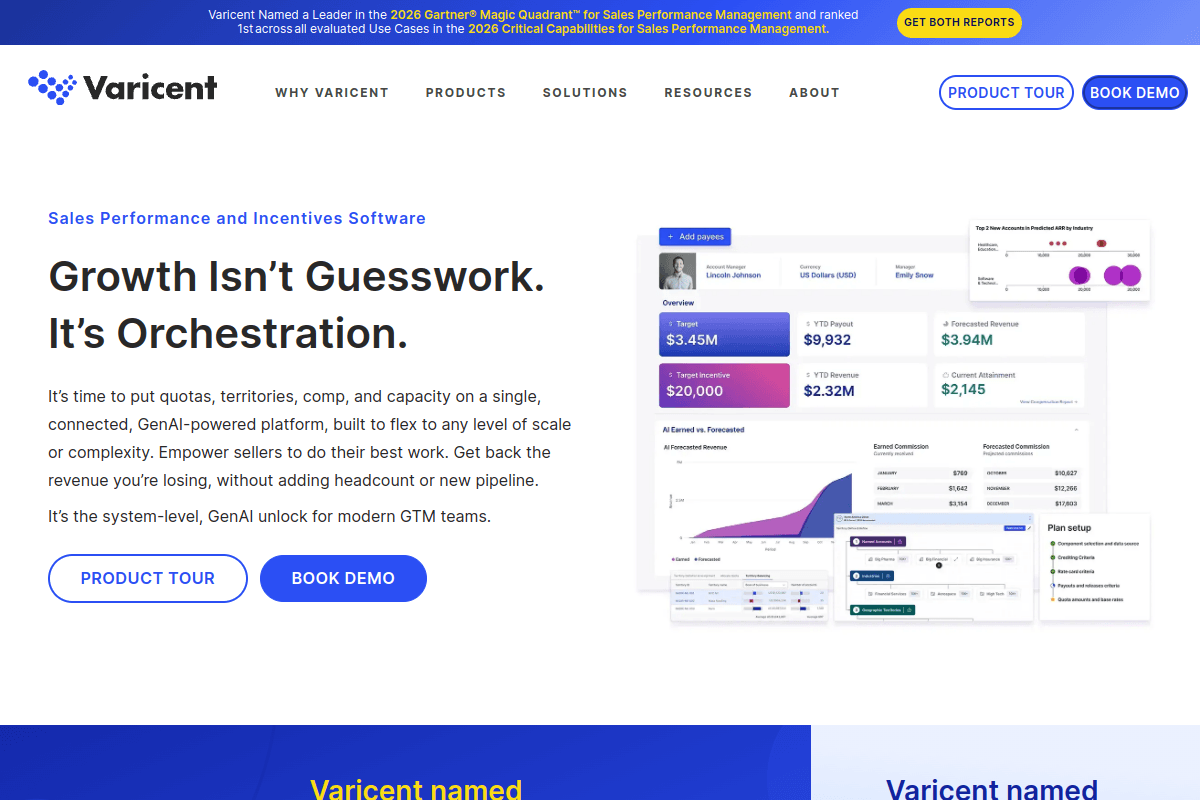
Varicent is an enterprise SPM suite that puts incentive compensation, territory and quota planning, and seller performance insights under one roof, which is rare and valuable when you don't want three vendors stitched together.
Where It Wins
- Full-suite breadth. ICM, planning, and analytics in one platform, the kind of coverage that removes an integration project between separate tools.
- Built for complexity. Designed for high payee counts and intricate crediting, the kind of plans that break lighter tools.
- Positioned as a market leader. Varicent describes itself as an SPM leader, which is a vendor claim on its own site, not an independent ranking.
Consider before choosing
- No public pricing. It's quote-based (Varicent pricing page, accessed July 22, 2026), so budgeting needs a sales cycle.
- This is enterprise software. Expect a real implementation project, not a plug-in.
Pricing: Custom. Contact sales.
Best for: Global orgs with 500+ payees, complex plans, and a dedicated RevOps or Finance owner for comp.
Xactly
Best for Audit-Heavy ICMA long-standing incentive compensation platform, anchored by Xactly Incent, with comp management, analytics, and benchmarking heritage.
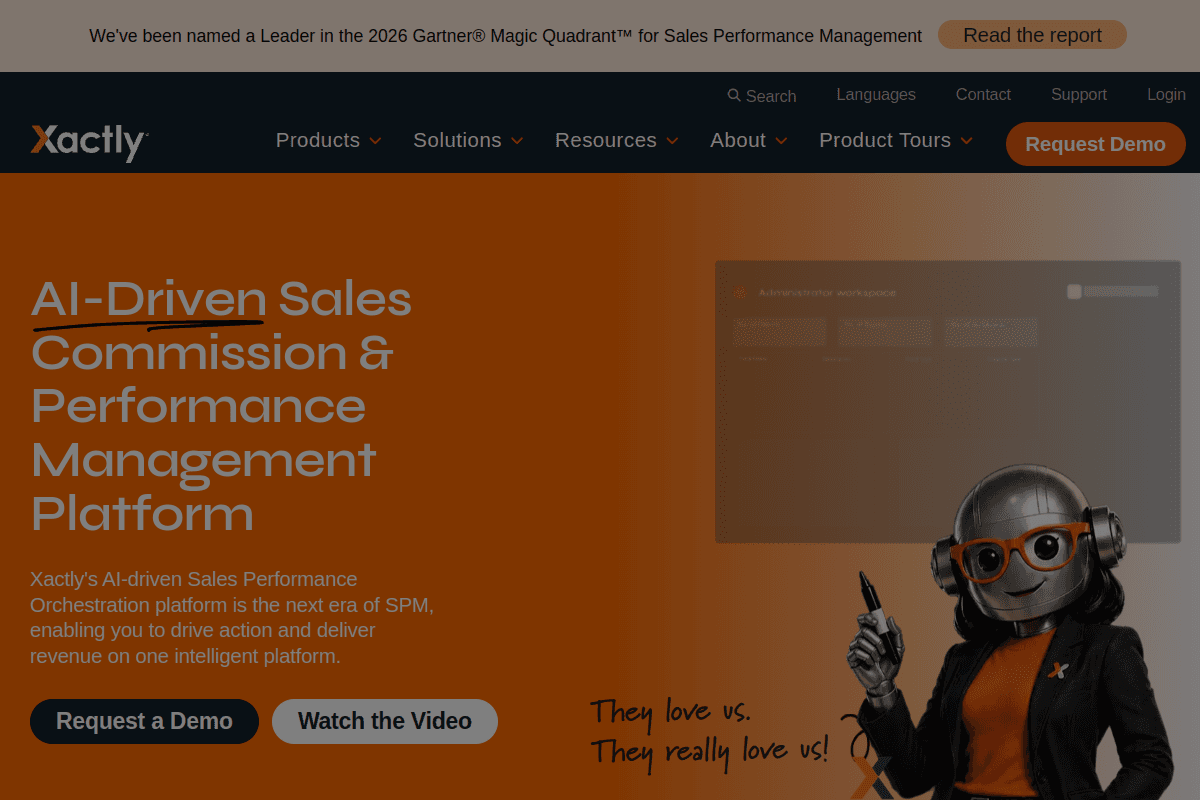
Xactly is a long-standing incentive compensation platform, anchored by Xactly Incent, with comp management, analytics, and benchmarking heritage that Finance teams lean on.
Where It Wins
- Deep ICM engine. Handles complicated plan logic and high-volume crediting with the controls auditors ask for.
- Audit trails and governance. Strong lineage from raw transaction to final payout, which matters when Finance owns the accrual.
Consider before choosing
- Quote-based pricing. It depends on payees and plan complexity, per Xactly's pricing page (accessed July 22, 2026).
- Compensation is the center of gravity. If planning is your primary need, weigh a planning-led option too.
Pricing: Custom. Depends on payees and complexity.
Best for: Enterprises with audit scrutiny and complex comp who want a proven ICM system of record.
Salesforce Spiff
Best for Salesforce TeamsAn incentive compensation product now owned by Salesforce, and one of the few SPM tools with a public per-seat price.
Native incentive compensation, run on the same Salesforce platform your deals already live in.
Public pricing: $75 / user / monthSalesforce's site blocks automated homepage capture, so this tile is a branded stand-in rather than a live screenshot.
Salesforce acquired Spiff and sells it as Salesforce Spiff, an incentive compensation product that runs commissions on the same platform your deals already live in. It's one of the few SPM tools with a public per-seat price.
Where It Wins
- Salesforce-native data flow. Commissions run where your deals already live, which shortens the data plumbing.
- Real-time rep visibility. Sellers see how deals translate to earnings, which cuts the shadow-spreadsheet problem.
- Transparent seat pricing. You can actually plan a budget without a sales call.
Consider before choosing
- Costs climb with add-ons. It's $75 per user per month billed annually, with connector add-ons at $250 per connector per month and premium support at 30% of net price (Salesforce Spiff pricing page, accessed July 22, 2026).
- Value concentrates inside Salesforce. Off-platform teams get less of the native advantage.
Pricing: $75 per user per month, billed annually.
Best for: Salesforce-native teams that want native ICM and a price they can plan around.
SAP Incentive Management
Best for SAP EstatesSAP's incentive compensation solution, aligned to SAP CX and ERP data so comp runs inside the same enterprise estate.

SAP Incentive Management is SAP's incentive compensation solution, aligned to SAP CX and ERP data. If your transactions, HR, and finance already live in SAP, the integration story is the whole point.
Where It Wins
- Fits SAP data. The tightest fit is for shops whose transactions, HR, and finance already run on SAP.
- Enterprise-grade at global scale. Built for large, multi-region payee populations.
Consider before choosing
- No public price. SAP's pricing page routes you to contact sales (accessed July 22, 2026).
- Value concentrates in SAP shops. Outside that estate, the fit weakens.
Pricing: Custom. Contact sales.
Best for: Large SAP customers aligning ICM with their existing SAP CX and ERP footprint.
Oracle SPM
Best for Oracle FusionSales performance management delivered within Oracle Fusion CX and EPM, covering quota, territory, and incentive compensation.
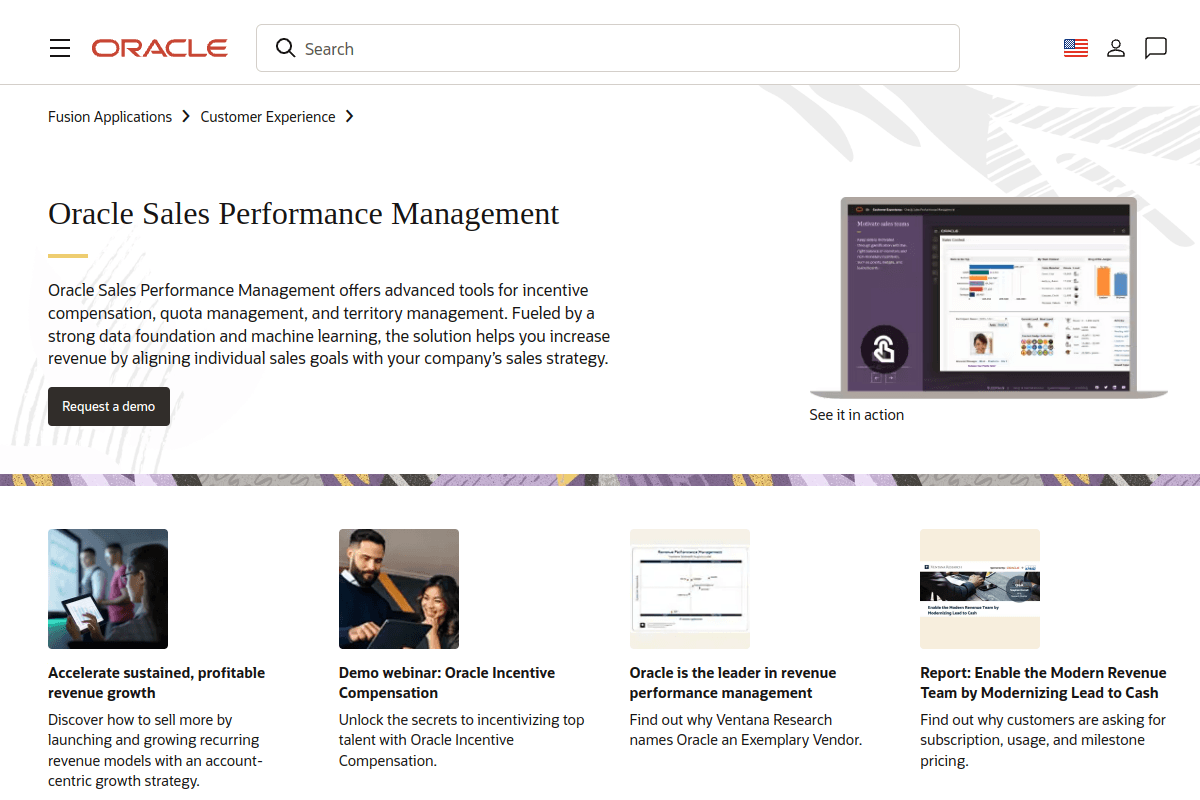
Oracle SPM delivers sales performance management within Oracle Fusion CX and EPM, covering quota, territory, and incentive compensation so planning and payout live in one estate rather than two disconnected tools.
Where It Wins
- Quota, territory, and ICM together. Planning and payout live in one estate instead of two disconnected tools.
- Unified with Oracle ERP and EPM. It keeps the planning-to-pay chain on one data spine.
Consider before choosing
- Best if you're already on Fusion. The economics and implementation are tied to Oracle Fusion.
- Quote-based pricing. There's no public number to plan against.
Pricing: Custom. Contact sales.
Best for: Organizations standardized on Oracle Fusion that want quota, territory, and ICM under one roof.
 SPM reports the score. Across Kendo customers, brand-new agents' close rates jump from about 33% to 60%+, and reps ramp 75% faster.
See the results →
SPM reports the score. Across Kendo customers, brand-new agents' close rates jump from about 33% to 60%+, and reps ramp 75% faster.
See the results →
CaptivateIQ
Best for Changing PlansA modern ICM platform built for flexible, frequently-changing compensation plans.
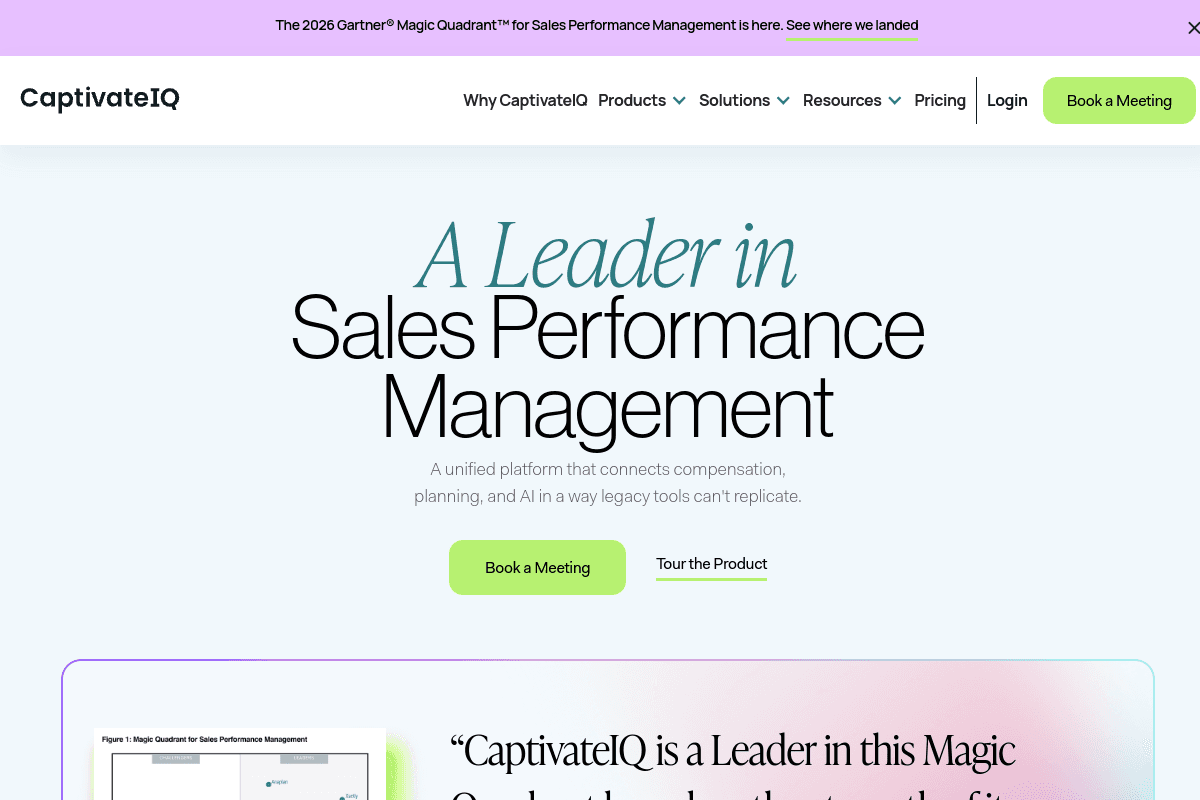
CaptivateIQ is a modern ICM platform built for flexible, frequently-changing compensation plans, where adjusting a plan feels closer to a spreadsheet than to a rigid enterprise config.
Where It Wins
- Flexible plan modeling. Editing plans feels closer to a spreadsheet than to a rigid enterprise config, a real advantage when plans move every quarter.
- Faster changes than legacy suites. Mid-quarter plan edits don't turn into a services ticket.
Consider before choosing
- Quote-based pricing. There's no public number to plan against (CaptivateIQ pricing page, accessed July 22, 2026).
- More ICM than full planning suite. Heavy territory and capacity modeling may push you toward a planning-led tool.
Pricing: Custom. Contact sales.
Best for: Mid-market teams where comp changes often and RevOps owns the plan.
Performio
Best for Standardizing CompAn incentive compensation platform built around prebuilt plan components and admin governance.
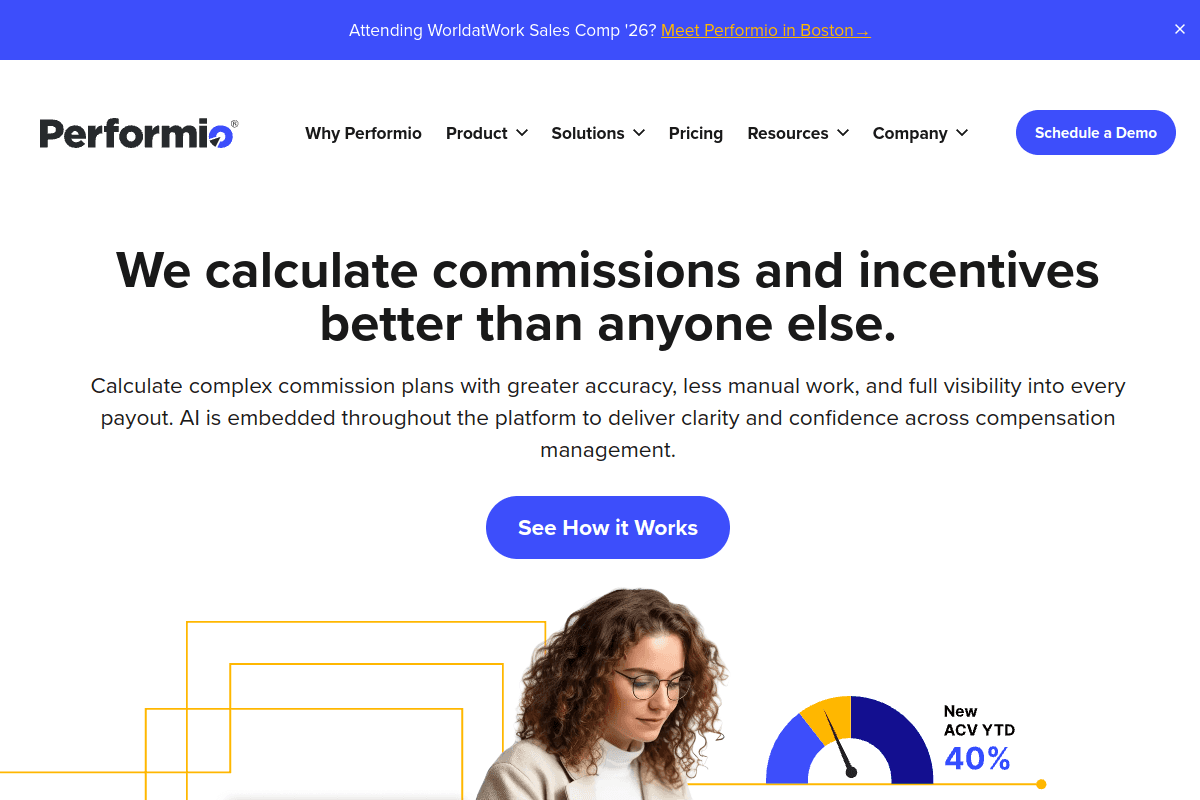
Performio is an incentive compensation platform built around prebuilt plan components and admin governance, aimed at teams that want repeatable, governed comp operations.
Where It Wins
- Library of comp components. It speeds up standardizing plans that grew messy over years of one-off exceptions.
- Strong admin controls and reporting. Aimed at teams that want repeatable, governed comp operations.
Consider before choosing
- Quote-based pricing. No public number (Performio pricing page, accessed July 22, 2026).
- ICM focus. Planning is lighter than a dedicated planning platform.
Pricing: Custom. Contact sales.
Best for: Mid-market and enterprise teams cleaning up and standardizing complex comp.
QuotaPath
Best for SMB & Transparent PricingA transparent, fast-to-deploy commission tracking tool aimed at SMB and lower-mid-market teams.
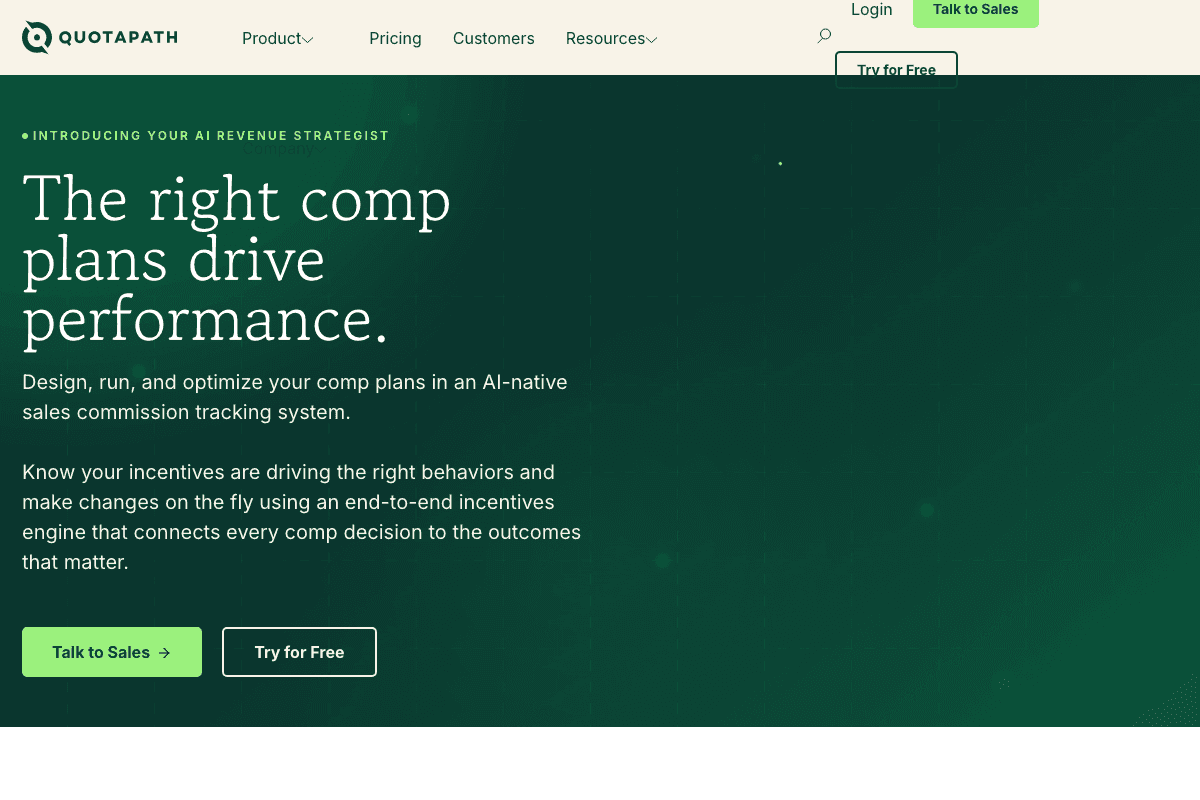
QuotaPath is a transparent, fast-to-deploy commission tracking tool aimed at SMB and lower-mid-market teams, so you can be live in days rather than a quarter.
Where It Wins
- Public pricing and fast setup. You can be live in days rather than a quarter.
- Rep-friendly earnings visibility. It builds trust in the number without a heavy admin lift.
- CRM and spreadsheet friendly. It wires into tools like HubSpot and Salesforce that lean teams already run.
Consider before choosing
- The platform fee matters at small scale. It's $50 per user per month plus an $800 per month platform fee, with the Atlas add-on starting at $5,000 (QuotaPath pricing page, accessed July 22, 2026).
- Not for the most complex crediting. Cross that complexity line and you'll outgrow it.
Pricing: $50 per user per month, plus an $800 per month platform fee.
Best for: SMBs and lean RevOps teams that want transparent ICM pricing and fast time to value.
Anaplan
Best for Planning-Led SPMA planning platform widely used for territory, quota, and capacity modeling, which is why it anchors the planning-led lane of SPM.
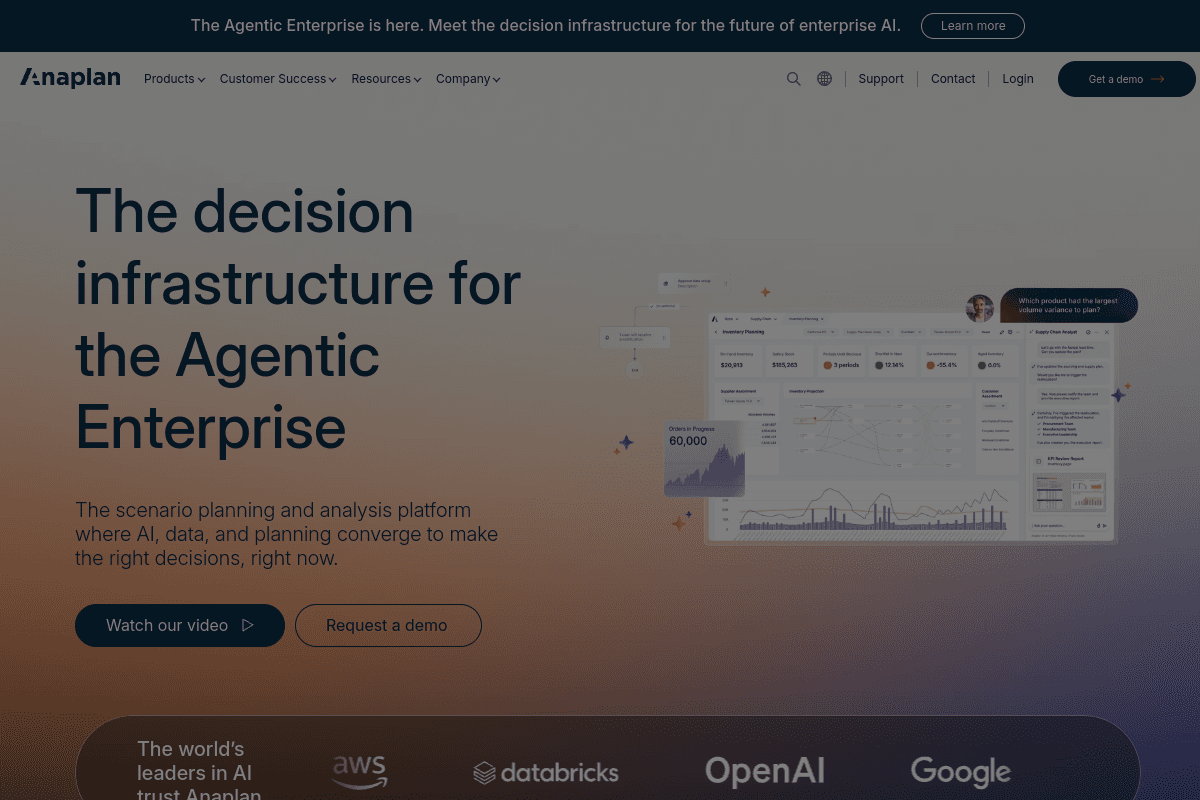
Anaplan is a planning platform widely used for territory, quota, and capacity modeling at a depth most ICM tools don't attempt, which is why it anchors the planning-led lane of SPM.
Where It Wins
- Powerful modeling. Territory carving, quota setting, and capacity planning at a depth most ICM tools don't attempt.
- FP&A collaboration. Finance and Sales plan on the same models instead of trading spreadsheets.
Consider before choosing
- Not a turnkey commission engine. Many teams pair it with a separate ICM tool for payout.
- Real modeling effort. Modeling and implementation take work, and pricing is custom.
Pricing: Custom. Contact sales.
Best for: Planning-first organizations that lead with territory, quota, and capacity modeling alongside FP&A.
NICE SPM
Best for Complex Crediting at ScaleEnterprise SPM and ICM built for large orgs with complex crediting, with particular strength in contact-center-adjacent environments.
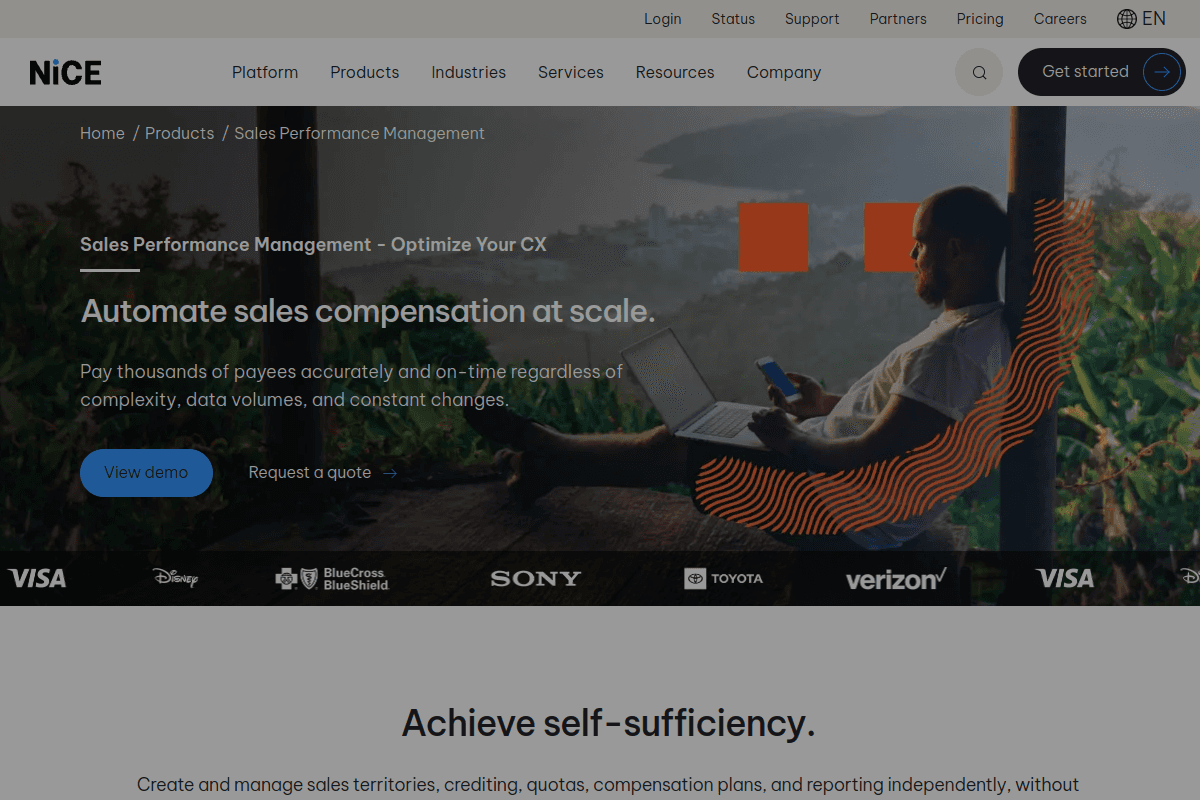
NICE SPM is enterprise SPM and ICM built for large orgs with complex crediting, with particular strength in contact-center-adjacent environments where intricate performance and payout workflows run across big populations.
Where It Wins
- Complex crediting at scale. It handles intricate performance and payout workflows across big populations.
- Modular design. Large orgs can adopt the pieces they need across performance management.
Consider before choosing
- Modular, custom pricing. Gartner Peer Insights notes a modular pricing model rather than a public number.
- Sweet spot is large and contact-center-adjacent. If that's you, review how high-volume call teams train and certify reps alongside the SPM shortlist.
Pricing: Custom. Modular.
Best for: Large sales orgs with complex crediting and performance workflows, especially contact-center-adjacent teams.
Want the enablement layer that sits next to these systems? See which content, training, and readiness platforms pair with an SPM stack.
Where Kendo Fits in Your SPM Stack
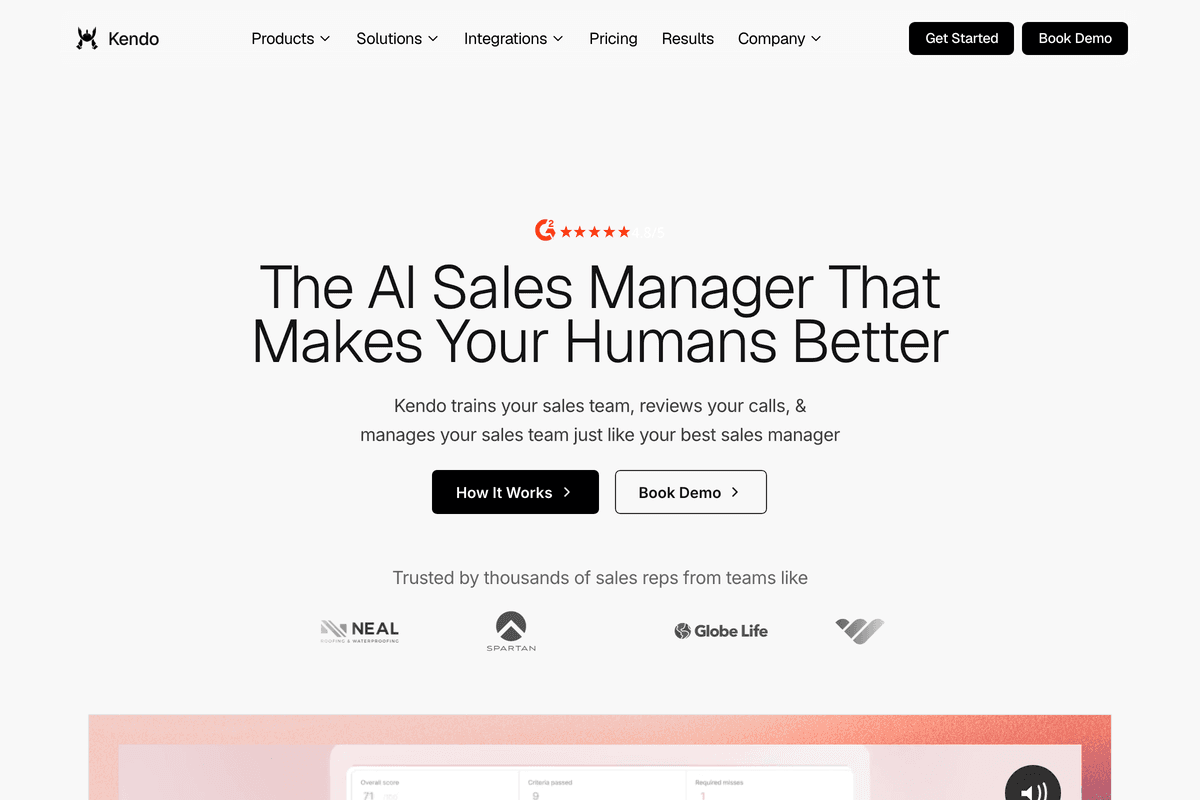
Kendo sits upstream of SPM: it moves the rep behavior your comp and quota tools measure.
Here's the honest placement, because it's the whole reason this section isn't a ranked slot. Kendo isn't an SPM or ICM platform. It doesn't run incentive compensation, model territories, or produce ASC 606-ready comp records. If that's what you're buying, pick from the 10 above.
What Kendo does is the thing SPM measures but can't move: the actual rep behavior on calls. SPM tells you the score. It reports attainment, close rate, and ramp. It does not change the inputs behind those numbers.
Kendo is the practice and readiness layer for those inputs. Reps rehearse against fully customizable AI prospects in AI sales roleplay, every live call is captured and scored against your own scorecard, and weaknesses turn into targeted training. It's the AI sales manager and performance analytics loop that turns a dashboard insight into a changed behavior.
Kendo Shows the Rep Behavior Behind Every Number SPM Reports
Your SPM dashboard shows attainment and win rate. Kendo shows the call score, the practice time, and the win-rate trend that produced them, so a soft number turns into a specific behavior a manager can coach this week.
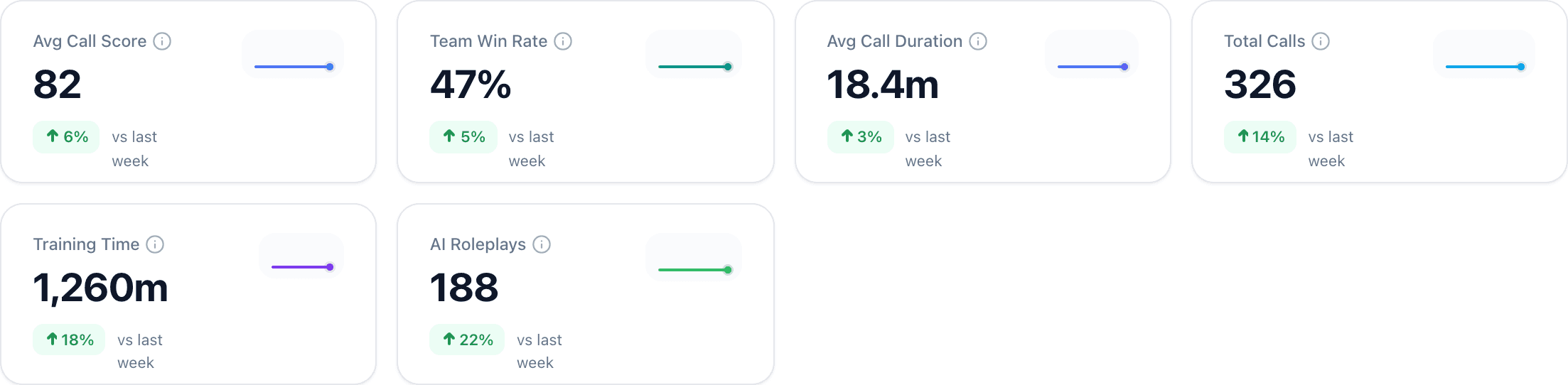 Call score: the rep skill SPM can't move
Win rate: exactly what SPM reports
Training time: the practice that moves it
Call score: the rep skill SPM can't move
Win rate: exactly what SPM reports
Training time: the practice that moves it
This is what practicing on Kendo looks like. The AI buyer pushes hard on SOC 2, ISO 27001, and proof the tool cuts compliance work, and the rep has to handle it on the spot, before any of it lands on a live deal.
The proof is in the inputs that SPM later reports. Globe Life's brand-new agents went from around 33% to 60%+ close rates using Kendo roleplay for repetition (Globe Life story). United Insurance Pros cut onboarding from 30 days to under 24 hours, and pulled their ramp-to-baseline from 45+ days down to 14 (United Insurance Pros story). Skvarla Insurance reported a 5 to 20% performance lift across agents. You can see the aggregate ramp-time and close-rate improvements on the results page.
A few guardrails on how to think about this. Kendo automates the repetitive call review, feedback, and training assignment so managers coach the high-leverage moments, rather than replacing managers. Plans include roleplay minutes (Pro at $55 per seat per month with 180 minutes, Max at $100 per seat per month with 480 minutes, and custom Enterprise), it supports 40+ languages, and it connects to your stack through native call integrations and an open push API. If you're scoping the manager layer specifically, compare which tools actually reduce review-and-coach work.
Globe Life Nearly Doubled the Close Rate SPM Was Only Reporting
SPM told Globe Life's leaders that brand-new agents were closing at roughly 33%. It couldn't move that number. Repetition on Kendo roleplay did: agents practiced every part of the script before live calls, and the new-hire close rate climbed to 60%+ within about six months.
Result: New-hire close rate went from about 33% to 60%+ (nearly double) in roughly six months, driven by reps getting the repetition, rebuttals, and practice before they touched a live lead.
"Our closing rate for brand new agents has been almost close to double with the use of Kendo just because they're getting that repetition, they're getting the rebuttals, they have the practice."Jess Chang, Partner, Globe Life
Short version: buy SPM to pay and measure your team correctly. Add Kendo to actually raise the numbers SPM is measuring.
How to Choose the Right SPM Software
Skip the feature checklist for a second. The decision comes down to your stack, your plan complexity, and who owns the project. Here are the profiles we see most often.
- Choose Salesforce Spiff if you're a Salesforce-native SMB or mid-market team. Your data already lives in Salesforce, you want native ICM, and a public seat price beats another quote-based negotiation.
- Choose CaptivateIQ or Performio if you're mid-market with plans that change constantly. Modern ICM gives RevOps the flexibility to edit plans without a services ticket every quarter. CaptivateIQ leans flexible-modeling; Performio leans standardized-components and admin control.
- Choose SAP or Oracle if you're an enterprise led by your ERP estate. The integration story wins here. SAP for SAP shops, Oracle SPM for Oracle Fusion customers who want quota, territory, and ICM under one roof.
- Choose Anaplan if planning comes first and FP&A is at the table. When territory, quota, and capacity modeling drive the decision, a planning platform beats a payout-first ICM tool, and you can add an ICM engine underneath it.
- Choose QuotaPath if you need a fast, transparent rollout with a lean team. Under roughly 100 payees, no appetite for a quarter-long implementation, and you want a price on a page.
For global enterprises with the most complex crediting and audit pressure, Varicent, Xactly, and NICE are the full-suite heavyweights. If your score on the scorecard above landed 7 or higher, that's your shortlist.
One more move worth making before you sign: pressure-test whether reps can hit the quotas your SPM tool will track, not just the comp math. If call coaching is driving the search, compare CI-first options against practice-first platforms instead.
Frequently Asked Questions
SPM software runs the machinery behind how sellers get paid and measured: incentive compensation, quota and territory planning, and performance reporting. A CRM tracks the deal; SPM turns that deal into a commission, a quota-attainment number, and an audit-ready record. Most teams run both.
Most enterprise SPM tools are quote-based, so budget for services and data work on top of license. Two public examples as of July 22, 2026: Salesforce Spiff lists $75 per user per month billed annually, and QuotaPath lists $50 per user per month plus an $800 per month platform fee. Everyone else on this list routes you to sales.
Not necessarily. If your first problem is paying reps correctly and giving them a statement they trust, start with ICM. Add planning-led SPM like Anaplan when territory, quota, and capacity modeling become the bottleneck, or when FP&A needs to co-own the plan.
Salesforce Spiff is the natural fit because comp runs on the same platform your deals live in, which shortens the data plumbing. Teams that want transparent pricing at smaller scale often pair or compare it with QuotaPath.
It depends on plan complexity and data readiness more than the vendor. A transparent SMB tool can be live in days to a few weeks. Enterprise full-suite ICM with multi-system data and audit requirements commonly runs a quarter or more, which is why naming a data owner before you sign matters.
The Bottom Line
SPM is quietly becoming an AI story. The next wave of these platforms is pushing agents into comp modeling, anomaly detection on payouts, and tighter auditability, which raises the bar on data readiness rather than lowering it. The teams that win with SPM in 2026 are the ones that get their source of truth clean first, then buy the tool that fits their lane.
Start with the scorecard, place yourself in one of the four lanes, and shortlist from there. Then remember the part SPM can't do on its own: a dashboard measures performance, it doesn't create it. Score your fit, pick your platform, and if you want the practice loop that moves the numbers SPM reports, explore a Kendo demo next.

Luke Alexander is the founder of Kendo AI, where he's helped train more than 5,000 sales reps. He started in sales as a frontline closer, scaled a high-ticket sales-training company, and founded Closer Cartel and AI Insiders before building Kendo to fix the tools he wished he'd had: realistic AI roleplay and automated call review for fast-moving sales teams. He writes about sales management, ramp speed, coaching, and applying AI across the revenue org.