
12 Best Jiminny Alternatives for Sales Teams in 2026
Most teams shopping past Jiminny aren't unhappy that it records calls. They're unhappy with the lock-in, the setup fee, and the seat math. We compared 12 alternatives on the four things that actually decide a switch, and named the best fit for each kind of team.
Most teams shopping for a Jiminny alternative aren't unhappy that it records calls. They're unhappy with the 12-month minimum, the one-time setup fee, and the seat-type math that climbs every time they add a rep. Those are fair reasons to look around.
But leaving raises a better question than "what else records calls?" Call analysis can turn a recording into coaching signals a manager can act on. It does not make the next call go better. For a lot of sales orgs, that gap is the real problem.
So this is not another roundup of meeting bots. We compared 12 Jiminny alternatives on the four things that actually decide a switch: pricing and contract terms, implementation effort, conversation-intelligence depth versus training depth, and how well each one covers your stack. Some are heavier conversation-intelligence suites. Some are cheaper notetakers. A few, including ours, attack the problem from the other end by training reps before the call instead of only grading them after. If you want the wider category first, see how conversation-intelligence tools divide across coaching, forecasting, and QA. Otherwise, let's get into it.
The best Jiminny alternative depends on why you're leaving. Gong (with Chorus by ZoomInfo and Clari Copilot) is the upgrade for deep enterprise conversation intelligence, Avoma is the transparent-pricing mid-market pick, and Kendo AI is the choice for teams whose real bottleneck is rep skill and ramp, because it trains reps with AI roleplay before the call and reviews every call after. Pricing, fit, and all 12 are below.
Pricing, features, and product details below were verified on July 22, 2026 against each vendor's public pages and public reviews. Specifics change after publication, so confirm current pricing and terms with each vendor before you buy. Fathom and MeetGeek figures in particular should be reconfirmed against their live pages.
Record-And-Summarize, Or Train-And-Review
This is the fork that decides your whole shortlist. Conversation intelligence grades the call you already ran. A training loop makes the next one go better. Most Jiminny alternatives sit on the top track. A few close the loop.
Jiminny Alternatives at a Glance
This table is a decision aid, not a leaderboard. Review signals are directional; check each tool's live G2, Capterra, and TrustRadius profile for current ratings and counts. Pricing is the public starting point where a vendor publishes one, and "Not published" where it does not.
| Rank | Tool | Best For | Pricing (Status) | Trial / Demo | Review Signal |
|---|---|---|---|---|---|
| 1 | Kendo AI TOP PICK | Rep readiness, coaching, and ramp | Public: from $55/mo per seat | 180 roleplay min/mo on Pro | Strong G2 reviews |
| 2 | Gong | Enterprise revenue intelligence | Not published (quote) | Demo only | G2 CI category leader |
| 3 | Chorus by ZoomInfo | CI for ZoomInfo customers | Not published (ZoomInfo bundle) | Demo only | Established on G2/TrustRadius |
| 4 | Clari Copilot | CI plus forecasting | Not published (quote) | Demo only | Well-reviewed on G2 |
| 5 | Avoma | Mid-market CI on a budget | Public: from $40/user/mo (annual); free tier | Free plan | Strong mid-market reviews |
| 6 | Dialpad Ai Sales | CI inside your phone system | Not published (credit-based) | Free trial / sales-led | Well-reviewed on G2 |
| 7 | Zoom Revenue Accelerator | Zoom-first teams | Not published in US (see note) | Add-on / demo | Reviewed on G2 |
| 8 | Fireflies.ai | Low-cost notes for small teams | Public: free; from $10/seat/mo (annual) | Free plan | High review volume |
| 9 | Fathom | Free recording for individuals | Public: free; from $15/user/mo (verify) | Free plan | Top-rated on G2 |
| 10 | MeetGeek | Budget notes with CRM sync | Public tiers incl. free (verify) | Free plan | Well-reviewed on G2 |
| 11 | Salesken.ai | Real-time guidance for outbound | Not published (sales-led) | Demo only | Reviewed on G2 |
| 12 | Observe.AI | Contact-center QA and CI | Not published (contract) | Demo only | Strong CCaaS reviews |
Where Jiminny Falls Short According to Users Online
Jiminny is a genuinely capable conversation-intelligence and coaching platform, especially for SMB and mid-market revenue teams. It records Zoom, Meet, and Teams calls, syncs cleanly to Salesforce and HubSpot, and its coaching and call-library features are well built. None of that is in dispute.
But when we reviewed public feedback from G2 and Capterra reviews, TrustRadius, and Jiminny's own FAQ and pricing pages, the same friction points came up repeatedly for teams weighing a move. Here is what users online flag most often:
- The 12-month minimum and setup fee lock you in early. Jiminny requires a 12-month minimum contract plus a one-time setup fee, so there's no low-commitment way to trial it at team scale before you sign. Source: Jiminny FAQ
- Seat-type pricing adds up fast. Recording seats start at $83/month and Insights seats at $42/month; Listener seats are free but view-only. A mixed team's real bill climbs well past the "from $42" headline. Source: Jiminny FAQ
- Pricing signals don't line up across surfaces. Third-party listings and Jiminny's own FAQ don't match cleanly. Capterra has shown a Basic plan around $85/user/month while Jiminny's FAQ describes seat-type pricing, which makes budgeting harder than it should be. Sources: Capterra; Jiminny FAQ
- Recording and processing can be unreliable. Reviewers report meetings occasionally not recorded or connected to the wrong colleague, and short meetings sometimes taking up to an hour to process. Source: G2 reviews
- Sharing and transcript navigation cause friction. Users say sharing snippets outside your own team isn't straightforward, and the transcript view can be harder to work through than expected. Source: G2 reviews
- It reviews calls, it doesn't train reps. By design, Jiminny grades the call you already ran. It has no built-in AI roleplay to build the skill before the next call, which is the gap most coaching-led teams are actually trying to close. Source: Jiminny product pages; category limitation
If two or three of those describe your week, the 12 alternatives below are worth a serious look. The honest first move is to pin down why you're leaving, because that decides where you should land.
First, Score Your Switch: The SFS-6 Scorecard
Most alternatives lists make you reverse-engineer your own criteria. This one hands you a scoring model so you don't over-buy a CI suite you won't use, or under-buy a notetaker that won't fix coaching.
Score every tool on your shortlist from 1 to 5 on these six criteria. The rows that matter most to you point straight to the right pick. This is the closed-loop lens Kendo's own AI sales manager is built around, and it maps neatly to tools that automate the repetitive review-and-coach loop.
Score Your Switch Before You Shortlist
Rate each tool 1 to 5 per row. Whatever you score highest is the job you're actually buying for, and that decides where you land.
| # | Criterion | Score It Low (1-2) If | Score It High (4-5) If |
|---|---|---|---|
| 1 | Pricing Transparency And Contract Terms | Quote-only, multi-year lock-in, setup fees | Public per-seat, monthly option, no lock-in |
| 2 | Implementation Time And Effort | Weeks of onboarding, admin-heavy | Self-serve, usable the same week |
| 3 | CRM, Dialer, And Meeting Coverage | Gaps across Meet, Teams, your dialer, or CRM | Native coverage of your exact stack |
| 4 | Coaching Depth | Dashboards only, manual review | Structured scorecards plus a targeted coaching loop |
| 5 | AI Training And Simulation | No roleplay; review-only | Realistic AI roleplay to practice before live calls |
| 6 | Compliance And Security Posture | Unclear certifications or data handling | Documented encryption, SOC 2 status, and data controls |
Read The Totals Like This
- Kendo AIIf coaching depth and AI training score highest and CI breadth matters less, shortlist Kendo.
- Gong / Chorus / ClariIf CI breadth and deal intelligence score highest and budget is flexible, shortlist Gong, Chorus by ZoomInfo, or Clari Copilot.
- Avoma / Fireflies / Fathom / MeetGeekIf price sensitivity is highest and basic notes are enough, shortlist Avoma, Fireflies.ai, Fathom, or MeetGeek.
Kendo AI: The #1 Jiminny Alternative for Rep Readiness and Ramp
Best overallTrain reps before the call against realistic AI buyers, then automatically review every live call after, in one closed loop with public pricing.
We'll be upfront: you're on our site, so of course we rank Kendo first. Read the case anyway, because the difference isn't a feature checklist, it's a different theory of what fixes sales performance.
Jiminny tells you what a rep did wrong on the call you already ran. Kendo trains reps to get it right before they pick up the phone, then automatically reviews every live call after to make sure the training stuck. Built by sales people for sales teams, it pairs realistic AI sales roleplay with automated call reviews in one closed loop, without a 12-month minimum or a setup fee to get started.
Kendo Reviews Every Call and Scores It Against Your Playbook
Kendo applies your custom scorecards to every recorded call and returns the summary, the strengths the rep showed, and the exact place to coach next. That's the same conversation-intelligence job Jiminny does, with the training loop attached to it.
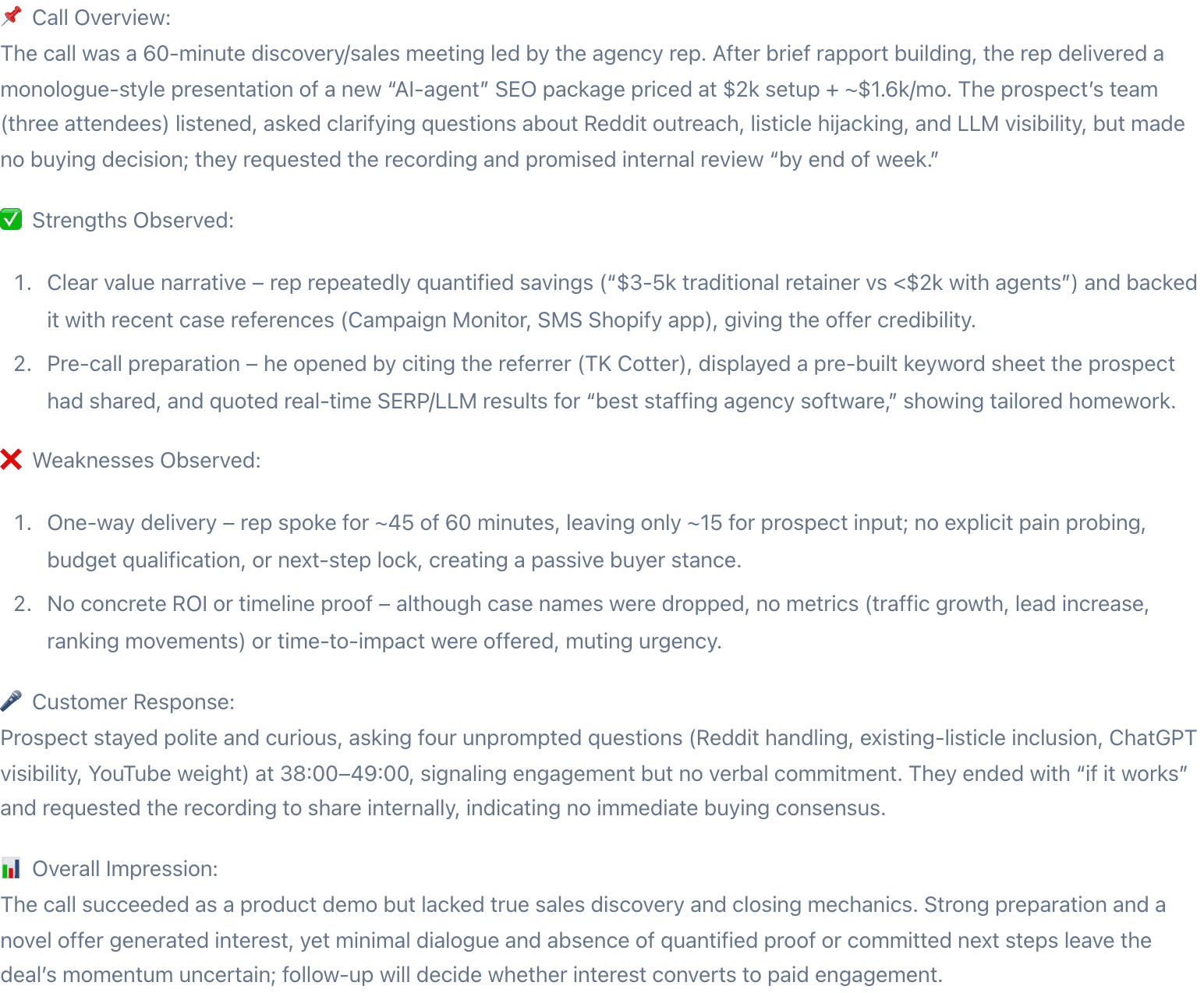 Every call scored automatically
What the rep did well
Exactly where to coach
Every call scored automatically
What the rep did well
Exactly where to coach
This is what practicing on Kendo looks like. The AI buyer pushes hard on SOC 2, ISO 27001, and proof the tool cuts compliance work, and the rep has to handle it on the spot, before any of it lands on a live deal.
Kendo AI vs. Jiminny: The Key Differences
| Feature | Kendo AI | Jiminny |
|---|---|---|
| Pricing | Public: from $55/mo per seat | From $42/mo Insights, $83/mo Recording seats (Jiminny FAQ) |
| Contract | Monthly or annual, no lock-in | 12-month minimum plus one-time setup fee (Jiminny FAQ) |
| AI roleplay | Native, low-latency AI prospects across 40+ languages | Not offered; records and analyzes live calls |
| Call review | Automated scoring on every call against custom scorecards | Conversation intelligence on recorded calls |
| The loop | Train before the call, review after, assign targeted practice | Reviews the call after it happens |
| Setup | Self-serve, usable the same day | Setup fee and onboarding before value |
Kendo's edge is practice plus review in one system. Reps drill against AI buyers that raise real objections, push back on price, and respond like actual prospects. Then every live call is scored against your scorecards, and Kendo assigns targeted training to fix whatever is still going wrong.
Key Features
- Live AI roleplay. Reps practice on AI prospects instead of burning real leads, with objections that feel like the calls they take every day. It is one of the strongest options for practicing realistic buyer conversations before the live call.
- Custom prospect builder. Describe the buyer, industry, call type, and objective in plain language and get a practice scenario in seconds, in 40+ languages.
- Automated call reviews. Your custom scorecards applied to every recorded call, with strengths, weaknesses, and trends per rep and no manager bottleneck.
- The coaching loop. Kendo Agent surfaces which rep needs which drill, assigns it, and tracks whether scores actually improve.
- Connects to your stack. Native call ingestion from Zoom and note-takers like Fathom and Fireflies, plus an open Push API for HubSpot, Salesloft, Gong, dialers, and custom systems.
Kendo Pricing Starts at $55/Month
Kendo publishes its pricing, which is the whole point next to a quote-only or lock-in incumbent. Plans are per seat, billed monthly or annually, with roughly 17% off for annual billing (two months free). Kendo reports customer outcomes of 5 to 15% higher close rates and about 70% faster ramp, which tends to cover the cost inside the first month.
| Pro $55/mo per seat | Max $100/mo per seat | Enterprise Custom |
|---|---|---|
| AI roleplay, AI call reviews, advanced metrics, AI sales manager, 180 roleplay minutes/mo per seat. Best for solo reps or small teams. | Everything in Pro, with 480 roleplay minutes/mo per seat. Best for teams that want maximum usage. | Everything in Max, plus a human account manager, custom AI models, custom scoring, and VIP support. Built for teams of 10+. |
See full plan details on the Kendo pricing page.
 Customer Story · Globe Life
Globe Life Nearly Doubled New-Agent Close Rates by Training Before the Call
Globe Life's life-insurance team was burning leaders' time on manual roleplays, and brand-new agents were starting at only 30 to 33% close rates because they weren't getting enough reps before live calls. New agents moved that practice into Kendo, drilling the script, rebuttals, and appointment booking, and getting graded on each pass.
Result: new-agent close rate went from 33% to 60%+, nearly doubled, on the same leads, in one of Kendo's earliest deployments.
"Our closing rate for brand new agents has been almost close to double with the use of Kendo just because they're getting that repetition, they're getting the rebuttals, they have the practice."Jess Chang, Partner, Globe Life
When a CI Suite Beats Kendo
Here's the honest boundary. Kendo is built to make reps better and review the calls they run. It is not a full revenue-intelligence platform.
If your real need is pipeline-wide deal intelligence, revenue forecasting, and call analytics across a large enterprise, a dedicated CI suite like Gong, Chorus by ZoomInfo, or Clari Copilot will go deeper than Kendo on that specific job. If you run a large contact center that needs QA scoring on 100% of support interactions, Observe.AI is the more natural fit. Kendo wins when the bottleneck is rep skill and ramp, not reporting.
Gong: The Enterprise Revenue Intelligence Standard
The category benchmark for deal and revenue intelligence, and the upgrade most teams measure against.
Gong is the category benchmark for revenue intelligence. It captures calls, emails, and meetings, then applies AI to surface deal risk, forecast revenue, and find coaching moments at enterprise scale. For teams that want more deal intelligence than Jiminny and have the budget, Gong is the upgrade most of them measure against.
Against Jiminny: Gong goes deeper on pipeline and deal intelligence and is built for larger orgs, but it is heavier and pricier, and it does not publish pricing the way Jiminny publishes seat rates. Both analyze calls after the fact rather than training reps beforehand.
Key Features
- Deep conversation intelligence across calls and emails, with topic, sentiment, and objection tracking.
- Revenue forecasting built on interaction signals rather than manual CRM entry.
- Deal intelligence that flags risks like a silent economic buyer.
- Enterprise integrations with Salesforce, HubSpot, Dynamics, Slack, Zoom, and Teams.
Pricing: Gong vs. Jiminny vs. Kendo
| Gong | Jiminny | Kendo AI (for reference) | |
|---|---|---|---|
| Public pricing | No; quote only (Gong pricing page) | Seat pricing on FAQ | Yes; from $55/mo per seat |
| Starting point | Quote; per-user plus platform fee | From $42/mo Insights, $83/mo Recording (Jiminny FAQ) | $55/mo Pro, $100/mo Max |
| Contract | Annual, often multi-year | 12-month minimum plus setup fee | Monthly or annual, no lock-in |
Gong figures are third-party reported; Gong quotes privately. Jiminny seat pricing is from its FAQ. Kendo pricing is first-party from kendo.ai.
Heads up · Based on user reviews
- Built for scale: the economics are hard to justify under roughly 20 reps.
- Platform fee on top of seats: reviewers report a mandatory platform fee separate from per-user licenses.
- Quote-only pricing means a sales cycle before you see real numbers.
For a closer look, compare what teams choose when they move beyond Gong, then read the head-to-head Kendo vs. Gong comparison.
Chorus by ZoomInfo: Conversation Intelligence for ZoomInfo Customers
A mature CI product that pulls ZoomInfo contact and company data into the conversation record.
Chorus is ZoomInfo's conversation-intelligence product. It records and analyzes calls, runs a mature tracker system, and pulls ZoomInfo contact and company data into the conversation record. If your team already lives in ZoomInfo, that data tie-in is a real advantage.
Against Jiminny: Chorus makes the most sense when you're standardizing on ZoomInfo's SalesOS. As a standalone Jiminny swap it is usually bought inside a broader ZoomInfo bundle, so pricing is bundle-dependent rather than the clean seat rates Jiminny lists. Teams not committed to that ecosystem can compare standalone options built around the same coaching signals.
Key Features
- Call recording and transcription with a mature tracker and theme system.
- ZoomInfo data enrichment tied into the conversation record.
- Deal and pipeline signals across recorded conversations.
- CRM sync to Salesforce and HubSpot.
Pricing: Chorus by ZoomInfo vs. Jiminny vs. Kendo
| Chorus by ZoomInfo | Jiminny | Kendo AI (for reference) | |
|---|---|---|---|
| Public pricing | No; typically via ZoomInfo bundle | Seat pricing on FAQ | Yes; from $55/mo per seat |
| Starting point | Quote, folded into a ZoomInfo contract | From $42/mo Insights, $83/mo Recording (Jiminny FAQ) | $55/mo Pro, $100/mo Max |
| Contract | Annual, bundle-dependent | 12-month minimum plus setup fee | Monthly or annual, no lock-in |
Chorus pricing is bundle-dependent and reported via ZoomInfo; Jiminny seat pricing is from its FAQ. Kendo pricing is first-party.
Heads up · Based on user reviews
- Bundle pricing: value depends heavily on already buying ZoomInfo.
- No public rate card: expect a sales conversation and bundle math.
- Analysis, not practice: like Jiminny, it grades calls rather than training reps first.
Clari Copilot: Conversation Intelligence Plus Forecasting
The conversation-intelligence layer inside Clari's revenue platform, wired into forecasting.

Clari Copilot (formerly Wingman) is the conversation-intelligence layer inside Clari's revenue platform. It records and analyzes calls, then feeds that signal into Clari's forecasting and pipeline tooling. For teams that want CI and forecasting from one vendor, that combination is the draw.
Against Jiminny: Copilot is the better fit when forecasting and revenue operations sit at the center of your stack, not just call coaching. The tradeoff is that pricing is sales-led rather than the transparent seat rates Jiminny publishes. Teams that do not need the full forecasting suite can compare lighter ways to combine conversation and pipeline signals.
Key Features
- Real-time call recording and analysis with battlecards and cues.
- Forecasting and pipeline through the broader Clari platform.
- Deal and conversation signals unified in one revenue view.
- CRM sync to Salesforce and HubSpot.
Pricing: Clari Copilot vs. Jiminny vs. Kendo
| Clari Copilot | Jiminny | Kendo AI (for reference) | |
|---|---|---|---|
| Public pricing | No; sales-led quote (Clari) | Seat pricing on FAQ | Yes; from $55/mo per seat |
| Starting point | Quote, tied to the Clari platform | From $42/mo Insights, $83/mo Recording (Jiminny FAQ) | $55/mo Pro, $100/mo Max |
| Contract | Annual | 12-month minimum plus setup fee | Monthly or annual, no lock-in |
Clari Copilot pricing is sales-led; Jiminny seat pricing is from its FAQ. Kendo pricing is first-party.
Heads up · Based on user reviews
- Platform buy: the full value assumes you also want Clari's forecasting stack.
- Quote-only pricing with no public rate card.
- CI, not training: it analyzes live calls and does not run pre-call roleplay.
 Across Kendo customers: new-hire close rates from 33% to 60%+, reps ramp 75% faster, and a 5-20% production lift.
See the results →
Across Kendo customers: new-hire close rates from 33% to 60%+, reps ramp 75% faster, and a 5-20% production lift.
See the results →
Avoma: Mid-Market Conversation Intelligence Without the Enterprise Tax
Best transparent pricingJiminny-grade conversation intelligence with public per-seat pricing, a free tier, and no lock-in.
Avoma is an AI meeting assistant and conversation-intelligence platform built for customer-facing teams at startups and scaleups. It bundles recording, transcription, AI notes, and revenue intelligence at price points that work for teams of 10 to 50 reps, and it is the alternative most often cited for Jiminny-grade capability with public pricing.
Against Jiminny: the headline difference is transparency and commitment. Avoma publishes per-seat pricing, offers a free tier, and does not require a 12-month minimum or a setup fee, which removes the exact friction that sends people looking past Jiminny. Buyers who want the same mid-market accessibility with a different feature mix can compare other options with similar meeting and coaching coverage.
Key Features
- AI meeting assistant that records, transcribes, and writes notes and action items.
- Conversation-intelligence add-on with scorecards, talk-pattern insights, and keyword tracking.
- Revenue-intelligence add-on for forecasting and methodology tracking.
- CRM sync to Salesforce and HubSpot within minutes.
Pricing: Avoma vs. Jiminny vs. Kendo
| Avoma | Jiminny | Kendo AI (for reference) | |
|---|---|---|---|
| Public pricing | Yes (Avoma pricing) | Seat pricing on FAQ | Yes |
| Starting price | Plus $40/user/mo annual ($50 monthly); Premium $70 annual ($90 monthly); free Basic | From $42/mo Insights, $83/mo Recording (Jiminny FAQ) | $55/mo Pro, $100/mo Max |
| Contract | Monthly or annual | 12-month minimum plus setup fee | Monthly or annual, no lock-in |
Avoma and Kendo figures are first-party; Jiminny seat pricing is from its FAQ. Verified July 22, 2026.
Heads up · Based on user reviews
- Add-ons stack up: conversation and revenue intelligence are paid on top of the base seat, so the real cost lands above the $40 headline.
- Notetaker reliability: the recurring gripe is the bot occasionally failing to join.
- Not a training tool: it analyzes calls rather than drilling reps beforehand.
Dialpad Ai Sales: Conversation Intelligence Inside Your Phone System
Conversation intelligence built directly into a cloud dialer, scored in the same tool that places the call.
Dialpad Ai Sales builds conversation intelligence directly into its cloud telephony. Reps dial from Dialpad, and the platform transcribes calls live, surfaces real-time assist cues, and scores conversations, all in the same tool that places the call.
Against Jiminny: Dialpad is the better fit when you want the phone system and CI in one place rather than a standalone analyzer bolted onto Zoom or Meet. If your team runs on video meetings instead of a dialer, Jiminny or a meeting-native tool covers more of your calls.
Key Features
- Native cloud dialer with live transcription.
- Real-time assist cards that surface answers mid-call.
- AI CSAT and scoring across conversations.
- CRM integrations with Salesforce and HubSpot.
Pricing: Dialpad Ai Sales vs. Jiminny vs. Kendo
| Dialpad Ai Sales | Jiminny | Kendo AI (for reference) | |
|---|---|---|---|
| Public pricing | Credit-based, sales-led (Dialpad pricing) | Seat pricing on FAQ | Yes; from $55/mo per seat |
| Starting point | Conversation-based pricing via AI Agent Credits | From $42/mo Insights, $83/mo Recording (Jiminny FAQ) | $55/mo Pro, $100/mo Max |
| Contract | Annual | 12-month minimum plus setup fee | Monthly or annual, no lock-in |
Dialpad pricing is credit-based and sales-led; Jiminny seat pricing is from its FAQ. Kendo pricing is first-party.
Heads up · Based on user reviews
- Telephony first: the CI is strongest when you also adopt Dialpad as your phone system.
- Credit-based pricing can be harder to forecast than flat per-seat rates.
- Coaching is lighter than a dedicated training platform.
Zoom Revenue Accelerator: Conversation Intelligence for Zoom-First Teams
Zoom's native CI add-on, keeping deal and sentiment signals inside the environment your team already uses.
Zoom Revenue Accelerator is Zoom's conversation-intelligence add-on for Zoom Meetings. It records and analyzes sales calls, surfaces deal and sentiment signals, and keeps everything inside the Zoom environment your team already uses.
Against Jiminny: if your calls happen almost entirely on Zoom, keeping CI native to Zoom is convenient and avoids a second bot. Jiminny is the broader pick if you also run heavily on Google Meet or Teams and want deeper coaching workflows.
Key Features
- Native Zoom Meetings capture with no separate recorder bot.
- Deal and sentiment analytics across recorded calls.
- Conversation and competitor tracking inside Zoom.
- CRM sync to Salesforce and HubSpot.
Pricing: Zoom Revenue Accelerator vs. Jiminny vs. Kendo
| Zoom Revenue Accelerator | Jiminny | Kendo AI (for reference) | |
|---|---|---|---|
| Public pricing | No US MSRP published; UK public-sector reference £58.46/user/mo (G-Cloud), indicative only | Seat pricing on FAQ | Yes; from $55/mo per seat |
| Starting point | Add-on to Zoom; quote for US | From $42/mo Insights, $83/mo Recording (Jiminny FAQ) | $55/mo Pro, $100/mo Max |
| Contract | Annual, add-on to Zoom | 12-month minimum plus setup fee | Monthly or annual, no lock-in |
The only clean public Zoom number is a UK public-sector reference, not a US rate; Jiminny seat pricing is from its FAQ. Kendo pricing is first-party.
Heads up · Based on user reviews
- Zoom-centric: value drops if a lot of your calls happen off Zoom.
- US pricing is opaque: the only clean public number is a UK public-sector reference, not a US rate.
- Analysis, not practice: it reviews calls and does not run roleplay.
Fireflies.ai: Low-Cost Meeting Capture with CI Features
A low-cost meeting assistant that trades enterprise deal intelligence for breadth of integrations.
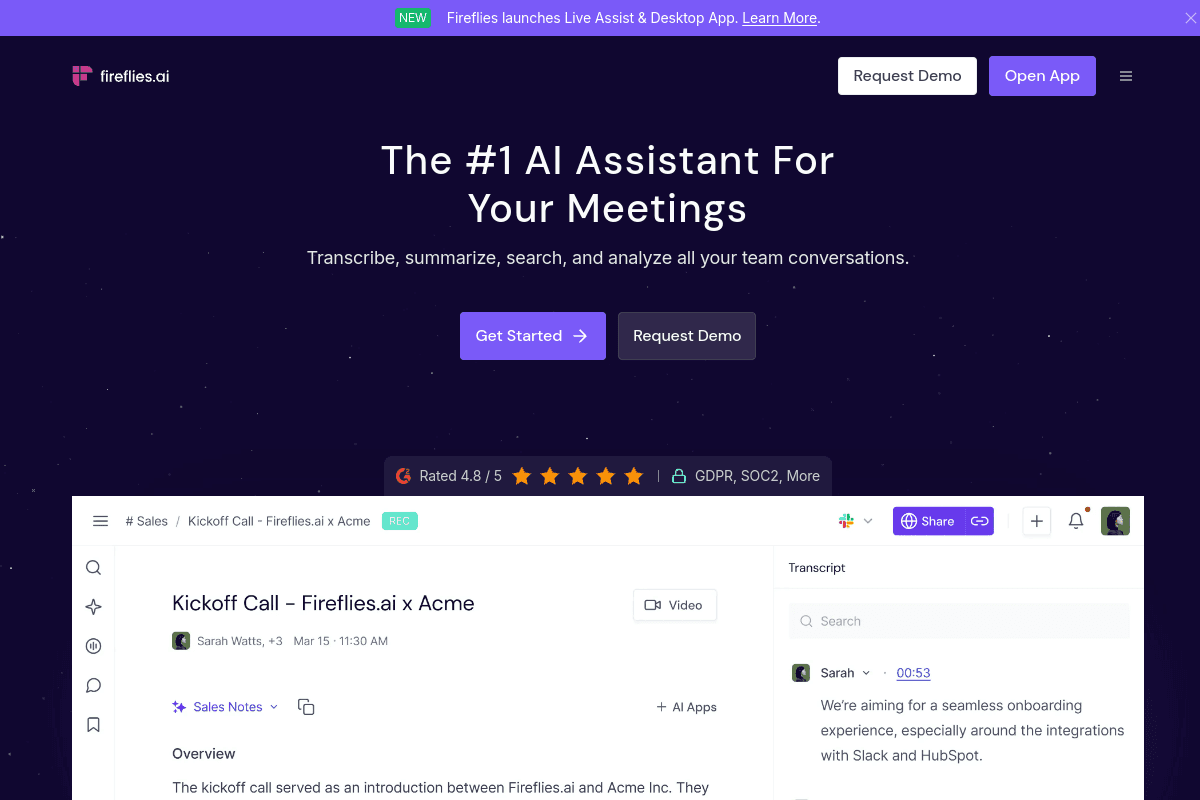
Fireflies.ai is an AI meeting assistant that joins calls, transcribes them, generates summaries, and pushes data to your CRM and project tools. It trades enterprise deal intelligence for breadth of integrations and a very low price, which makes it a favorite for small teams.
Against Jiminny: Fireflies is a fraction of the cost and integrates almost everywhere, but it is a notetaker, not a coaching suite. It fits when you mostly want transcripts and summaries flowing into your stack, not structured rep coaching. It covers Zoom, Meet, and Teams, so you won't lose meeting coverage on the switch.
Key Features
- Auto-join bot for Zoom, Teams, and Google Meet.
- Ask Fred copilot to query meeting history in natural language.
- Broad integrations with Salesforce, HubSpot, and Pipedrive.
- Basic conversation intelligence with sentiment and talk-time ratios.
Pricing: Fireflies.ai vs. Jiminny vs. Kendo
| Fireflies.ai | Jiminny | Kendo AI (for reference) | |
|---|---|---|---|
| Public pricing | Yes (Fireflies help center) | Seat pricing on FAQ | Yes |
| Starting price | Free; Pro $10/seat/mo annual ($18 monthly); Business $19/seat/mo annual ($29 monthly) | From $42/mo Insights, $83/mo Recording (Jiminny FAQ) | $55/mo per seat |
| Enterprise | $39/seat/mo, annual | Quote; 12-month minimum | Custom |
Fireflies and Kendo figures are first-party; Jiminny seat pricing is from its FAQ. Verified July 22, 2026.
Heads up · Based on user reviews
- Notetaker, not CI: it lacks the deeper coaching and deal analytics Jiminny offers.
- Free tier is limited: AI summaries and storage are capped on lower plans.
- Accuracy dips with heavy accents and crosstalk.
Fathom: Free Meeting Recording for Individuals and Small Teams
One of the most generous free tiers in the category for clean recording and fast AI summaries.
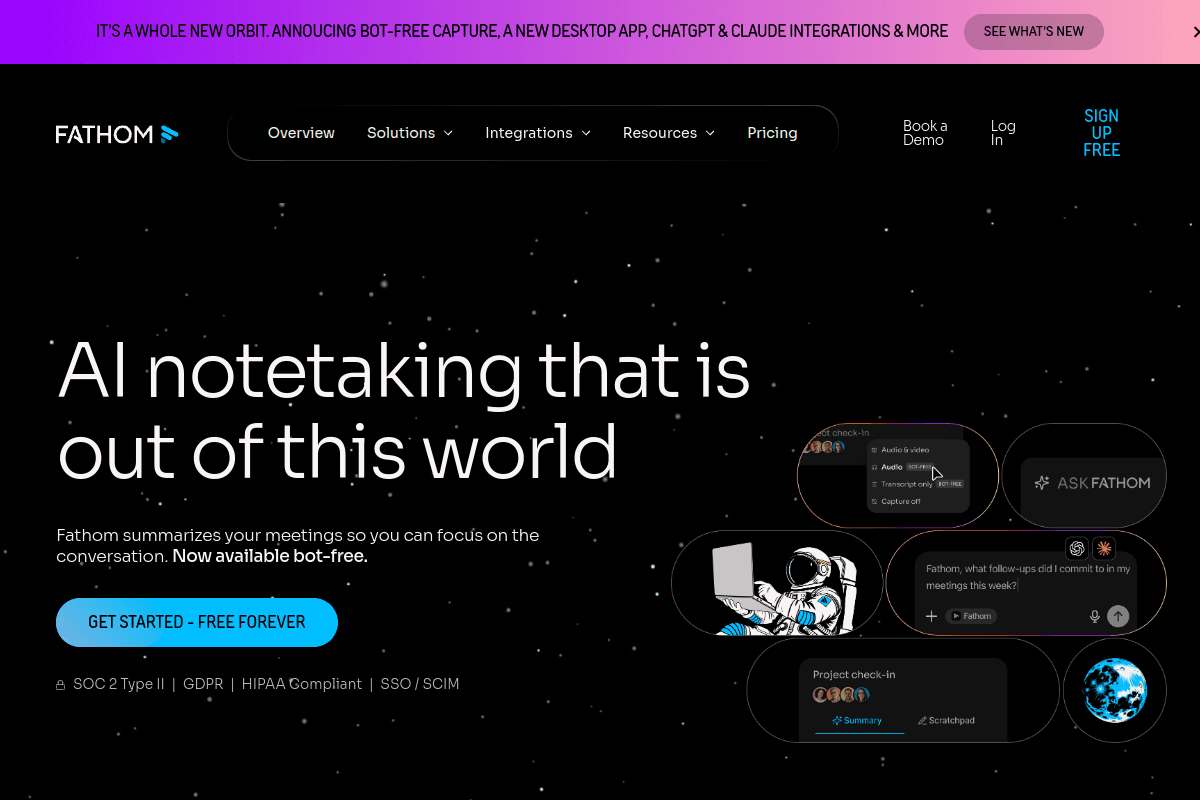
Fathom is an AI meeting recorder with one of the most generous free tiers in the category. It records, transcribes, highlights, and summarizes Zoom, Google Meet, and Teams calls, with fast AI summaries after each call.
Against Jiminny: for individuals and small teams that don't need coaching workflows or deal intelligence, Fathom covers the day-to-day recording and summary job at little or no cost. It is not a like-for-like CI or coaching replacement, but it nails clean notes.
Key Features
- Fast AI summaries delivered shortly after a call ends.
- Ask Fathom natural-language search across meetings.
- Clean recording across Zoom, Meet, and Teams.
- CRM sync on paid tiers to HubSpot and Salesforce.
Pricing: Fathom vs. Jiminny vs. Kendo
| Fathom | Jiminny | Kendo AI (for reference) | |
|---|---|---|---|
| Public pricing | Yes; verify current tiers (Fathom pricing) | Seat pricing on FAQ | Yes |
| Starting price | Free; paid from about $15/user/mo, with higher tiers near $19 to $29/user/mo (verify) | From $42/mo Insights, $83/mo Recording (Jiminny FAQ) | $55/mo per seat |
| Contract | Monthly or annual | 12-month minimum plus setup fee | Monthly or annual, no lock-in |
Fathom tiers have shifted, so confirm current rates before you buy; Jiminny seat pricing is from its FAQ. Kendo pricing is first-party.
Heads up · Based on user reviews
- Notetaker scope: less deal intelligence and coaching than Jiminny.
- Summaries need a check: AI notes occasionally need a quick accuracy review.
- Verify pricing: tier numbers have shifted, so confirm current rates before you buy.
MeetGeek: Budget Meeting Assistant with CRM Sync
A budget-friendly notetaker that records, summarizes, and syncs meeting output to your CRM.
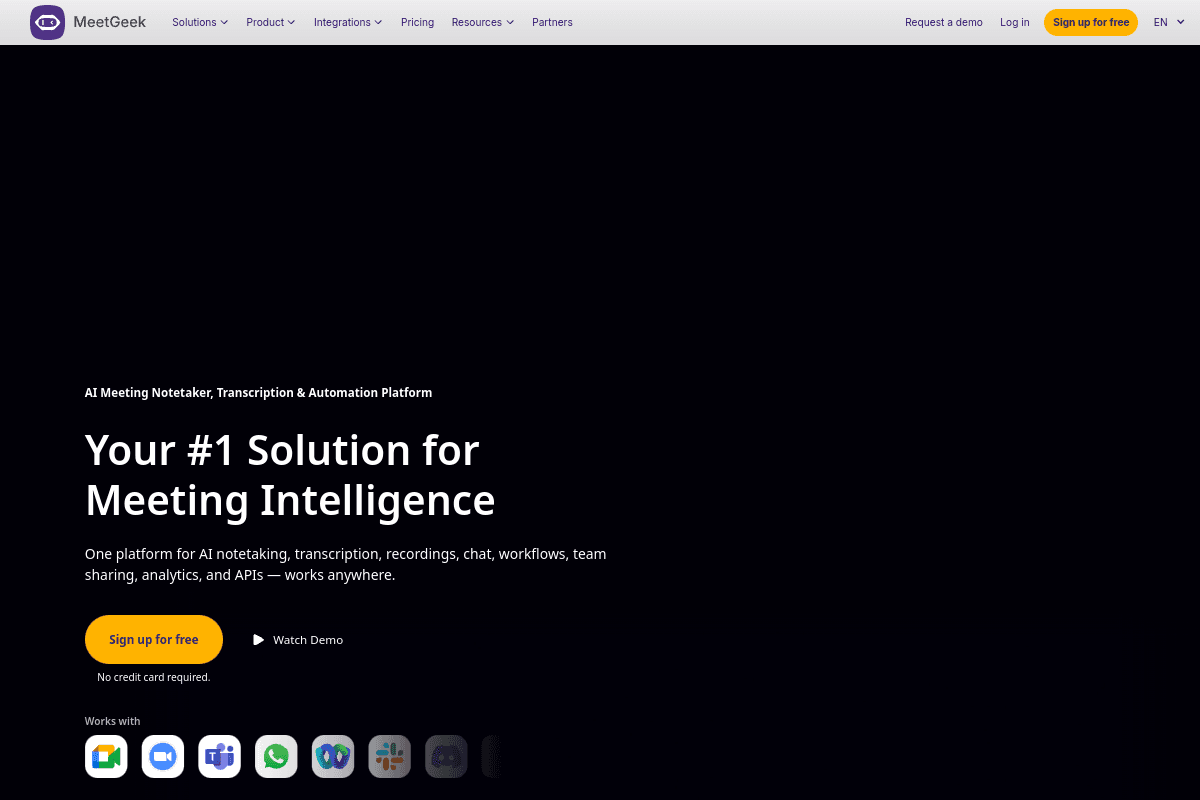
MeetGeek is a budget-friendly AI meeting assistant that records, transcribes, and summarizes calls, then syncs the output to your CRM and tools. It is aimed at small teams that want automated notes and light conversation insights without a big platform commitment.
Against Jiminny: MeetGeek is lighter and cheaper, with a free entry tier and simple paid plans, but it is a notetaker with CRM sync rather than a coaching and CI platform. It fits teams that want summaries in the CRM more than structured rep development.
Key Features
- Automated recording and summaries across major meeting tools.
- CRM sync to push notes and highlights automatically.
- Meeting templates for consistent summaries.
- Basic conversation insights and highlights.
Pricing: MeetGeek vs. Jiminny vs. Kendo
| MeetGeek | Jiminny | Kendo AI (for reference) | |
|---|---|---|---|
| Public pricing | Yes; tiered plans including a free tier, verify current numbers (MeetGeek pricing) | Seat pricing on FAQ | Yes; from $55/mo per seat |
| Starting point | Free tier plus low-cost paid plans (confirm live) | From $42/mo Insights, $83/mo Recording (Jiminny FAQ) | $55/mo Pro, $100/mo Max |
| Contract | Monthly or annual | 12-month minimum plus setup fee | Monthly or annual, no lock-in |
Confirm MeetGeek's live tier numbers before you budget; Jiminny seat pricing is from its FAQ. Kendo pricing is first-party.
Heads up · Based on user reviews
- Light on coaching: it is a notetaker with CRM sync, not a coaching suite.
- Confirm current pricing: verify live tier numbers before you budget.
- Basic insights: conversation analytics are thinner than dedicated CI tools.
Salesken.ai: Real-Time Guidance and CI for Outbound Teams
Real-time conversation cues and call scoring for high-volume outbound and inside-sales teams.
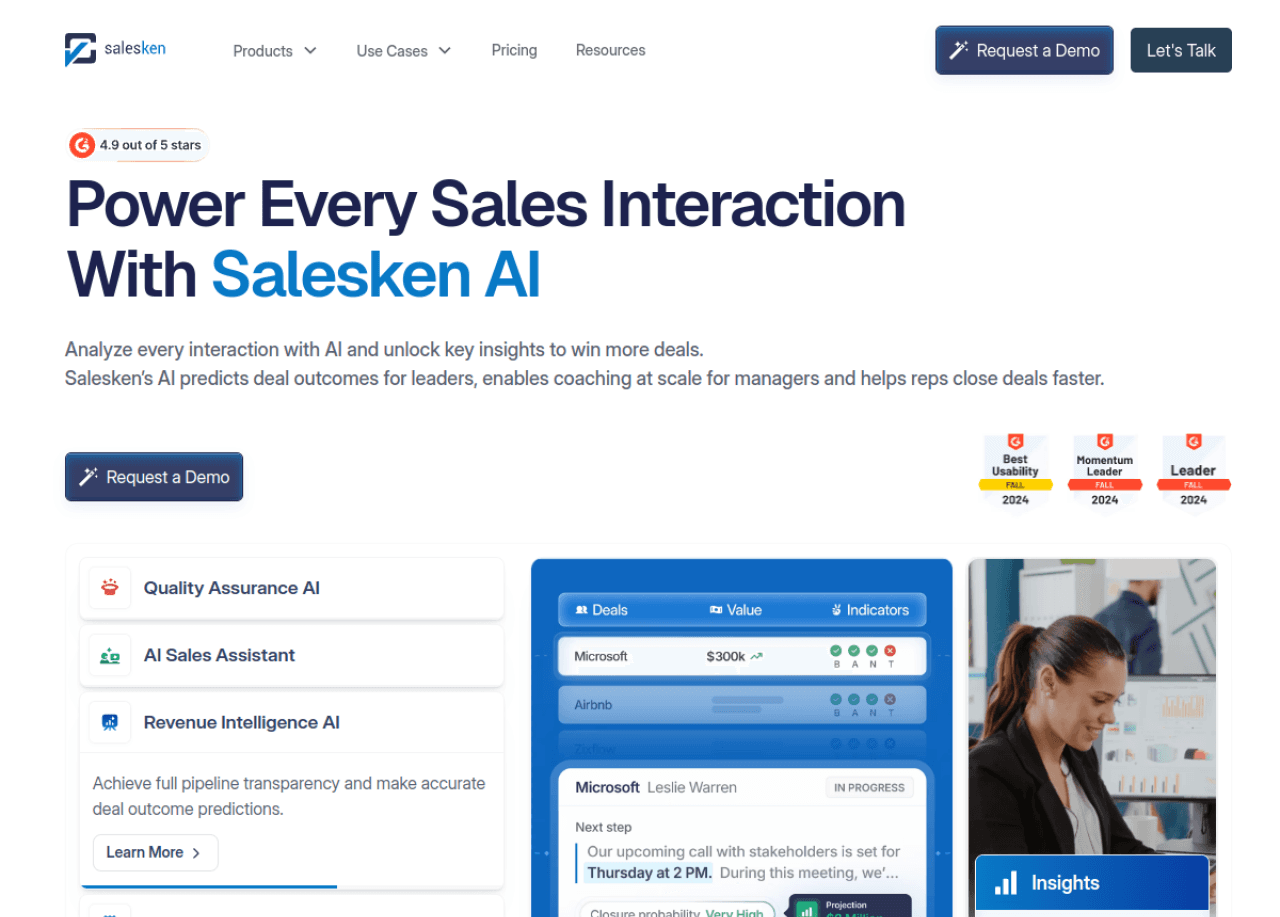
Salesken.ai focuses on real-time conversation guidance and coaching for outbound and inside-sales teams. It analyzes live calls, prompts reps mid-conversation, and scores calls against your playbook, with an emphasis on high-volume calling environments.
Against Jiminny: Salesken leans harder into real-time cues and outbound coaching, which suits SDR-heavy teams. Pricing is sales-led rather than the published seat rates Jiminny lists, so budgeting takes a conversation.
Key Features
- Real-time cues that prompt reps during live calls.
- Call scoring against your sales playbook.
- Conversation analytics for talk ratios and objections.
- CRM integrations for activity and outcomes.
Pricing: Salesken.ai vs. Jiminny vs. Kendo
| Salesken.ai | Jiminny | Kendo AI (for reference) | |
|---|---|---|---|
| Public pricing | No; sales-led quote (vendor site) | Seat pricing on FAQ | Yes; from $55/mo per seat |
| Starting point | Quote, tied to team size and use case | From $42/mo Insights, $83/mo Recording (Jiminny FAQ) | $55/mo Pro, $100/mo Max |
| Contract | Annual | 12-month minimum plus setup fee | Monthly or annual, no lock-in |
Salesken pricing is sales-led with no public rate card; Jiminny seat pricing is from its FAQ. Kendo pricing is first-party.
Heads up · Based on user reviews
- Outbound focus: strongest for SDR and high-volume calling, less for complex B2B cycles.
- Quote-only pricing with no public rate card.
- Real-time cues need tuning to your playbook to feel useful.
Observe.AI: Contact-Center-Grade QA and Conversation Intelligence
Automated QA and conversation intelligence across high volumes of contact-center interactions.
Observe.AI is built for contact centers, applying conversation intelligence and automated QA across large volumes of support and sales interactions. It scores calls, automates quality assurance, and drives agent coaching at call-center scale.
Against Jiminny: Observe.AI is the right tool if you run a high-volume contact center that needs QA on most or all interactions. For a focused B2B sales team, it is more platform than the job requires, and pricing is contract-based.
Key Features
- Automated QA across a high volume of interactions.
- Conversation intelligence with sentiment and compliance signals.
- Agent coaching workflows tied to QA scores.
- Contact-center integrations and reporting.
Pricing: Observe.AI vs. Jiminny vs. Kendo
| Observe.AI | Jiminny | Kendo AI (for reference) | |
|---|---|---|---|
| Public pricing | No; contract, via marketplace or sales (AWS Marketplace listing) | Seat pricing on FAQ | Yes; from $55/mo per seat |
| Starting point | Quote, tied to interaction volume and seats | From $42/mo Insights, $83/mo Recording (Jiminny FAQ) | $55/mo Pro, $100/mo Max |
| Contract | Annual | 12-month minimum plus setup fee | Monthly or annual, no lock-in |
Observe.AI pricing is contract-based via marketplace or sales; Jiminny seat pricing is from its FAQ. Kendo pricing is first-party.
Heads up · Based on user reviews
- Contact-center scope: overkill for a focused B2B sales team.
- Contract-based pricing with no public rate card.
- Heavier setup: built for QA at scale, not quick self-serve.
If contact-center coaching is your actual need, compare platforms that turn high-volume QA gaps into targeted practice.
The Verdict: Which Jiminny Alternative Should You Choose?
The honest answer is that it depends on the problem you're actually solving. Three picks cover most teams leaving Jiminny.
- Gong is the clearest upgrade for enterprise teams that want the deepest deal and revenue intelligence and have the budget for a per-seat-plus-platform-fee model. Chorus by ZoomInfo and Clari Copilot are the natural picks when you're standardizing on ZoomInfo or Clari.
- Avoma is the mid-market value choice. You get Jiminny-grade conversation intelligence with public, per-seat pricing and no 12-month minimum, which removes the exact friction that sends people shopping.
- Kendo AI is the choice when your real bottleneck is rep skill and ramp, not call analytics. If reps make the same mistakes call after call and new hires take weeks to get productive, more reports on past calls won't fix it. Kendo trains reps before the call against realistic AI buyers, reviews every call after, and assigns targeted coaching to close the gap. United Insurance Pros cut ramp from a 45-day curve to 14 days and saved $3,000+ per agent per month; Kody Skvarla's team saw a 5% to 20% lift and roughly doubled monthly production.
If rep readiness is the reason you're leaving, compare which practice engines make readiness measurable before you commit.
Ready to see the train-before, review-after loop in action? See Kendo pricing to compare it against your current Jiminny quote, or read more customer results.
Jiminny Alternatives FAQ
It depends on why you're leaving. For enterprise deal intelligence, Gong is the most-cited upgrade. For mid-market conversation intelligence with public pricing, Avoma is hard to beat. For teams whose real problem is rep readiness and ramp, Kendo AI is the standout because it trains reps with AI roleplay before the call and reviews every call after, rather than only analyzing what already happened.
Hard to compare directly, because Gong, Chorus by ZoomInfo, and Clari Copilot don't publish standard pricing. Jiminny does publish seat rates (from $42/month for Insights seats and $83/month for Recording seats) but requires a 12-month minimum and a setup fee. The enterprise CI suites are quote-only and typically cost more per seat once bundled. Kendo publishes $55/month per seat with no lock-in for a clean point of comparison.
Usually not. Most alternatives here sync to Salesforce and HubSpot and record Zoom, Google Meet, and Teams, so meeting and CRM coverage carries over. Dialer coverage is the one to check: Dialpad builds CI into its own phone system, while Kendo ingests calls natively from Zoom and note-takers and pulls in dialer and CRM calls through its open Push API.
For transcripts and summaries, yes. For coaching, usually not. Notetakers like Fireflies, Fathom, and MeetGeek capture and summarize calls but don't build rep skill. If the goal is better calls, you need either conversation intelligence with structured coaching, or a training tool like Kendo that drills reps before the call and reviews every call after.
The move itself is mostly reconnecting your CRM and meeting tools and re-creating scorecards or trackers, which is a matter of days for most teams. The bigger question is call history: confirm whether you can export past recordings and libraries before you cancel, since a 12-month contract may still be running. Tools with a free tier or monthly billing let you run a parallel pilot before you fully cut over.
No. Kendo automates the repetitive parts of the job, reviewing every call, scoring against your rubric, assigning targeted practice, and tracking whether reps improve, so managers spend their time on higher-leverage coaching and deals instead of listening to recordings. The manager still owns strategy, judgment, and the human coaching that follows.

Luke Alexander is the founder of Kendo AI, where he's helped train more than 5,000 sales reps. He started in sales as a frontline closer, scaled a high-ticket sales-training company, and founded Closer Cartel and AI Insiders before building Kendo to fix the tools he wished he'd had: realistic AI roleplay and automated call review for fast-moving sales teams. He writes about sales management, ramp speed, coaching, and applying AI across the revenue org.