15 Best Call Center Training Software Platforms for 2026
Quality assurance scores a call. It does not change what the agent does on the next one. We scored 15 call center training platforms on how well they close the loop from a scored interaction to targeted practice, then back to a measurable result.
Quality assurance scores a call. It does not change what the agent does on the next one. That gap is the whole problem with most call center training software, and it is why QA coverage can hit 100% while CSAT, AHT, and first-call resolution stay flat.
If you run a 50 to 2,000-seat contact center and you are picking a 2026 training stack, you already know the pain: new hires take too long to reach baseline performance, attrition is brutal, and coaching lives in a spreadsheet nobody opens. Generic "best call center software" lists do not help, because they rank telephony and routing, not training.
So we scored 15 platforms on one thing: how well they close the loop from a scored interaction to targeted practice on the same standard, then back to a measurable result. Below is the CC-TRAIN rubric we used, a 15-tool comparison table, and the buyer profile each pick actually fits.
Most call center training tools only score calls, which is roughly 20% of the job. For sales-oriented, outbound, and hybrid centers, Kendo AI is the top pick because it runs the whole loop: it reviews live calls, assigns AI-roleplay practice against the exact gap, and scores that practice on the same rubric, with pricing you can see up front. If your core job is pure inbound workforce management at enterprise scale, a full CCaaS or WEM suite (numbers 11 to 15) does a different job that training rides on top of.
How To Choose Call Center Training Software (The CC-TRAIN Rubric)
Most buyers compare feature checklists and end up with tool sprawl: a QA suite here, an LMS there, a roleplay app nobody adopted. The CC-TRAIN rubric fixes that by scoring each platform on its ability to run the full loop, not just one slice of it.
The Closed Loop That Actually Changes Agent Behavior
A scored call is a diagnosis, not a cure. The number only moves when the score feeds coaching, coaching feeds targeted practice, and that practice is graded on the same rubric as the live call.
Live Call
An agent handles a real customer interaction on voice or chat.
QA Scorecard
Auto-QA scores that interaction against your rubric, at full coverage.
Most tools stop hereCoaching
The scored gap becomes a specific, assigned fix, not a generic note.
Targeted Practice
The agent rehearses that exact scenario, scored on the same rubric.
Score every shortlisted tool on 5 weighted pillars, 0 to 5 each, then weight and total. The name maps to the five pillars: Targeted practice, Review and QA, Assign and coach, Insight, and Native fit.
The CC-TRAIN Fit-Score Rubric
Score each platform 0 to 5 per pillar, multiply by the weight, total out of 5. Targeted Practice and Assign & Coach carry half the weight on purpose, because that is where behavior changes.
| Pillar | Weight | What You're Scoring (0 to 5) |
|---|---|---|
| TTargeted Practice | 25% Heaviest |
Can reps rehearse the exact call, with realistic objections, before they touch a live customer? Simulation and roleplay realism. |
| RReview & QA | 20% |
How much of your interaction volume gets scored, and how well can you calibrate Auto-QA against your own rubric? |
| AAssign & Coach | 25% Heaviest |
When a gap shows up, can a manager assign practice to that exact weakness and track it on the same scorecard used on live calls? |
| IInsight | 15% |
Do the analytics map to CSAT, AHT, FCR, adherence, and compliance, not just activity counts? |
| NNative Fit | 15% |
Integrations with your CCaaS, CRM, and WFM stack, plus honest implementation effort (lower lift scores higher). |
Targeted Practice and Assign & Coach carry half the weight because that is where reps actually get better. A platform that only scores calls is doing 20% of the job. If you want the mechanics of that closed loop, our page on automated sales call reviews and scorecards shows what a single-rubric review-to-practice flow looks like.
Worked example. Score a practice-first tool built around simulation plus scored review: Targeted Practice 5, Review & QA 3, Assign & Coach 5, Insight 4, Native Fit 4. That is (5 x .25) + (3 x .20) + (5 x .25) + (4 x .15) + (4 x .15) = 4.30 out of 5. A full WEM suite usually flips the pattern: strong on Review and Native Fit, weaker on Targeted Practice and same-rubric Assign & Coach, because training rides on top of a workforce platform rather than driving it. Run your own shortlist through the same math and the right pick stops being a matter of opinion.
TL;DR: The 15 Best Call Center Training Platforms At A Glance
Skim this, then read the entries that match your center. "Contact sales" means pricing is not publicly listed as of July 22, 2026. You can also see how we quantify outcomes on the Kendo results page, which gathers the ramp-time and close-rate numbers referenced below.
| # | Tool | Best For | Primary Modality | Channels | Pricing Visibility | Implementation Lift |
|---|---|---|---|---|---|---|
| 1 | Kendo AI TOP PICK | Sales-oriented, outbound, and hybrid centers | Simulation + call review + custom scorecards | Voice | Public ($55-$100/seat) | Low, self-serve |
| 2 | Cresta | AI-forward centers wanting live + practice | Real-time assist + simulator + QM | Voice + digital | Contact sales | High |
| 3 | Observe.AI | QA-led coaching at scale | Auto-QA + coaching + agent copilot | Voice + digital | Contact sales | Medium |
| 4 | Level AI | Omnichannel QA automation | Auto-QA + coaching | Voice + digital | Contact sales | Medium |
| 5 | MaestroQA | BPO and QA-driven programs | QA + AI-assisted coaching | Voice + digital | Contact sales | Medium |
| 6 | Scorebuddy CX | QA plus built-in learning | QA + integrated LMS/coaching | Voice + digital | Tiers listed publicly | Medium |
| 7 | Playvox | Digital-first CX teams | QA + eLearning | Voice + digital | Contact sales | Medium |
| 8 | Centrical | Reinforcement and engagement | Microlearning + gamification + AI role-play | Voice + digital | Contact sales | Medium |
| 9 | Axonify | Frontline knowledge reinforcement | Microlearning / enablement | Voice + digital | Contact sales | Medium |
| 10 | CallMiner Coach | Analytics-heavy centers | Analytics-driven coaching | Voice + digital | Contact sales | High |
| 11 | NICE CXone (Enlighten AI) | Enterprise WEM at scale | Auto-QA + WEM + real-time guidance | Voice + digital | Contact sales | High |
| 12 | Genesys Cloud CX (WEM) | Teams already on Genesys | QA + coaching + performance mgmt | Voice + digital | Contact sales | High |
| 13 | Talkdesk QM | Teams already on Talkdesk | QA + coaching tied to evaluations | Voice + digital | Contact sales | Medium-High |
| 14 | Five9 QM | Teams already on Five9 | QA to coaching workflows | Voice + digital | Contact sales | Medium-High |
| 15 | Verint | Large enterprise WFO programs | QA + coaching/eLearning (WEM) | Voice + digital | Contact sales | High |
Positioning and pricing visibility reflect each vendor's public materials as of July 22, 2026. Numbers 11 through 15 are full CCaaS and WEM suites where training is one module of a much larger workforce platform, ranked lower on training fit, not on quality.
The 15 Best Call Center Training Software Platforms for 2026
The ranking follows the CC-TRAIN weights: the two heaviest pillars are Targeted Practice and Assign & Coach, so a platform that closes the loop from a scored call to scored practice sits above one that only reviews it. The full WEM suites still earn a place for the centers whose real job is workforce management.
Kendo AI
Top Pick, Best OverallThe one platform built around the exact loop the CC-TRAIN rubric rewards: review a real call, find the gap, assign scored roleplay against it, and grade practice on the same rubric as live calls.
Kendo is the one platform on this list built around the exact loop the CC-TRAIN rubric rewards: review a real call, apply a custom scorecard, find the specific weakness, assign targeted AI-roleplay practice against that weakness, then score the practice on the same rubric used live.
What it is: an AI sales training and management suite that runs AI sales roleplay training and automated call review in one place. Reps rehearse against fully customizable AI prospects (call type, product, personality, industry, sales cycle), and managers score both practice and live calls 1 to 100 on scorecards they build.
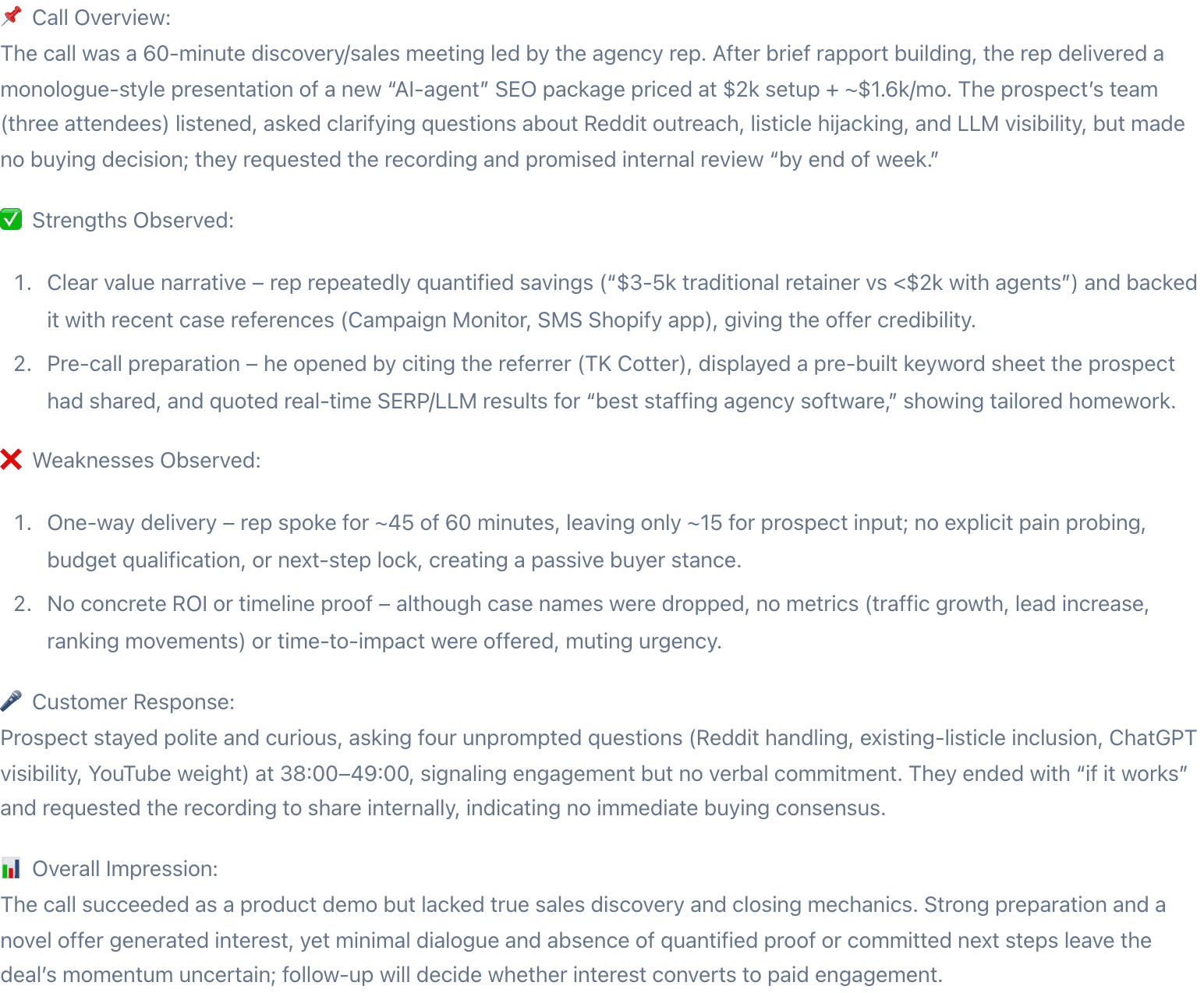
Kendo Reviews Every Call and Pinpoints Exactly What to Coach
Kendo applies custom 1-to-100 scorecards mapped to your call types and returns summaries, strengths, weaknesses, and sentiment. That single scored review is the pivot of the whole loop: it turns a call into a named gap a manager can assign practice against tomorrow.
 Every interaction scored
Strengths on your rubric
Exactly where to coach
Every interaction scored
Strengths on your rubric
Exactly where to coach
This is what practicing on Kendo looks like. The AI buyer pushes hard on SOC 2, ISO 27001, and proof the tool cuts compliance work, and the rep has to handle it on the spot, before any of it lands on a live call.
Where it wins against the rubric:
- Targeted Practice (5): reps can practice full calls or objections-only, in 40+ languages, with low-latency human-like voice. If simulation depth is your priority, our roundup of the practice engines ranked by buyer realism goes deeper on realism.
- Assign & Coach (5): when a review flags a gap, managers assign practice by score target or training-time target, and the AI coach returns prioritized fixes on the call itself.
- Insight (strong): rep profiles track call history, roleplay scores, missed opportunities, and trends, so training maps to outcomes rather than activity.
The honest fit: Kendo is best for centers that sell, meaning outbound, inside sales, and hybrid support-and-sell teams, not pure inbound WFM shops that need scheduling and adherence forecasting. If your core job is workforce management at 2,000 inbound seats, a suite lower on this list does something Kendo does not.
The proof is in sales-led centers. Globe Life's brand-new agents went from around 33% to over 60% close rates in six months of Kendo practice. United Insurance Pros cut new-agent onboarding from 30 days to 24 hours, with reps hitting baseline in 14 days instead of 45-plus, saving over $3,000 per rep in wasted leads. Kody Skvarla's insurance team saw a 5 to 20% close-rate lift and roughly doubled monthly production.
Pricing (public, as of July 22, 2026): Pro is $55/mo per seat with 180 roleplay minutes, Max is $100/mo per seat with 480 roleplay minutes, and Enterprise is custom for teams of 10 or more. Consistent seat-plus-usage pricing makes it one of the few tools here you can budget without a sales call.
| Pro $55/mo per seat | Max $100/mo per seat | Enterprise Custom |
|---|---|---|
| AI call review, AI roleplay, custom scorecards, advanced analytics, 180 roleplay minutes per seat each month | Everything in Pro, 480 roleplay minutes per seat each month, for centers that want maximum practice volume | Teams of 10+, custom AI models, custom scoring, done-for-you setup, dedicated account manager |
Best for: Outbound, inside-sales, and hybrid support-and-sell contact centers that need measurable agent improvement in weeks and want to see what they're paying before they commit.
United Insurance Pros Cut New-Agent Onboarding From 30 Days to Under 24 Hours
Running the full loop, scoring live calls and assigning targeted practice against each gap, turned agent onboarding from a slow drift into a measured curve. New agents hit baseline in 14 days instead of 45+, and onboarding setup that used to take 30 days now takes under 24 hours.
Result: A 7-day ramp-up plus 7 days to baseline performance equals 14 days total vs 45+ days before, with onboarding setup down from 30 days to under 24 hours and over $3,000 per rep saved in wasted leads.
"Typically we would see about a 45-day period where people would dip their foot in the water and slowly improve and then level off at their performance level. Now that's 14 days. So it's the 7-day ramp-up and then 7 days to be where they're going to be at their baseline."Waylon Artrip, Founder, United Insurance Pros
Cresta
Best for AI-Forward CentersReal-time agent assist paired with a practice simulator and quality management in one enterprise system.
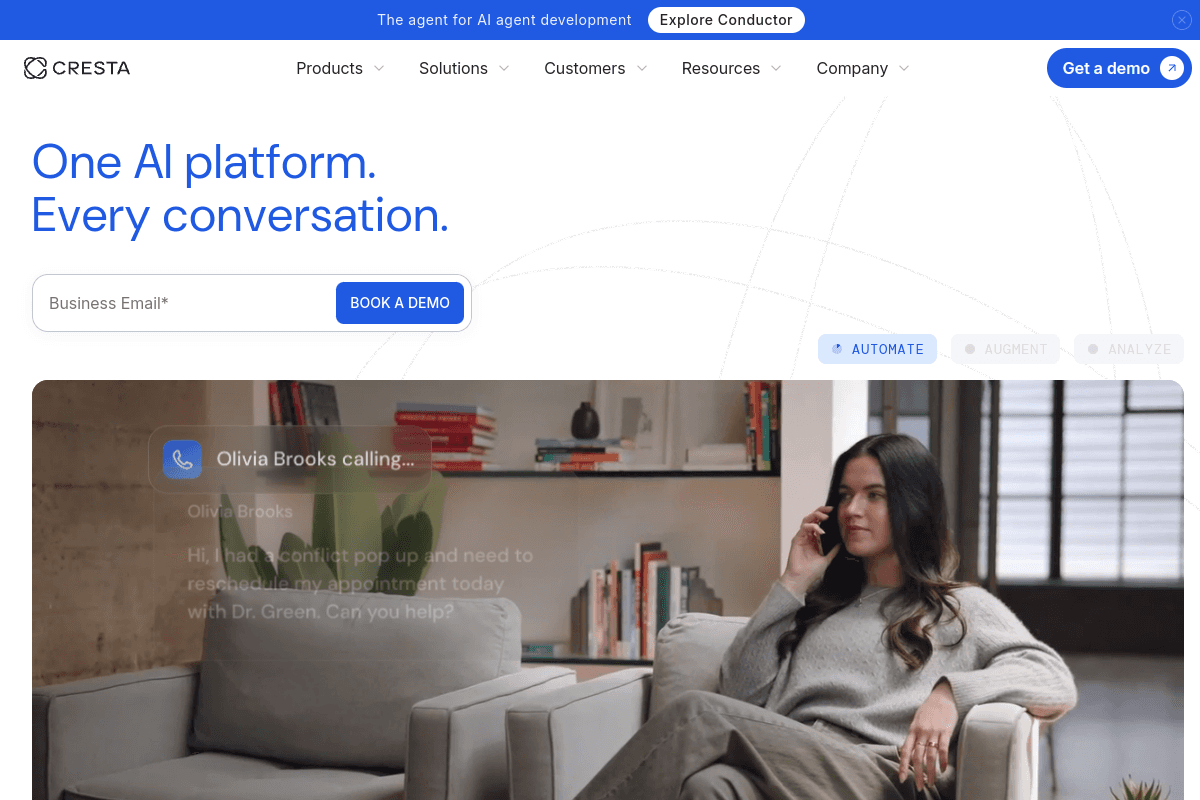
Cresta homepage, July 2026. Screenshot via thum.io; trademarks belong to Cresta.
Cresta pairs real-time agent assist with a simulator and quality management, so agents get live guidance during calls and structured practice outside them. It is one of the few enterprise suites that treats simulation as a first-class training modality, which is why it ranks above the traditional WEM platforms on training fit.
- Best for: larger voice and digital centers that are comfortable with an AI-heavy rollout and want guidance plus practice in one system.
- Where it wins: real-time assist during live calls, a practice simulator, and conversation intelligence feeding coaching.
Consider before choosing
It is a broad, enterprise-grade deployment, so implementation lift is high and pricing is not publicly listed (contact sales). Smaller teams often find it more platform than they need.
Observe.AI
Best for QA-Led CoachingAuto-QA that scores interactions automatically, then routes findings into coaching and an agent copilot.
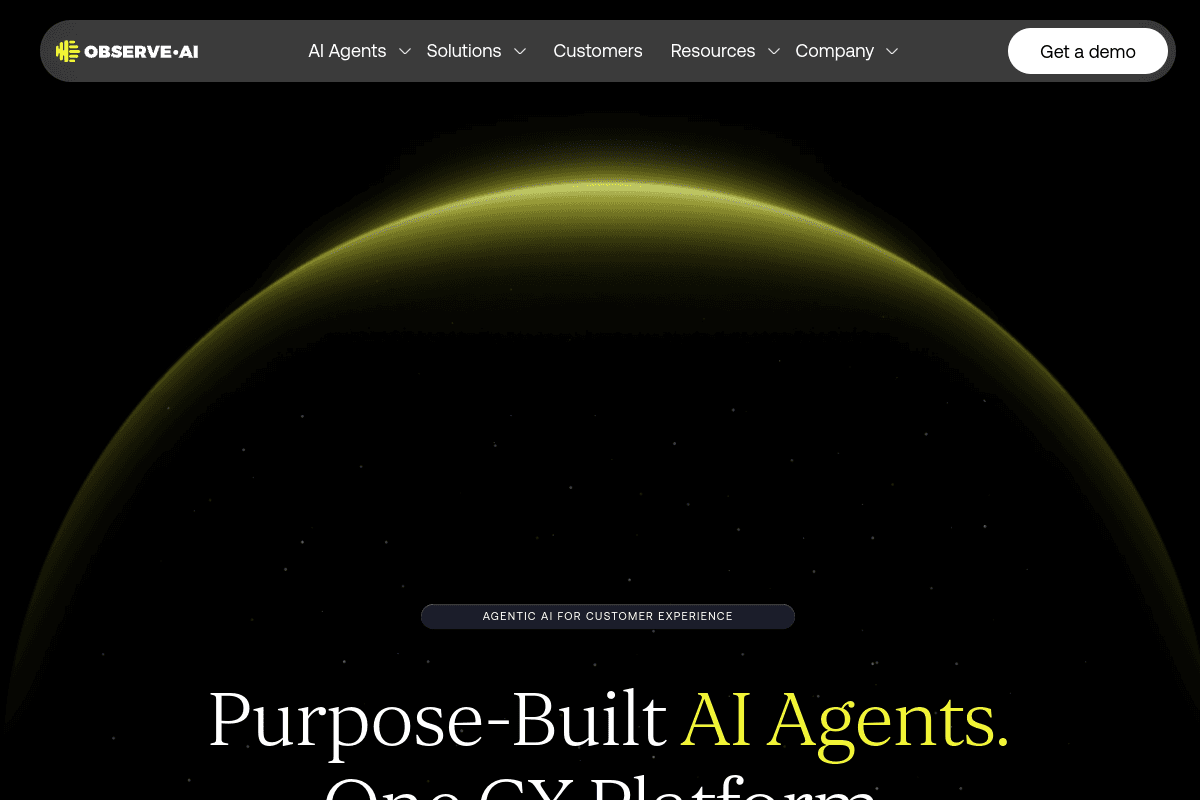
Observe.AI homepage, July 2026. Screenshot via thum.io; trademarks belong to Observe.AI.
Observe.AI centers on Auto-QA that scores interactions automatically, then routes findings into coaching and an agent copilot. If your training program is driven by QA scorecards across high volume, this is a natural fit.
- Best for: centers standardizing quality across voice and digital that want coaching to follow directly from QA.
- Where it wins: automated scoring coverage, coaching workflows tied to evaluations, and post-interaction analytics.
Consider before choosing
The strength is review and coaching, not simulation, so reps get feedback more than rehearsal. Pricing is not public (contact sales). For the conversation-intelligence angle specifically, compare options in our guide to the coaching platforms that turn recorded calls into manager action.
Level AI
Best for Omnichannel QAFully automated QA across every channel, with coaching built on top of the scores.
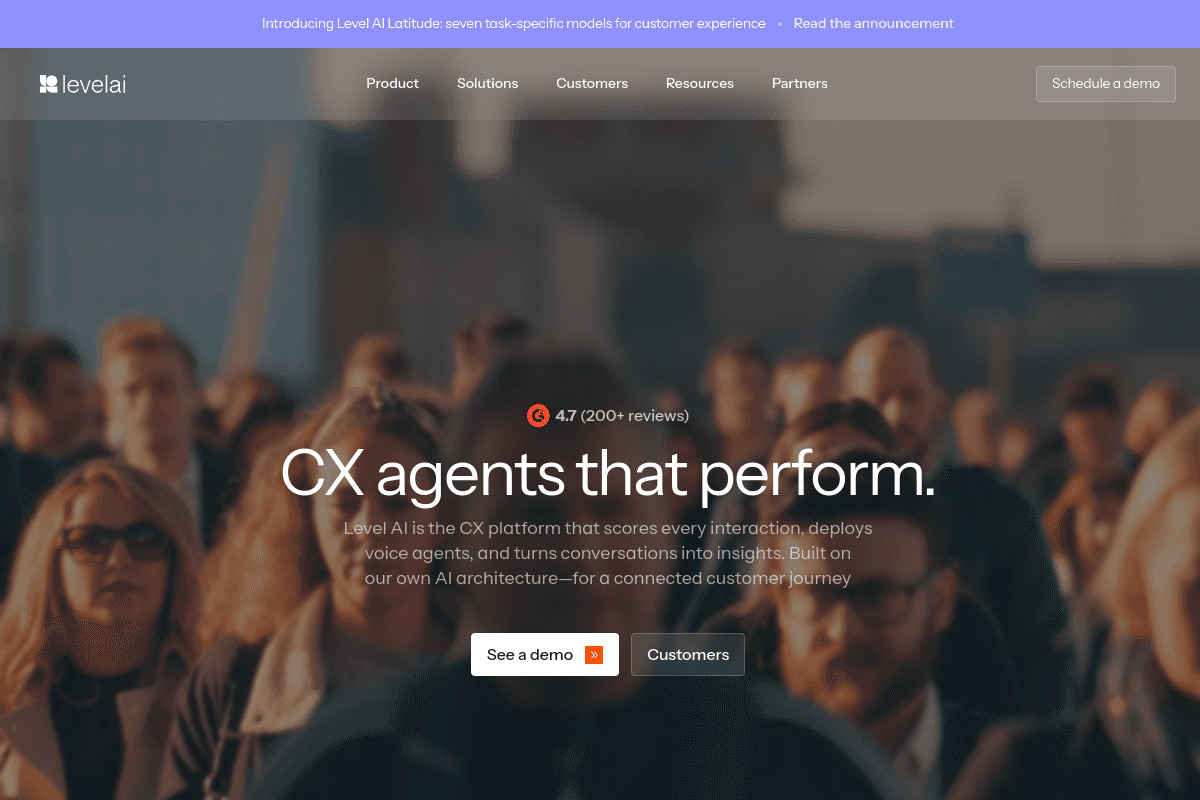
Level AI homepage, July 2026. Screenshot via thum.io; trademarks belong to Level AI.
Level AI focuses on fully automated QA across channels, with coaching built on top of the scores. Its pitch is QA you can trust without sampling a tiny fraction of calls, which matters when manual QA only ever touches 1 to 2% of volume.
- Best for: digital-heavy and blended centers that want automated scoring across every interaction.
- Where it wins: Auto-QA coverage, calibration controls, and coaching that references specific moments.
Consider before choosing
Like most Auto-QA tools it leans review-first rather than practice-first, and pricing is not public (contact sales).
MaestroQA
Best for BPO QA ProgramsA dedicated quality management platform with AI-assisted coaching, popular with BPOs and CX teams in Zendesk or Salesforce.
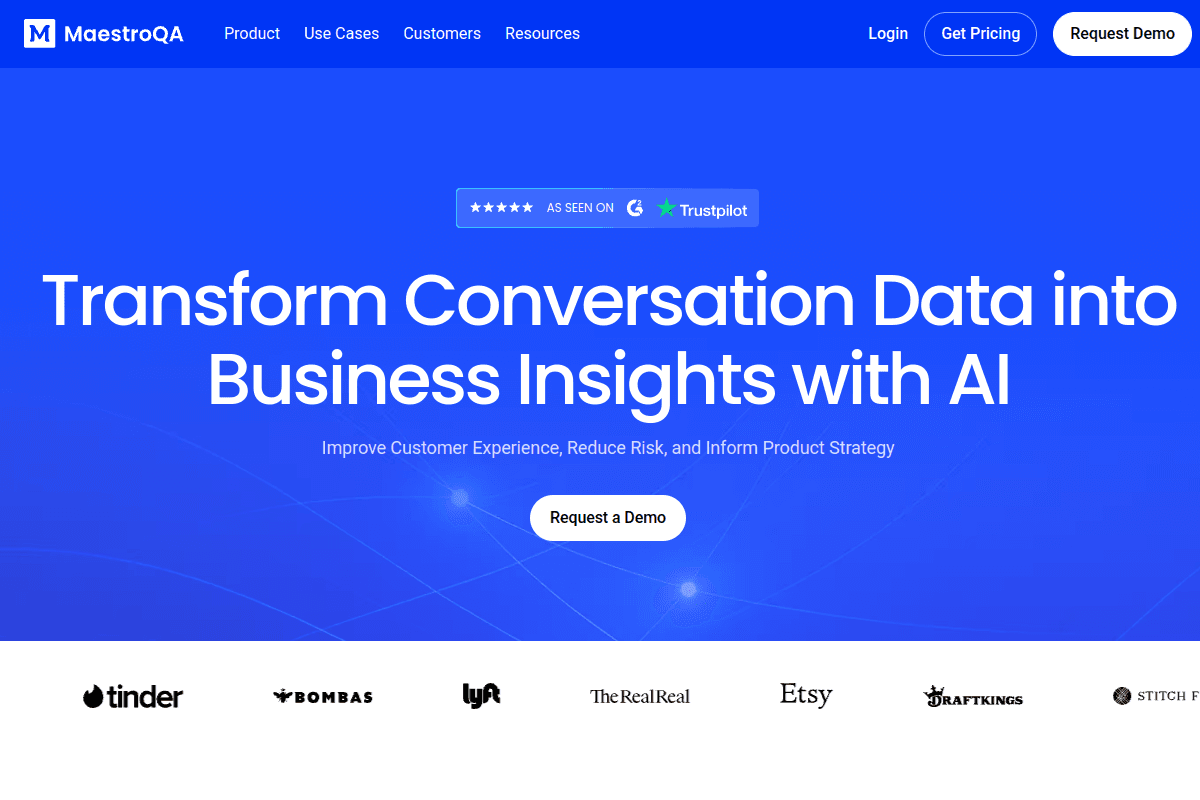
MaestroQA homepage, July 2026. Screenshot via thum.io; trademarks belong to MaestroQA.
MaestroQA is a dedicated quality management platform with AI-assisted coaching, popular with BPOs and CX teams that live in Zendesk or Salesforce. Its coaching module turns scorecard trends into structured coaching sessions, which keeps feedback consistent across large agent pools.
- Best for: outsourcers and support orgs that need rigorous, auditable QA plus a coaching workflow.
- Where it wins: flexible scorecards, calibration, and coaching tied to QA data.
Consider before choosing
It is QA and coaching, not simulation or an LMS, so pair it with a practice tool if rehearsal matters. Pricing is not public (contact sales).
Scorebuddy CX
Best for QA Plus LearningQuality scoring, conversation analytics, and an integrated LMS in one tool, with pricing tiers published openly.
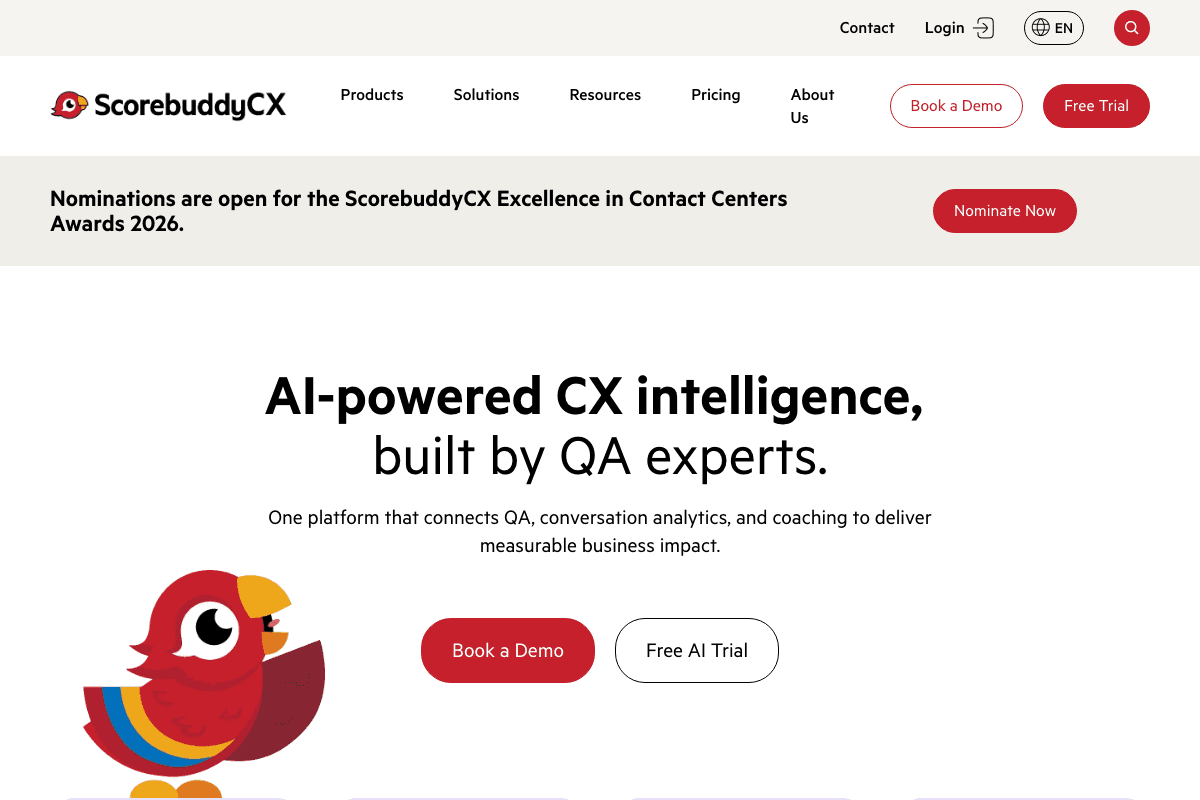
Scorebuddy CX homepage, July 2026. Screenshot via thum.io; trademarks belong to Scorebuddy.
Scorebuddy combines quality scoring, conversation analytics, and an integrated LMS, so QA findings can trigger assigned learning without a second system. It is one of the few here that publishes pricing tiers publicly, which helps teams that need cost clarity up front.
- Best for: mid-market centers that want QA and coaching plus light learning content in one tool.
- Where it wins: integrated LMS and coaching, conversation analytics, and clearer pricing.
Consider before choosing
The learning content is course-style, not live simulation, so it reinforces knowledge more than call reflexes.
Playvox
Best for Digital-First CXQuality management paired with contact-center eLearning aligned to the same QA standards used to score agents.
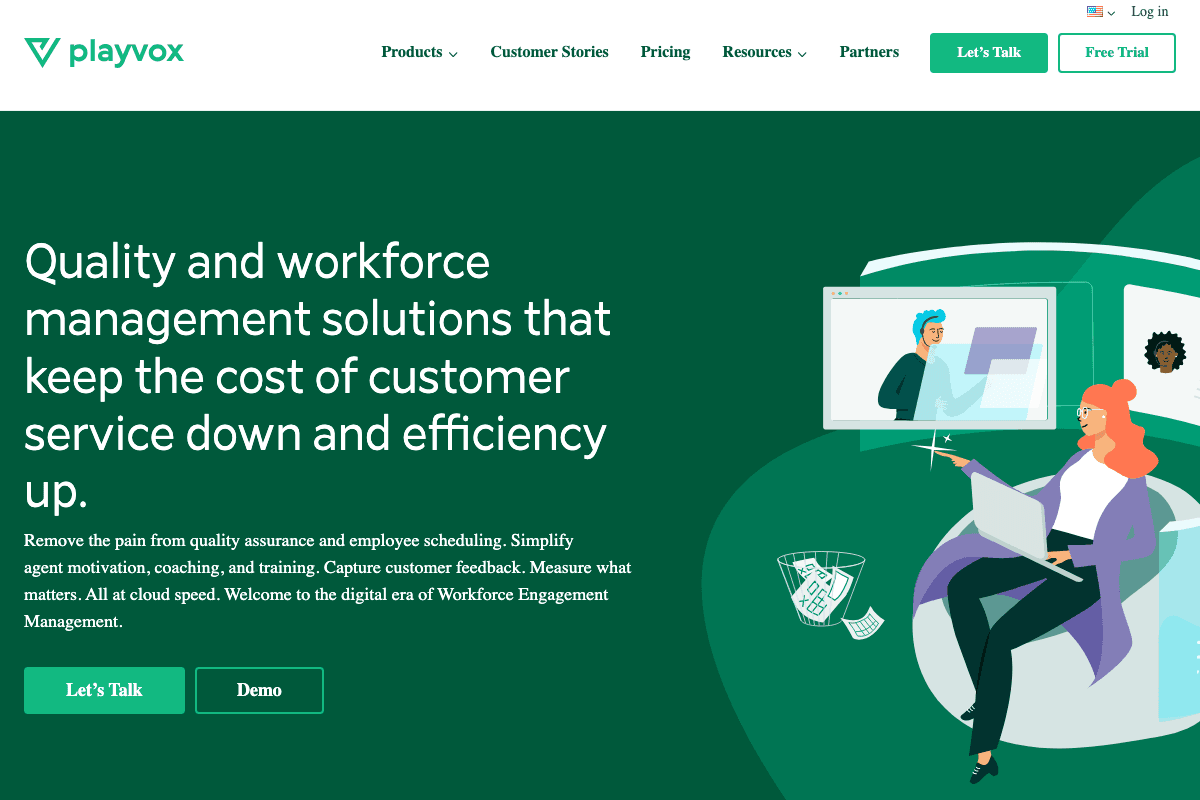
Playvox homepage (via Internet Archive), 2023. Screenshot via web.archive.org; trademarks belong to Playvox / NICE.
Playvox pairs quality management with eLearning designed for contact centers, so training content aligns to the same QA standards used to score agents. The eLearning and QA sharing one framework is the closed-loop idea applied to digital support.
- Best for: digital-first support teams in Salesforce or Zendesk ecosystems.
- Where it wins: QA-aligned eLearning, coaching, and workforce tools for digital channels.
Consider before choosing
It is content and QA rather than voice simulation, and pricing is not public (contact sales).
Centrical
Best for ReinforcementPersonalized microlearning, gamification, and AI role-play that keep agents engaged and reinforced over time.
Centrical homepage, July 2026. Screenshot via thum.io; trademarks belong to Centrical.
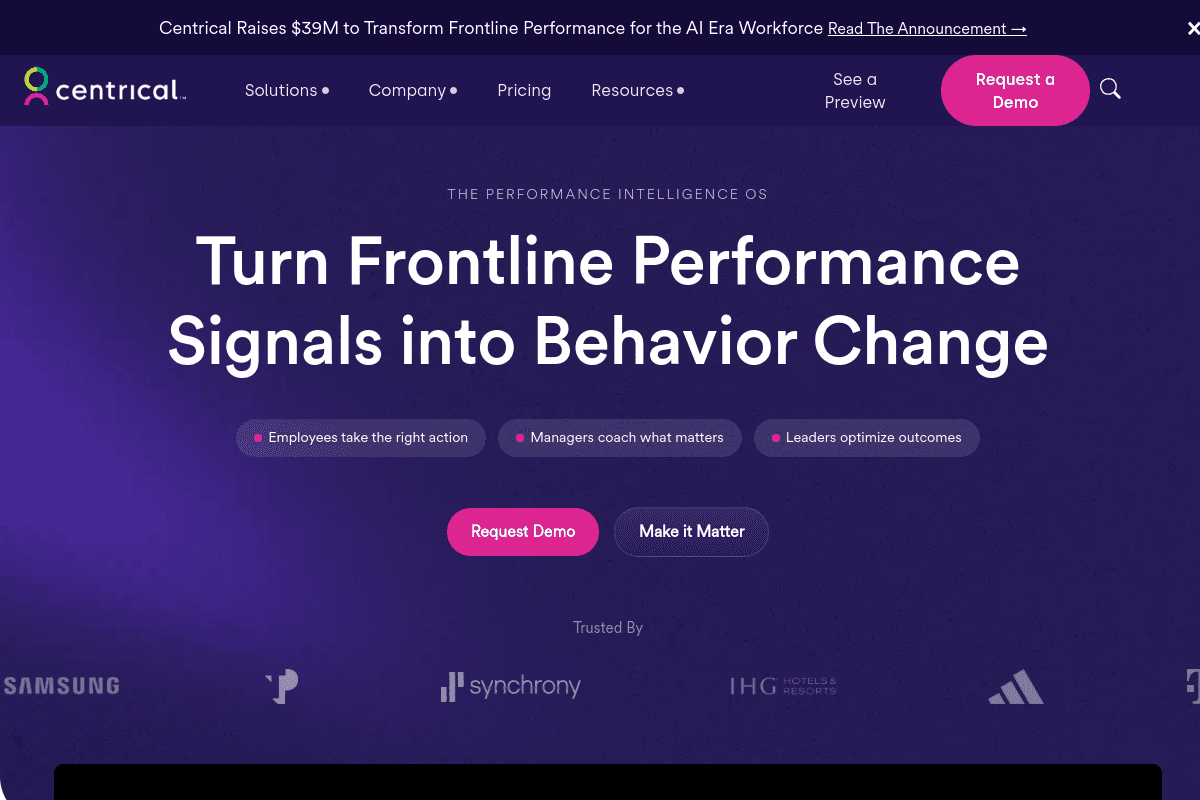
Centrical blends personalized microlearning, gamification, and AI role-play to keep agents engaged and reinforced over time. Its strength is sustained reinforcement, not one-and-done onboarding, which helps with the attrition and knowledge-decay problem every center fights.
- Best for: large centers that want daily reinforcement, contests, and recognition tied to performance.
- Where it wins: microlearning personalization, gamified engagement, and role-play practice.
Consider before choosing
It is a performance-and-engagement platform, so QA depth and enterprise rollout can be heavier lifts. Pricing is not public (contact sales).
Axonify
Best for Knowledge ReinforcementFrontline enablement built on short, daily microlearning bursts and knowledge reinforcement.
Axonify homepage, July 2026. Screenshot via thum.io; trademarks belong to Axonify.
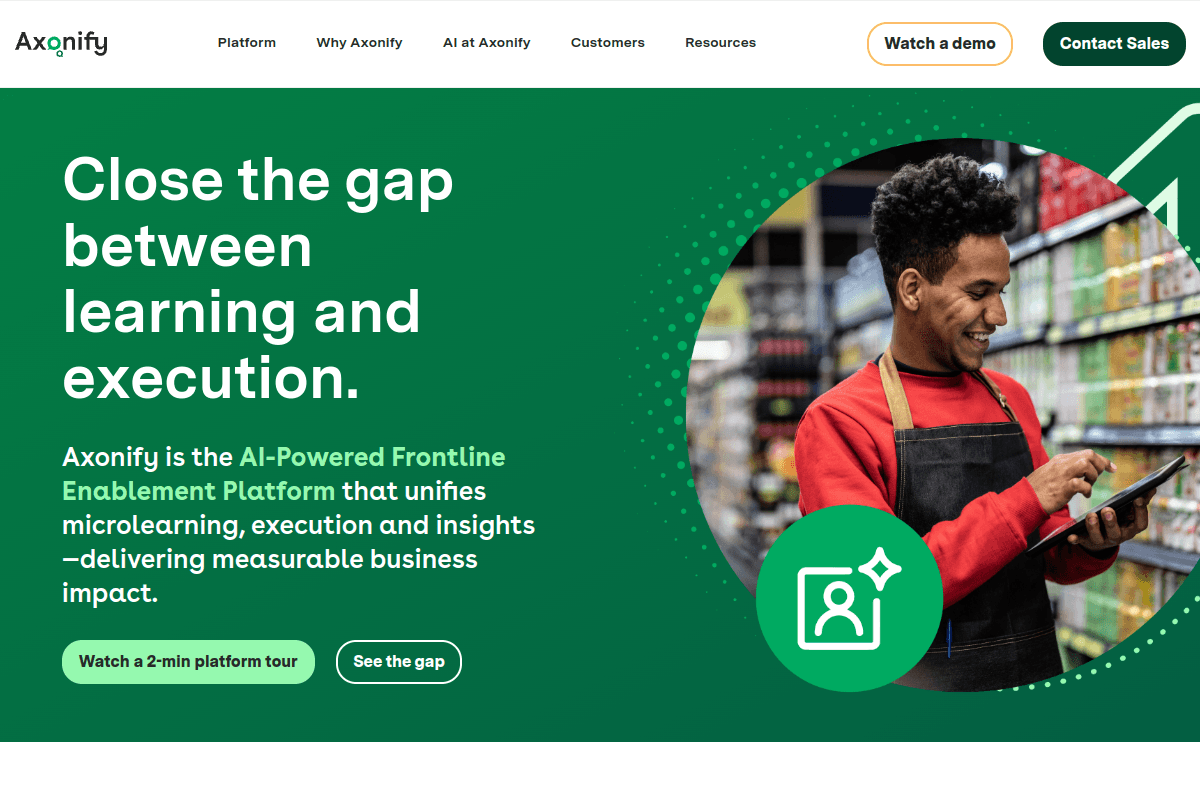
Axonify is frontline enablement built on short, daily microlearning bursts and knowledge reinforcement. It is the pick when the core issue is agents forgetting product and policy, not failing at conversation mechanics.
- Best for: large frontline teams that need daily knowledge reinforcement across locations.
- Where it wins: bite-sized microlearning, retention mechanics, and communication tools.
Consider before choosing
It is knowledge reinforcement, not QA or call simulation, so it complements rather than replaces a review-and-practice loop. Pricing is not public (contact sales).
CallMiner Coach
Best for Analytics-Heavy CentersCoaching driven by deep interaction analytics, surfacing the behaviors and moments that correlate with outcomes.
CallMiner homepage, July 2026. Screenshot via thum.io; trademarks belong to CallMiner.
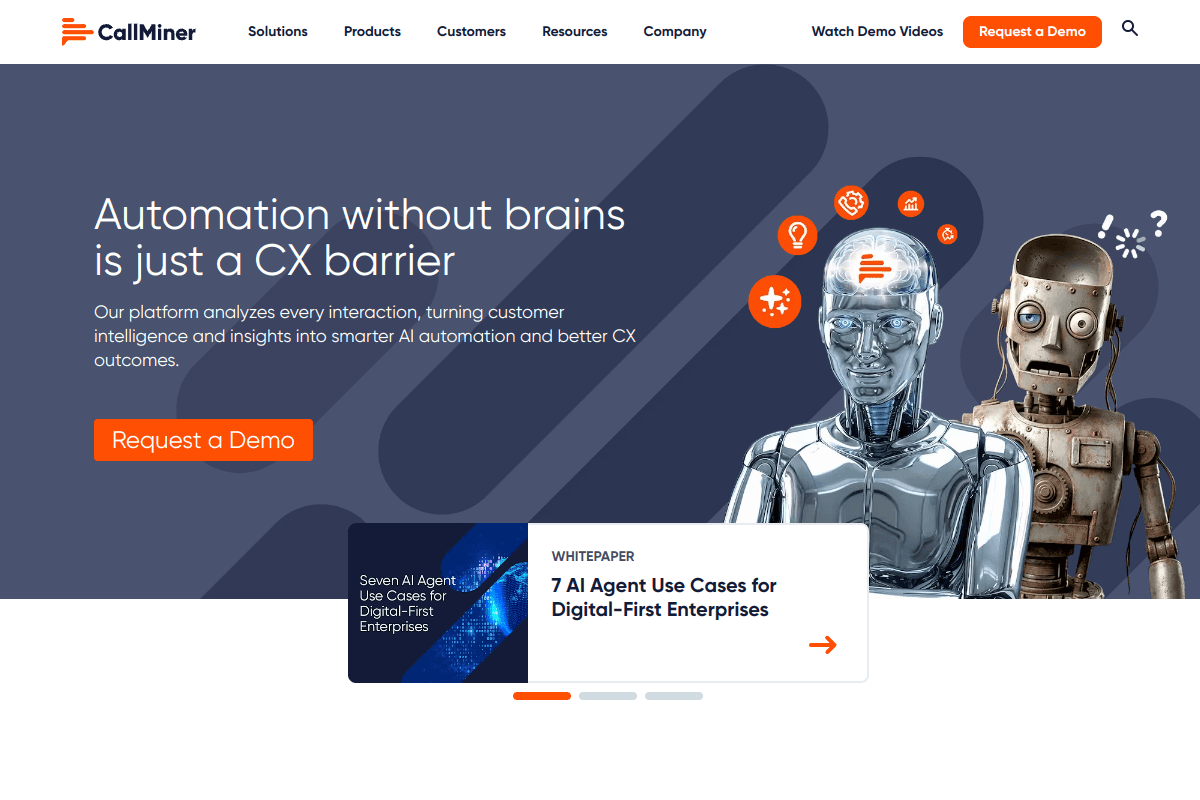
CallMiner Coach drives coaching from deep interaction analytics, surfacing behaviors and moments that correlate with outcomes. If you already run conversation analytics and want coaching to flow from it, Coach is the natural extension.
- Best for: analytics-mature enterprises that want data-driven coaching at scale.
- Where it wins: interaction analytics depth, behavior scoring, and coaching prioritization.
Consider before choosing
It assumes analytics maturity, so implementation lift is high, and it is coaching rather than simulation. Pricing is not public (contact sales).
NICE CXone (Enlighten AI)
Best for Enterprise WEMA full workforce engagement suite with Auto-QA, real-time interaction guidance, and coaching embedded across the platform.
NICE homepage, July 2026. Screenshot via thum.io; trademarks belong to NICE.
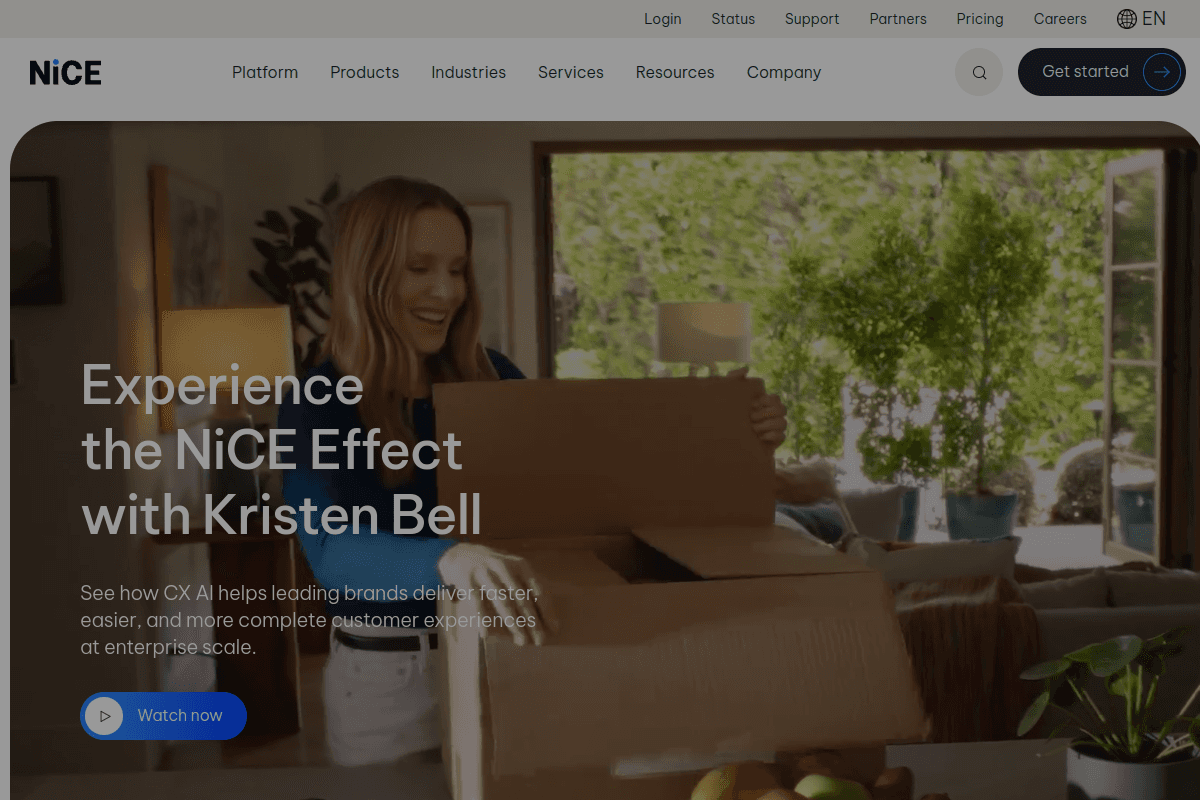
NICE CXone with Enlighten AI is a full workforce engagement suite: Auto-QA, real-time interaction guidance, and coaching embedded across the platform. This is a platform decision, not a training-tool decision, and it fits centers standardizing on NICE end to end.
- Best for: enterprise inbound centers that want QA, WFM, and guidance in one suite.
- Where it wins: Auto-QA coverage, real-time guidance, and native WEM depth.
Consider before choosing
Training is one module of a large platform, so implementation lift is high and pricing is not public (contact sales). You are buying the suite, then running training inside it.
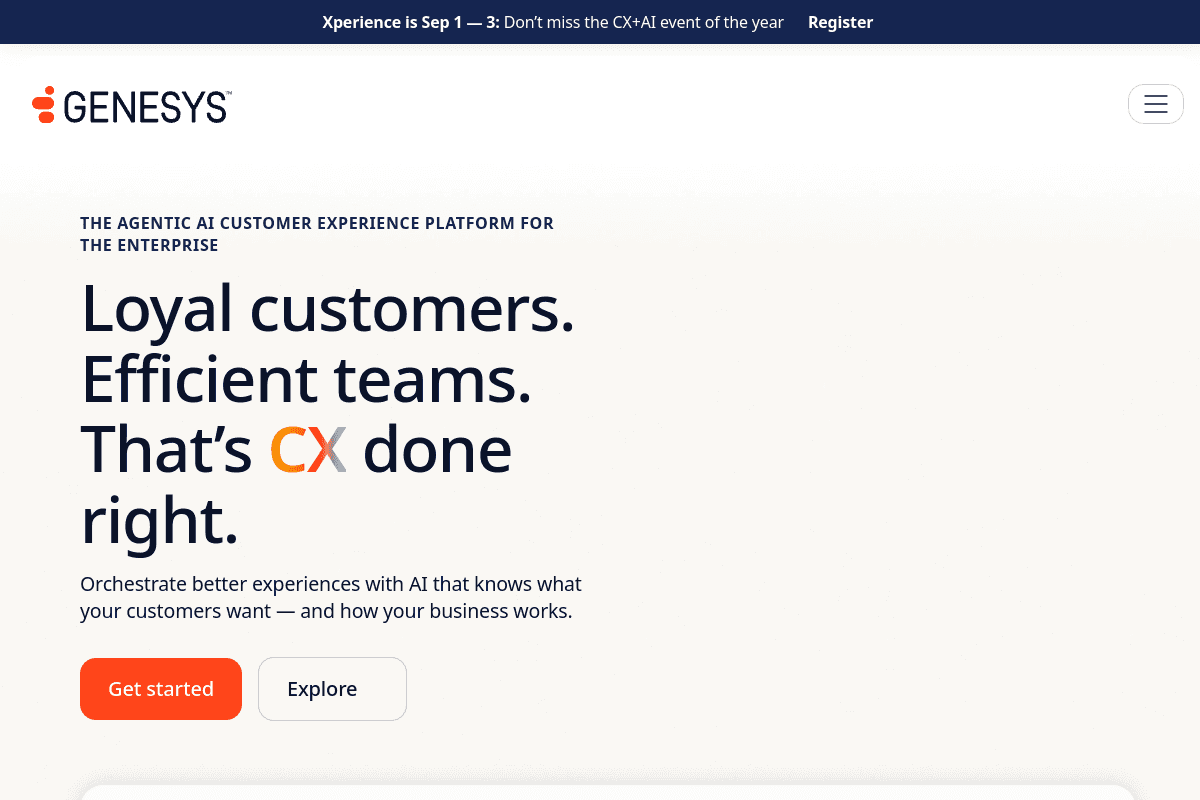
Genesys Cloud CX (WEM)
Best for Genesys TeamsWorkforce engagement management with quality management, coaching appointments, and performance tracking inside the CCaaS you already run.
Genesys homepage, July 2026. Screenshot via thum.io; trademarks belong to Genesys.
Genesys Cloud CX includes workforce engagement management with quality management, coaching appointments, and performance tracking. The value is consolidation: QA and coaching living where your routing and WFM already run.
- Best for: centers already committed to Genesys as their CCaaS.
- Where it wins: QA plus coaching plus performance management inside one platform.
Consider before choosing
The coaching and QA are suite features rather than a dedicated training product, and pricing is not public (contact sales).
Talkdesk Quality Management
Best for Talkdesk TeamsCoaching tied directly to evaluations, with AI-assisted scoring inside the Talkdesk workforce suite.

Talkdesk homepage, July 2026. Screenshot via thum.io; trademarks belong to Talkdesk.
Talkdesk QM ties coaching directly to evaluations, with AI-assisted scoring inside the Talkdesk workforce suite. Coaching that flows straight from an evaluation is the loop most WEM tools promise, and Talkdesk keeps it tidy for existing customers.
- Best for: Talkdesk CCaaS customers who want QA and coaching in-platform.
- Where it wins: evaluation-linked coaching and AI-assisted scoring.
Consider before choosing
It is best inside the Talkdesk ecosystem, and pricing is not public (contact sales).
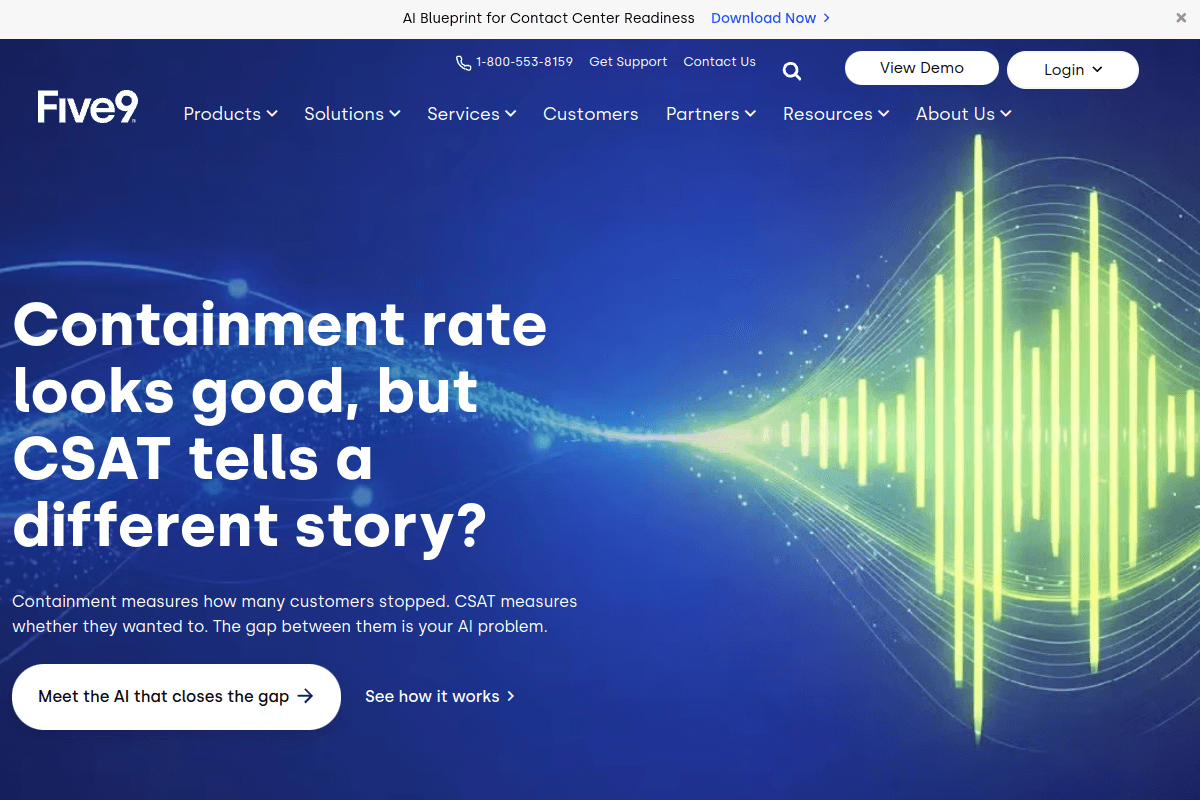
Five9 Quality Management
Best for Five9 TeamsQuality findings that flow straight into coaching and training workflows within the Five9 platform.
Five9 homepage, July 2026. Screenshot via thum.io; trademarks belong to Five9.
Five9 QM moves quality findings into coaching and training workflows within the Five9 platform. For Five9 shops, it removes the friction of exporting QA data to a separate coaching tool.
- Best for: Five9 CCaaS customers standardizing QA-to-coaching in one place.
- Where it wins: native QM to coaching handoff and agent monitoring tools.
Consider before choosing
The training capability is a platform module, not a simulation engine, and pricing is not public (contact sales).
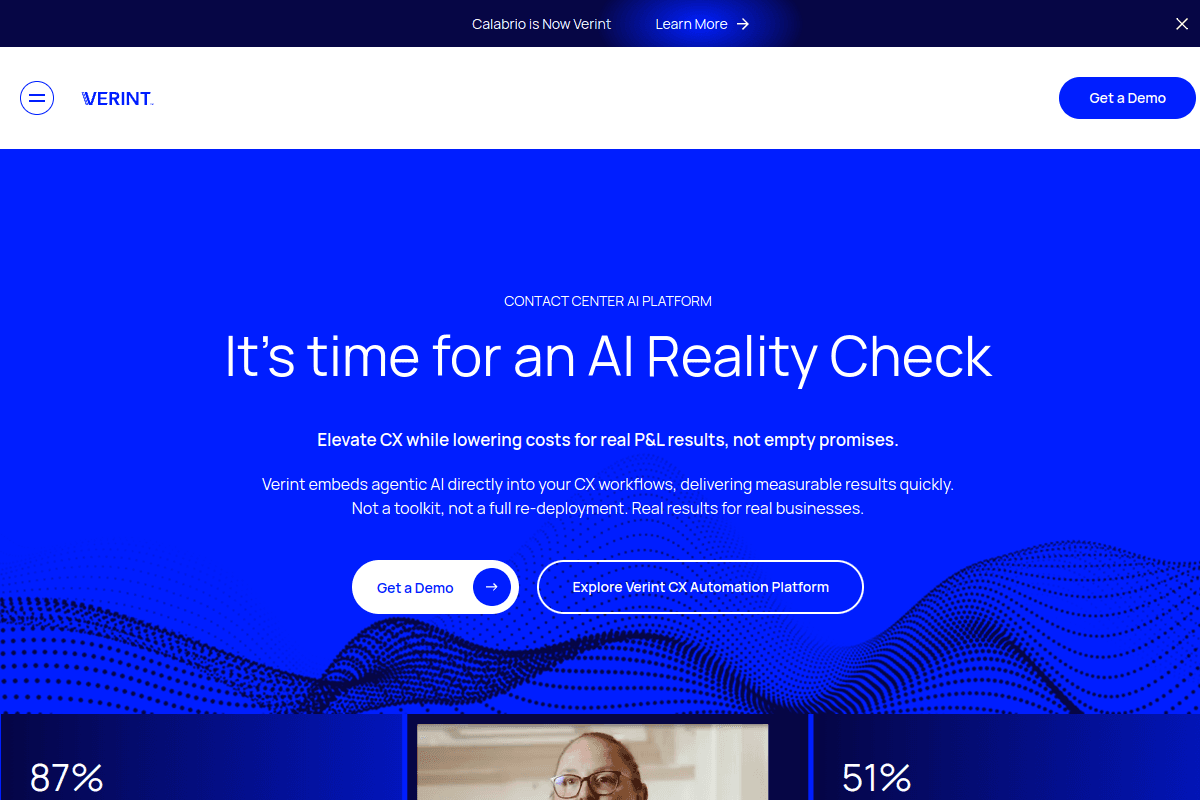
Verint
Best for Enterprise WFOQuality and compliance brought together with coaching and eLearning inside a mature workforce optimization suite.
Verint homepage, July 2026. Screenshot via thum.io; trademarks belong to Verint.
Verint brings quality and compliance together with coaching and eLearning inside a mature workforce optimization suite. It is built for scale and governance, which is why heavily regulated enterprises lean on it.
- Best for: large, compliance-driven enterprises running full WFO.
- Where it wins: QA and compliance, coaching, and eLearning across a broad platform.
Consider before choosing
It is enterprise WFO with a long implementation, and pricing is not public (contact sales).
Where Full CCaaS and WEM Suites Actually Fit
The suites at 11 through 15 are not weak products. They just answer a different question. A WEM suite exists to manage a workforce: forecast volume, schedule shifts, track adherence, and score QA at enterprise scale. Training is a module bolted onto that job.
A dedicated training platform answers a narrower question: can this rep run this call well, and can we prove they improved? That is why Kendo, Cresta, and the QA-plus-coaching tools rank higher on training fit even though the suites are larger products.
Pick a suite when you are buying a platform. Pick a training-first tool when the number you need to move is ramp time, close rate, or CSAT on the calls themselves. Many centers run both: the suite for WFM and QA, a practice tool for the loop that changes behavior. If you are mapping this to broader tooling, our overviews of the content and enablement layer around training and tools that automate the manager's review-and-coach workload show where training sits next to the rest of the stack.
Your 30-60-90 Day Rollout Plan
Buying the tool is the easy part. Adoption dies when training is not wired into the daily workflow, so treat rollout as its own project.
-
Days 1-30 · Wire Up the Data
Connect your call sources, import a sample of real interactions, and rebuild your QA scorecard inside the tool so practice and live calls score on one rubric.
-
Days 1-30 · Pick a Pilot Cohort
Start with one team and one call type (the first 30 seconds of a cold call, a specific inbound flow, or a renewal), not the whole floor.
-
Days 31-60 · Calibrate
Score the same calls by hand and by the tool, compare, and tune until Auto-QA agrees with your best evaluators.
-
Days 31-60 · Assign Practice From Real Gaps
Use the first month of scores to assign targeted rehearsal to specific weaknesses, then re-score the practice.
-
Days 61-90 · Prove It and Scale
Track ramp time, close rate, AHT, and CSAT for the pilot cohort against a control group, then roll out the workflow that worked.
- For new-hire ramp specifically, the tactics in our guide to the ways to get new hires productive sooner and our comparison of systems that certify readiness before live calls pair well with this timeline.
- Teams that want a formal coaching cadence can also review the platforms built around manager-led coaching.
Frequently Asked Questions
It is any platform that improves agent skill and knowledge, and it spans four modalities: QA and WEM coaching (score calls, coach from findings), LMS and microlearning (courses and reinforcement), simulation and roleplay (rehearse real calls), and real-time assist (guide agents live). The strongest tools connect at least two of these into a loop, and all 15 platforms above cover one or more of them.
QA measures a call against a standard. Coaching is the conversation about what to fix. Training is the practice that builds the new behavior. QA without the other two is just scoring, which is the trap that keeps CSAT flat even at full QA coverage. The value comes from linking all three on the same rubric.
Auto-QA accuracy depends entirely on calibration, not on the vendor's marketing. Score a batch of real calls both by hand and by the tool, compare where they disagree, and tune the scorecard and prompts until the machine matches your best evaluators. Treat calibration as an ongoing habit, not a one-time setup step, and keep a human in the loop on high-stakes or compliance-sensitive evaluations.
Most contact-center suites list "contact sales," so budget in ranges: expect per-seat licensing plus usage or module add-ons for WEM, QA, and analytics. Ask every vendor for total cost including implementation and admin time, since the platform suites carry the highest setup lift. Tools with public seat-plus-usage pricing, like Kendo at $55 to $100 per seat, are the easiest to model before you ever talk to sales.
Pick one cohort and one metric, run a control group, and measure before and after. Tie the practice directly to the KPI: drill the objections that keep stalling deals, or the flow that inflates AHT, then track that exact number for the trained group. The centers that show ROI measure a small, specific change and expand from proof, rather than trying to move every metric at once. Our overview of how training activity connects to KPI dashboards covers how to connect training to KPI dashboards.
The Bottom Line
Every tool on this list can score a call. Far fewer can take that score, put the agent back in the exact scenario they fumbled, and prove they got better. That closed loop, from review to targeted practice to a measurable result, is what separates training software from a QA dashboard.
If you run a sales-oriented, outbound, or hybrid contact center, that loop is Kendo's core design: AI roleplay, automated call review, and custom scorecards that grade practice and live calls on one standard. Teams cross-shopping conversation-intelligence-first tools often weigh CI-first options against practice-first coaching in the same search, but if the number you need to move is ramp time or close rate, start with a practice-first platform.
Next step: score your top 3 tools with the CC-TRAIN rubric above, then see the ramp-time and close-rate outcomes on the Kendo results page and run a pilot on one call type.

Luke Alexander is the founder of Kendo AI, where he's helped train more than 5,000 sales reps. He started in sales as a frontline closer, scaled a high-ticket sales-training company, and founded Closer Cartel and AI Insiders before building Kendo to fix the tools he wished he'd had: realistic AI roleplay and automated call review for fast-moving contact centers. He writes about agent ramp, coaching, quality assurance, and applying AI across the revenue org.