
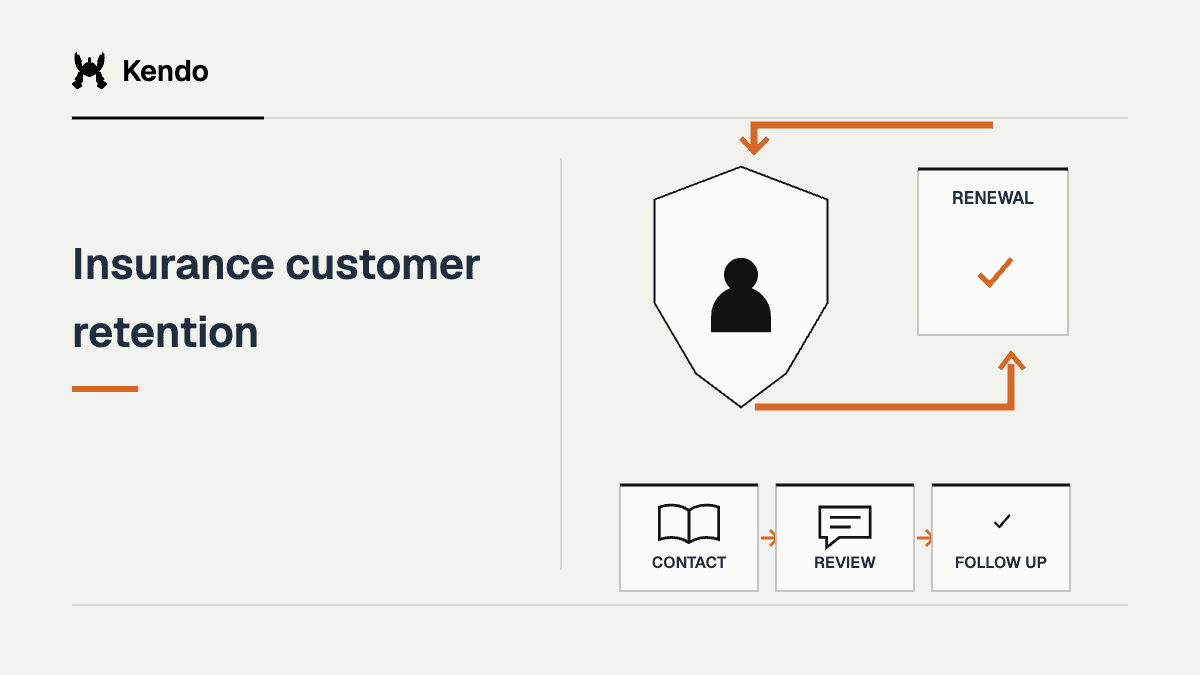

Keep more insurance customers by fixing service problems, checking what changed in their lives and doing what you promised at renewal. Count customers and policies separately, then find out why each account left. Better conversations can stop avoidable losses, but they cannot undo every price increase, carrier decision or life change.
Did the team save the account? That is only half the question. The better question is whether the customer got a straight answer, a useful review and the promised call back while there was still time. A manager can check and fix those.
Start before the renewal notice arrives
A customer still waiting for a corrected document or a claim answer already has a reason to doubt the agency. A polished renewal call does not erase that.
Check the service history before the renewal call. Look at open requests, unresolved complaints, promised callbacks and recent changes before you ask about next year's policy. Otherwise the agent looks like they do not know about the one thing the customer cares about.
A life agent's 21-second script for the minute after the sale. Different line, same idea: say what happens next before the customer has to ask.

- 0:00Sets the expectation at the close: the policy arrives by mail in about five business days.
- 0:04Says the exact payment amount out loud, so the first charge is not a surprise.
- 0:09Gives the client a PIN and tells them to refuse anyone who calls without it.
- 0:17Ends on a congratulations, so the sale feels finished and safe.
Independent agent clip, not a Kendo roleplay. The PIN tactic suits life and final expense; the expectation-setting works for any line.
Own the follow-up. Do not promise the outcome. An agency can connect the customer with the right claims contact, confirm the next step and check that a response arrived. Never promise a claim decision, a payment or a coverage answer the agency cannot make.
Assign a named service owner and backup. A request should never fall through because the producer thought the account manager had it, or the account manager expected the carrier to call.
Customers may still shop despite good service. J.D. Power's 2026 U.S. Insurance Shopping Study describes an auto market with elevated shopping and greater digital comparison. That is the market, not a target for your agency. Good service will not beat a bad price every time.
Measure customers and policies without mixing the two
Choose the unit first. A household or business can keep one policy while moving another. The account is still a customer, even though policy retention went down.
Give every customer and policy one ID that never changes, pick the date you count on, and write down how you treat rewrites. A new policy number should not show up as a lost customer plus a new sale.
| Measure | Formula | Worked example and boundary |
|---|---|---|
| Policy renewal retention | Renewed policy relationships from the eligible cohort ÷ policy relationships due for renewal in that cohort × 100 | 92 ÷ 100 = 92%. Hypothetical cohort; new business is excluded. |
| Customer book retention | Starting customers still holding an active agency relationship at the closing date ÷ customers active at the starting date × 100 | 47 ÷ 50 = 94%. Hypothetical fixed book; new customers do not enter either count. |
For the first measure, set the renewal dates and a cut-off date for outcomes. For example, group the policies due for renewal each month and pick the date after which their results count as final. Until the cut-off date, show pending cases as pending. Do not call them kept or lost yet.
For the second, decide whether “customer” means a person, a household or a business account, and stick to it. A customer with two policies who keeps one still counts as a kept customer. In the policy count, one policy is kept and one is lost.
Track cancellations during the term separately from renewal decisions, and show carrier non-renewals instead of quietly dropping hard cases. Carrier non-renewals of homeowners policies nearly doubled nationally in two years, from 10.5 to 19.6 per 1,000 (NAIC).
Company-initiated non-renewals per 1,000 homeowners policies in force, by region, 2024.
Countrywide: 10.5 in 2022, 12.2 in 2023, 19.6 in 2024. State-reported data; New York does not report and is left out of the Northeast. Homeowners line only.
Source: NAIC, Examining Homeowner Property Insurance Market Dynamics, July 2026
For life business, measure persistency by the group of policies issued together and the date you check them. Do not compare that number with a yearly P&C renewal rate. They measure different things.
If leadership wants a wider scorecard, the insurance agency KPI dictionary connects these numbers to production and coaching. Set targets only after the counts add up.
Pick one number, define it and track it over a real period. Globe Life did that with new-agent close rates.
Insurance case study: Globe Life new-agent close rates went from about 33% to 60%+
Jess Chang, Partner at Globe Life, tracked new-agent close rates over about six months.
“Kendo buys back time for my leaders”
Triage by the customer's issue and the time available
Not every renewal needs the same work. A quick yes, an open complaint and a business that changed what it does should not sit in the same queue.
Use a worksheet with actions, not a list of customers marked “at risk.” A label without a next step does not help the next person who picks up the account.
| Worksheet field | What to record |
|---|---|
| Renewal cohort and dates | The actual deadline, the counting window and anything still outstanding |
| Confirmed change and concern | What changed, what the customer said and what is still unconfirmed |
| Action and owner | One next action assigned to a person with the right authority |
| Promised update | A specific date or time, plus the route if the answer is delayed |
| Outcome and loss reason | The result you saw, a short note and anything still unknown |
Take an account with a premium concern and an unanswered billing question. Shopping it to other carriers right away skips the problem in front of you. First answer or route the billing question, then decide whether a comparison makes sense.
A business that starts new work may need a technical review even if it never mentioned price. Its risk has changed. Silence does not mean the current policy still fits.
Use urgency and complexity to choose the next owner
Routine review
Specialist review
More time
Deadline close
Deadlines and who can approve what come from the agency's own process.
A July 2025 r/InsuranceAgent thread about re-quoting every renewal shows the workload problem. Agents in the thread questioned the hours involved and described reviewing only some accounts. Use it to think about triage, not to copy a stranger's percentage rule.
If shopping the account makes sense, assign the work and tell the customer what happens next. Never say the agency checked other options unless it did. If the team cannot finish before the deadline, say so and escalate instead of reassuring the customer without a plan.
Handle premium concerns without pretending price does not matter
Start by finding the real concern. The customer may want to know why the price changed, whether a competing quote is a fair comparison, or whether they can afford the renewal at all.
Those are different conversations. Answering all three with a speech about great service sounds like dodging.
“Quick review. Everyone loves their coverage. Done by noon.”
“Why did my bill go up, and did anyone ever answer my billing question?”
Answer the question they asked first.
When the customer wants an explanation
Use the facts you have for that policy. If the reason is not clear yet, say what you will check and when you will call back. Do not guess the carrier's reasons from a news headline.
An example answer: “Let's separate the amount that changed from anything that changed in the policy or your circumstances. The renewal documents answer part of that; the remaining question needs confirmation. Would a review tomorrow afternoon work?”
Follow the agency's approved process. Separate what you know from what you still need to check, then give the customer one clear next step.
- +18.3%
- Average homeowners premium per policy in the Northeast, 2018 to 2024, after inflation
- +43.3%
- The same measure in the West
- 2.4% to 5.3%
- The same rises as a yearly average since 2018, lowest region to highest
Homeowners line only, in 2025 dollars. The agent did not set the price; the agent still owes the customer an explanation.
When the customer brings a competing quote
Ask to review the terms, not just the price. Have qualified staff compare the documents and list what is missing. Do not call the other policy worse without proof.
For example: “The lower price is worth looking at. Can the team compare the terms you were offered with the renewal, including any differences that matter to you? Then you can decide with the differences clear.”
An independent agency's 26-second pitch to people whose renewal just went up. Your customer is watching clips like this.

- 0:01Opens on the customer's exact moment: the renewal went up with no claim, no move and no change to the house.
- 0:11Names the real reason people stay: switching feels like a hassle. Silence is not loyalty.
- 0:14Makes a standing promise: the agency shops the coverage across carriers every year.
- 0:19Ends with a one-step ask: send us the number and we will tell you if you can do better.
Independent agency ad, not a Kendo roleplay. It sells the re-quote; this guide adds the explain-first step before any comparison.
Do not suggest that a higher price means better coverage, or that loyalty should beat a real price gap. If the customer's preferred option is with a carrier the agency cannot place, say so plainly.
The auto insurance sales conversation guide goes deeper on quote comparisons. For other hard conversations, these insurance objections examples show how to clear up concerns without pressure or false urgency.
Rehearse the premium conversation before it happens on a live renewal. Kody Skvarla, an insurance team lead, says Kendo's objections match real calls.
Insurance case study: Kody Skvarla's team reports a 5 to 20% improvement
Kody leads a final-expense team of about 20 agents. One top performer roughly doubled his own baseline.
“Kendo matches or beats a human practice partner. The objections are the exact same as real calls.”
Close the service loop after the conversation
The account record should show the customer's question, the agreed action, who owns it and when the next update happens. Write down what was said, not a hopeful note like “customer happy” while the issue is still open.
The record should look like this: one action, an owner, a due date
Action Items
0 of 1 completedCall the customer back with the carrier's answer on the billing question before the renewal date.
HIGHEasy difficultySet due date
Recreated from Kendo's Action Items tab on a reviewed call, with an example renewal follow-up: what was promised, who owns it, by when.
An update helps even when the answer is still pending. Tell the customer who has the question, what is still open and when you will be back in touch. If the carrier goes quiet, the agency still owes the customer an update.
Check every handoff between producer, account manager, service team and specialist. Each person should know if they are asked to look into it, advise, call the customer or confirm it is done. Forwarding an email is not owning the problem.
Levels of follow-through
- Forwarded the email.
- Said “someone will get back to you.”
- Named the owner and the backup.
- Named the owner, the backup and the date the customer hears back.
Forwarding is not owning.
When a claim is the frustration, keep the talk on the customer's open need and the right process. Confirm how they reach the claims professional handling it, and escalate missed contact through the agency's usual route. Never tie the renewal to a promised claim result.
When a review turns up another need, ask permission to talk about it separately. Needs-based cross-selling can help an account review, but an open complaint is no time for another sales pitch.
Review losses without turning every cancellation into a coaching failure
Give every lost account one main loss reason and a short supporting note. Pick the reason from a short, fixed list so the reports add up.
“Price” and “service” can both be true. A customer may find a lower premium after a request went unanswered. The team cannot always know which one decided it, but it can still fix how requests get answered.
Check a small sample of kept accounts too. A customer who stayed may have had the same missed callback. Looking only at losses hides service problems until they turn into cancellations.
In a January 2026 r/InsuranceAgent discussion, agents described repeated premium conversations, non-renewals and training replacement staff. That strain explains why queues back up, but it does not excuse open requests. When a new service rep inherits a book mid-year, the insurance agent onboarding checklist helps keep every open request owned.
Practice and review insurance renewal conversations with Kendo
Kendo's call review gives a summary and feedback for each recorded call. A manager can see whether the agent found the real concern and agreed a follow-up, instead of assuming a lost renewal means poor objection handling.
Custom scorecards let the team write the criteria for that conversation, and team analytics show training and performance trends. Renewal numbers still live in the agency's own systems. Kendo scores the conversation, not the retention rate.
Custom scorecards: the team writes the criteria
Renewal call: premium increase
Define categories, criteria, and weights
Weight distribution100/100
Category weights are percentages and must total 100.
Explain the change
50%- Separated the service issue from the price15 pts
- Explained the change from the renewal noticeREQUIRED20 pts
- Said what still needs checking, and by when15 pts
Own the follow-up
50%- Named who owns the open requestREQUIRED20 pts
- Agreed the date the customer hears back15 pts
- Confirmed the next step out loud15 pts
Recreated from Kendo's scorecard editor with example renewal criteria. Weights, criteria and required items are the team's choice.
Teams comparing practice options can start with the AI sales roleplaying tools roundup.
A renewal objection can hide an unanswered service question. Give agents a realistic customer, practice separating the concerns and review the promised next step. Coach the conversation without pretending every cancellation is a sales failure.
Buyer Profile
Define who the buyer is and the context they make decisions in.
Scenario & Resistance
Set what is being sold, the conversation stage, and how this buyer should resist.
Renewals: explanation and follow-throughACTIVE



My renewal costs more, and nobody answered my billing question.
There are two things to resolve. What is still unanswered about the bill? Then we can review the renewal notice.
I want to know what changed and who will get back to me.
I'll coordinate the billing response and review the documented renewal changes with you. What time works for an update?
Use Kendo's insurance coaching workflow for the conversations. Fix ownership gaps with process changes and coverage questions with technical review. Different problems need different fixes.
For a renewal team with a coaching backlog, the sales coaching platform comparison looks at tools for reviewing calls and assigning follow-up practice.
What is a good insurance retention rate?
A good target depends on the line of business, what you count as a customer, the market, the period and how you treat rewrites, carrier non-renewals and early cancellations. Start from your own baseline once the counts add up, and compare like with like. A percentage borrowed from someone else's book sets a misleading target.
The next step is simpler: pick the next group of renewals, find the open customer work and give each item an owner. Better retention starts with promises the team can keep and a clear record of whether it kept them.
Frequently asked questions
Should we re-quote every account at renewal?
Not automatically. Let the customer's concern, confirmed changes and time left decide how much review the account gets. Assign qualified staff when a comparison is needed and tell the customer what happens next. Never say other options were checked unless they were.
How can customer retention rise while policy retention falls?
An account may keep one policy and move another. They are still a customer. The lost policy only shows up in the policy count. Report both numbers with fixed IDs and written counting rules, and never swap one for the other.
What should a team say when it cannot offer a lower premium?
Explain the confirmed differences and the options you have, without promising a saving or knocking the other offer. If similar coverage still costs more, say so. Close any open service work and give the customer a clear choice, even if the account leaves.
Does call-review software calculate our retention rate?
No. In this workflow Kendo handles call summaries, feedback and the team's own coaching criteria. Retention numbers come from the agency's policy or customer system. Read the call next to the outcome; a good call score does not mean the account renewed.