
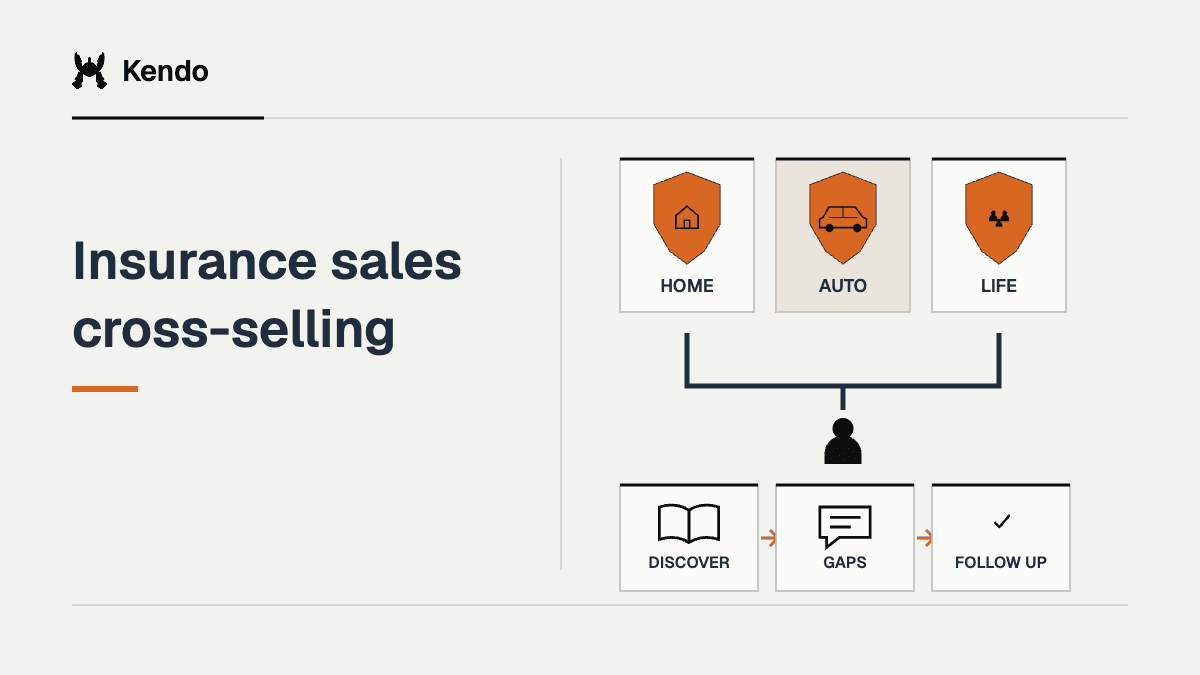

Cross-selling insurance works best when a real change in the client's life or business raises a coverage question, and the client says yes to a review. Coach agents to spot the change, stay inside what they are licensed to discuss, and pass the client to the right person. Sometimes that ends in another policy. Sometimes it ends with “you are already covered.”
For agency leaders, the hard part is adding policies to an account without turning every service call into a pitch. That takes one set of rules for producers, service staff and specialists, especially when the person who hears about the change is not licensed to advise on it.
- 93%
- of US policyholders would like to buy several policies from one insurer
- 17%
- actually hold most of their policies with one insurer
- 4 to 9%
- say their insurer has contacted them about more coverage
Simon-Kucher survey of 702 US policyholders, spring 2019.
Source: Simon-Kucher & Partners, 2019, reported by InsuranceNewsNet
Start with the change, not the quota
A sales target is not a client need. Telling every employee to mention life insurance still leaves three gaps: a real reason to bring it up, the client's permission, and someone licensed to take the next call.
Carriers say the same thing. Chubb frames cross-selling around business risks a client has not covered; Nationwide tells agents to keep life-insurance conversations personal to the client. Neither is a script, and neither promises retention or revenue.
Agents draw the same line in public forums: adding a policy the client needs is account rounding, while hitting a quota on an unrelated product is something else. The management question is the one that matters. What makes this conversation relevant to this customer now?
Six triggers worth teaching the team to recognize
Use this table as a list of moments worth asking about, not a list of policies to sell. The change opens the conversation. It does not prove the client is missing anything.
| Known change | Question that checks relevance | Who reviews it | Outcome to record |
|---|---|---|---|
| Home purchase or move | “What has changed about the property and how you use it?” | Property or personal-lines producer | Review accepted, declined or not needed |
| Household or money responsibilities change | “Has this changed what you want your current protection to do?” | Licensed life specialist where relevant | The client's question and review preference |
| Vehicle use changes | “How is the vehicle being used now, and who drives it?” | Personal or commercial specialist | Use clarified and owner assigned |
| Business adds employees | “What roles and work activities are being added?” | Commercial producer | Exposure facts and open questions |
| Business starts deliveries | “Which vehicles and drivers are involved, and how are deliveries arranged?” | Commercial specialist | Facts passed on without a coverage promise |
| New location or way of operating | “What changed about the work, premises or customer commitments?” | Commercial account owner and relevant specialist | Review scope and agreed next step |
Household changes: ask what the change means
A home purchase can prompt a useful review, but do not assume every buyer wants all policies moved at once. Do the job they asked for first, then find out what coverage they already have.
Example: “Once the property details are settled, would you like a separate review of how this move affects the rest of your insurance?”
When a client takes on a new financial responsibility, the useful life-insurance question is what they want their protection to do. Do not jump from “new child” to a set amount of coverage. The client may already have reviewed that need elsewhere.
If the client wants to continue, the life insurance needs-analysis scripts show how to talk about current protection and affordability without turning the call into a product speech.
Vehicle changes: check the use before discussing fit
A client who mentions deliveries or client visits has given you one fact worth following up. They have not given you enough to promise the policy covers it.
Example: “You mentioned using the vehicle for deliveries. May the right producer review that use with you before anyone assumes how the current policy applies?”
Ask only what your role allows, and let the licensed reviewer check the actual policy. Never say on the spot that a personal or commercial policy “always covers” something. The auto insurance sales techniques guide covers the questions a personal-lines producer asks before quoting a changed use.
Business changes: make the handoff about operations
Hiring, opening a second location or starting deliveries are changes in how the business runs, not orders for new policies. A commercial specialist needs the facts, the current arrangements and the questions still open.
Example: “The business is adding drivers and delivery vehicles. Would you like a commercial specialist to review what is changing and how it relates to your current policies?”
Do not shrink that introduction to “interested in commercial auto.” That drops the reason for the review and nudges the specialist toward a product before anyone has looked. For the deeper conversation, use the commercial insurance discovery playbook.
Finish the service job before opening another one
If the customer called to fix a billing error, the first job is the billing error. A coverage question may deserve a separate conversation, but do not make another sales discussion the price of getting service.
“Fix the billing error, then ask about life insurance.”
“I called to fix my bill. Thanks, that was quick.”
Close the job. Offer a separate review only if a real change came up.
Ask permission for a relevant transition
Agent: “The document you asked for is done. You also mentioned [the change]. Would it help to set up a separate coverage review around that?”
Client: “Possibly. What would it involve?”
Agent: “A licensed producer would ask about [the change], look at what you have now and tell you whether anything is worth considering. It doesn't assume you need another policy.”
The posture behind that dialogue, from a working insurance trainer. Share it with the service team; the line to clip is at 0:51.

- 0:04Take the pressure off first: tell the client they are free to buy or not, and this is just information.
- 0:14Give the conversation the time it needs. Trust comes before the sale.
- 0:27Let the client do most of the talking.
- 0:51Talk about the client's problem, not your product. That is the whole cross-sell rule in one line.
Keep discovery proportional to the next decision
Agent: “Before I make the introduction, what is the main question you want answered?”
Client: “Whether the new delivery work changes anything.”
Agent: “That is the question the specialist will review. How would you like them to contact you?”
The service rep does not need to run the specialist's whole fact-find. Write down enough for the handoff to make sense, skip sensitive details nobody asked for, and give no advice outside your role.
Decline gracefully and keep the relationship intact
Client: “No, I don't want another review.”
Agent: “Understood. Your original request is complete. Just let us know if that changes.”
Do not follow with “it only takes a minute,” another product or a discount promise. A no tells you what the client prefers, not that you should push harder. Some clients want every detail, others find a long review tedious, so ask how much depth this person wants.
For the replies that follow a no, see how to handle insurance objections without pushing. Those replies are worth practicing out loud. Kody Skvarla's team rehearses them against Kendo's AI prospect, and he says the objections match real calls.
Insurance case study: Kody's team reports a 5 to 20% lift
Kody Skvarla leads an insurance sales team; one top performer roughly doubled his own baseline.
“Kendo matches or beats a human practice partner. The objections are the exact same as real calls.”
Write an email around the question, not the bundle
When the client has agreed to a review, keep the follow-up email short and specific. Answer the question they asked and leave the bundle pitch out.
The bundle blast
Subject: Bundle and save!
- Hi [name], have you thought about adding home, life or umbrella? Reply today for a free quote!
- Sent to the whole book, whether or not anything changed.
The question email
Subject: Your question about [the change]
- Hello [name], you asked whether [the change] affects your current coverage.
- [Licensed owner] can review that with you using your policy details. Would [agreed contact method or time] suit you?
- No changes have been made to your coverage.
Send the one that answers a question the client actually asked.
Adapt the last line to the facts. Do not say nothing changed if a separate service request did change the policy. Add the agency's required identification and disclosures.
If the client did not agree to a review, follow the agency's normal contact rules. Having their details on file does not mean you may message them.
Give the specialist a handoff they can use
Cross-selling breaks when the referring employee closes the task and nobody owns the next call. A referral is not a review.
- Referring employee
Writes down the change and the client's own question.
- Client says yes
Confirms a review and further contact are welcome.
- Specialist takes it
Accepts the task and checks the facts and documents.
- Loop closed
Records the review outcome and any work still open.
One owner on each side, and a recorded outcome.
The handoff note should hold the change, the client's own question, useful facts already on file, how the client wants to be contacted and who now owns it. Keep the client's words separate from your own guess.
For example, write “client asks whether delivery use affects current coverage,” not “client needs a new commercial policy.” The first keeps the task open. The second turns an unchecked situation into a recommendation.
Client: Does using the van for deliveries change my current coverage?
Referral note: Interested in commercial auto.
Specialist: So... they want a quote?
Write down what the client asked, not what you guessed.
Who may advise, who may be paid for a referral and what client data may move between teams all depend on state rules and the agency's own procedures. Check them before you launch.
Plenty of P&C producers prefer to spot a life need and refer it to a specialist rather than sell it themselves. That is a sound way to run a desk, not a sign of weak sales skill.
For agencies with several offices, name the team that receives referrals and the person who chases them before launching a campaign. Otherwise one branch may call warm introductions back fast while another lets them sit. A company-wide referral count hides that difference.
Shared handoff rules only hold if every branch practices the same way. United Insurance Pros runs Kendo's AI roleplay across a 500+ agent organization.
Insurance case study: United Insurance Pros, 45+ days to 14
Time to the organization's defined baseline fell from 45+ days to 14 days across 500+ agents.
“If you've got more than five agents, it's a no-brainer.”
Measure relevant reviews, not just policy count
Policies per household tells you the size of the book. It does not tell you whether any one conversation was the right call. Read it next to the client's need and the quality of the review.
Teams track policies per household because bundled clients stay longer. Longer tenure does not prove the extra policy caused it.
Average years with the insurer, US customers, 2025.
Source: J.D. Power 2025 U.S. Insurance Shopping Study, reported by Insurance Journal
Define a small internal funnel before comparing teams:
- Relevant opportunity: A real change or client question came up.
- Accepted review: The client agreed to talk about that question.
- Completed handoff: The receiving owner took the task and got usable notes.
- Completed review: A licensed person answered the question with the client.
- Recorded outcome: New coverage, no change, referral elsewhere, decline or work still open.
These are definitions for your agency to adopt, not industry benchmarks, and Kendo does not report policy counts. Record outcomes in your CRM or AMS, and decide what you are dividing by, and over what period, before you quote a conversion rate.
Look at no-change outcomes too. They can mean a well-covered client, a weak referral or a review that stopped short, and those are different problems. The insurance agency KPI guide explains how to keep activity and client outcomes apart.
For renewal work, pair the review process with insurance customer retention practices. Do not claim a cross-sell caused retention just because clients with more policies stayed longer.
One defined number, tracked over a set period, is what makes a result believable. Globe Life tracked new-agent close rates for about six months while agents practiced daily with Kendo.
Insurance case study: Globe Life new-agent close rates, about 33% to 60%+
Jess Chang, Partner at Globe Life, tracked new-agent close rates over about six months.
“Kendo buys back time for my leaders”
Practice insurance cross-sell conversations with Kendo
Start with a service call where the client mentions a business change. Build that moment in Kendo and rehearse the permission ask. A useful handoff names the next person and action, not just another product to discuss.
Buyer Profile
Define who the buyer is and the context they make decisions in.
Scenario & Resistance
Set what is being sold, the conversation stage, and how this buyer should resist.
Insurance Cross-Sell: Permission and HandoffACTIVE



The address change is sorted. We're also starting deliveries next month.
Thanks for mentioning that. Would you like our commercial specialist to look at how the vans will be used, before anyone assumes what the current policy covers?
Yes, but I don't want to be passed around.
Understood. I'll set it up and confirm who will call you. Phone or email?

Kendo's scorecard library. Pick "Create with AI", describe the cross-sell call, and Kendo drafts the rubric. Then add your own criteria, such as "asked before arranging the review."
Kendo does not find coverage gaps or pick policies. It shows you the conversation and lets agents practice the part they got wrong. Coverage decisions stay with licensed people and the policy documents.
Start with one common transition. Have service and sales managers review the same example, agree what a useful referral contains, and check that the receiving team follows through. More referrals only help if the client gets the promised help.
Questions managers ask
Is cross-selling the same as bundling?
No. Cross-selling opens a conversation about another relevant coverage. Bundling is about how policies are packaged and priced together. Do not promise a discount or a better fit until the terms and eligibility are checked.
Should staff raise another need on every call?
No. Finish the original job and only bring up a real trigger. A distressed client or an unresolved service issue may need attention without any sales invitation.
When should an agent refer to a specialist?
When the topic goes beyond what they are licensed or trained to handle, or when a specialist would serve the client better. Spotting the question and making a clean handoff is a useful result on its own.