The Sandler Sales Methodology: The 7-Step Selling System Explained
A plain-English walk through the Sandler Selling System: the 7-step Submarine, Up-Front Contracts, and the Pain Funnel, with a practical how-to-apply angle for every stage and copy-ready scripts you can use on your next call.
Most sales methodologies teach you to pitch harder. Sandler teaches you to stop pitching altogether. Since 1967, it has treated a sales call as a two-way evaluation, where you diagnose problems like a doctor and walk away from bad fits without flinching.
This guide breaks down the full 7-step system, the Submarine metaphor that holds it together, and the Pain Funnel that does the heavy lifting. You will also get copy-ready scripts, adjacent B2B sales techniques, and a clear read on how reps actually turn it into instinct.
Why Sandler Still Wins in 2026
When David Sandler built this in the 1960s, selling ran on information asymmetry. Reps held the cards because they held the data, and buyers had to sit through a pitch just to learn what was possible.
That world is gone. Today's buyer is drowning in information overload: endless feature lists, cold sequences, and marketing noise from every direction. According to Gartner, B2B buyers now spend just 17% of the entire buying journey meeting with potential suppliers, and when several vendors are in the mix, any single rep may get only 5% to 6% of that time. [Source: Gartner B2B buying research, 2024]
So the math is brutal. You get a sliver of attention, and the buyer does not need another slide deck. They need a navigator who helps them find the truth faster than they could alone. That is exactly the job Sandler is built for. It treats the cycle as mutual qualification, so you spend your sliver of time diagnosing fit instead of performing enthusiasm.
What Is the Sandler Sales Methodology?
The Sandler sales methodology is a seven-step, psychology-based selling system designed to put the rep in control of the discovery process without resorting to pressure. Every conversation is framed as a two-way evaluation: you are deciding whether to work with them just as hard as they are deciding about you.
Sandler's own framing is sharper than most: the goal was never to teach people to play sales games better, it was to prevent the games from being played at all. [Source: sandler.com, 2026] Mutual respect, early honesty, and a willingness to disqualify replace the pitch-and-chase reflex.
The Psychology: Transactional Analysis
Sandler grounded the whole system in Eric Berne's Transactional Analysis, the behavioral model that says we operate from three "ego states." Get the sequence right and you engage all three in the order that actually moves a decision.
Emotional desire. Where the real buying motivation is born.
Critical judgment. Asking whether the decision is responsible.
Logical analysis. Weighing cost, risk, and feasibility.
The core insight: people buy emotionally and justify logically. A pitch aimed only at the Adult never reaches the part of the brain that actually decides. Sandler also uses this to keep the rep out of the needy "Child" role and in a calm, equal "Adult" stance, the opposite of the eager seller chasing approval.
The Metaphor: The Sandler Submarine
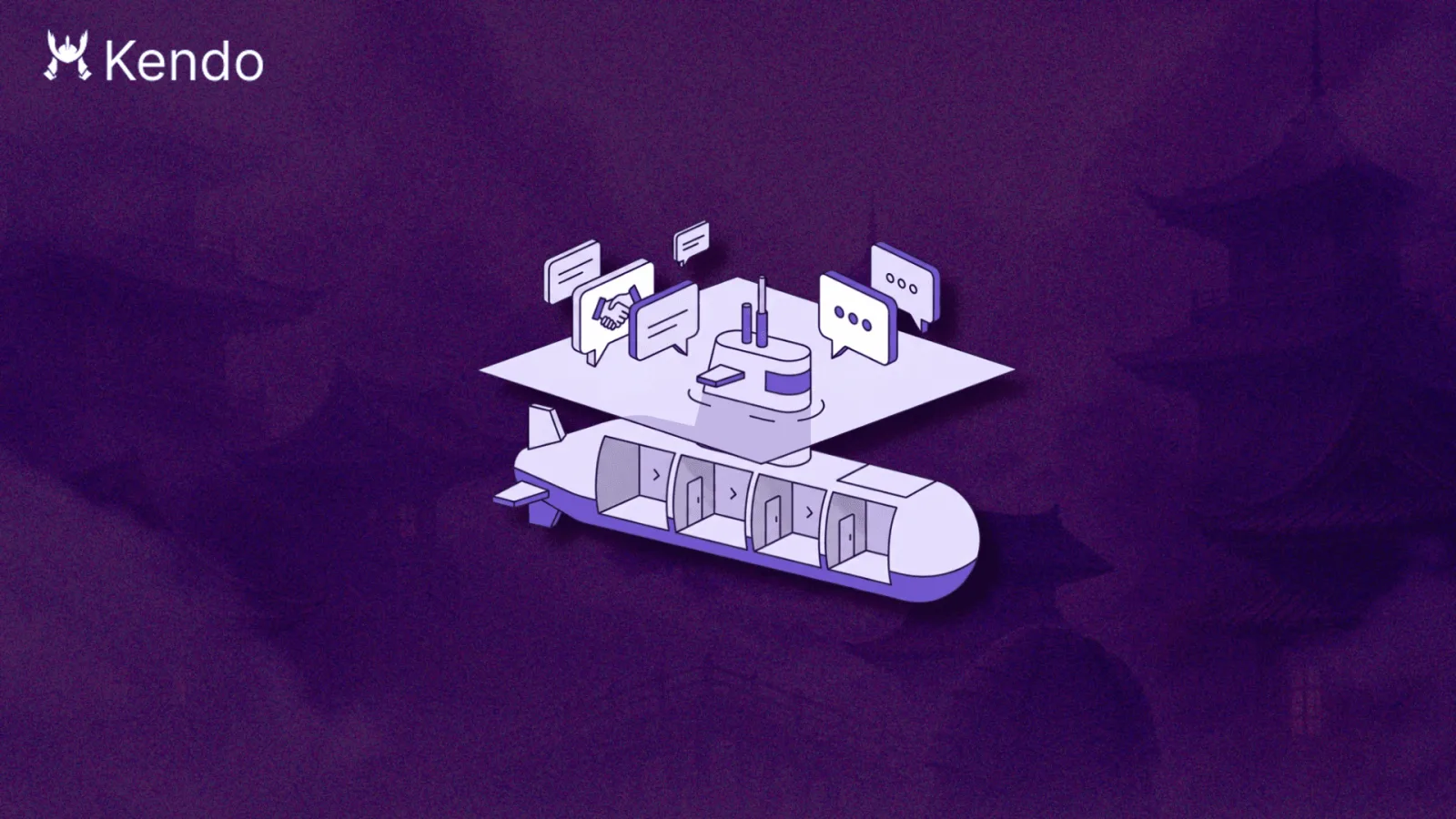
The system is visualized as a submarine with seven watertight compartments. The idea came from old war films: when a sub took a hit, the crew sealed each hatch behind them as they moved forward so a single breach could not flood the whole vessel.
Your sale works the same way. You move through one compartment at a time and seal the hatch behind you so the deal cannot slip backward. Skip a stage or leave a hatch open, and water rushes in: the deal stalls, then sinks.
The Sandler Submarine
Seven sequential compartments. Seal each one before you open the next.
Sandler groups the seven compartments into three phases: relationship, qualification, and closing. [Source: sandler.com, 2026]
The 7 Steps of the Sandler Selling System
Here is each compartment in order, with what it is for and, just as importantly, how to actually run it on a live call. The official Sandler stage definitions are quoted where they sharpen the point.
Bonding and Rapport
Develop equal business stature and encourage open, honest communication.
Every sales relationship starts with trust or the absence of it. The job here is to dismantle the buyer's guard and establish equal business stature, so you show up as a partner evaluating a fit, not a rep begging for time. Listen far more than you talk, and prove you understand their world before you ask anything pointed.
Two openers that earn honesty without feeling scripted:
- "What's been the biggest shift in your business this year?" Gets them talking about change, which is where pain hides.
- "What made you open to this conversation?" Surfaces their real motivation before you assume it.
Up-Front Contracts
Establish roles and ground rules to create a comfortable environment to do business.
The Up-Front Contract (UFC) is one of the most valuable tools in the system, and the one reps most often fumble. It is a quick verbal agreement set at the start of a meeting that removes ambiguity and anxiety. You name the time you have, the topics you will cover, and the possible outcomes, explicitly including the prospect's permission to say no.
Why it matters: it signals professionalism, and it frees the prospect to be honest instead of polite. A clear "no" today beats a vague "let me think about it" that ties up your pipeline for a month.
The opening 30 seconds, word for word
Set one of these at the start of every meeting and at the end to lock the next step. The contract covers time, agenda, and a clear outcome, so no one leaves guessing.
Pain Discovery and the Sandler Pain Funnel
The heart of the systemUncover the problems and their potential impact to identify reasons for doing business.
This stage is what makes Sandler, Sandler. Pain discovery moves past surface symptoms to the deeper business and emotional impact that actually drives change. The Pain Funnel is the structured questioning path that gets you there, and it works in three descending levels.
- Level 1, Technical pain. The facts: what is broken, slow, or missing.
- Level 2, Business and financial pain. The cost: what the problem is doing to revenue, time, or the team.
- Level 3, Personal pain. The deepest layer: how the problem lands on the prospect personally. This is the level that usually closes the deal.
Eight questions, in order
- "Tell me more about that."
- "Can you be more specific? Give me an example."
- "How long has this been a problem?"
- "What have you tried to do about it?"
- "Did what you tried work?"
- "How much do you think that has cost you?" (Level 2 opens here)
- "How do you feel about all of that?" (Level 3)
- "Have you given up trying to fix it?"
The sequence matters more than the exact wording. By the last question, the prospect has built the case for change themselves, with no arguing from you. To drill this before a live call, work through these sales roleplay scenarios built around pain-funnel discovery. For opener and presentation language outside the Sandler frame, pair it with these sales pitch examples.
One nuance that decides everything
- This only works with genuine empathy. Run mechanically, the funnel feels like a cross-examination and the prospect shuts down. Run with real curiosity, it becomes the most useful conversation they have had all month.
Budget
Discover whether the prospect can invest the time, money, and resources to fix the problem.
Here Sandler breaks ranks with most methodologies: it puts money on the table early, not at the end. Where a checklist like the BANT qualification framework often leaves budget as a box ticked late, Sandler makes it a hatch you seal up front. The point is to make sure neither side burns weeks on a deal that was never going to close financially.
And budget means more than cash. It includes time, internal resources, and the organizational will to actually implement. A prospect with the funds but no bandwidth is still a no.
Decision
Discuss the who, when, what, where, why, and how of the prospect's buying process.
Map the entire decision-making process before you present anything. You need to know who is involved and how they actually choose, or you will hit a wall in the final stretch.
- Stakeholder mapping. Name every person who has to sign off, not just your champion.
- Timeline and criteria. Confirm when they need a fix and the exact metrics they will judge options on.
- Objection prevention. Nail this and you delete the classic finish-line stall: "I need to run this by my team."
Fulfillment
Propose your solution to the problem, within budget, and consistent with the decision process.
Only now does the presentation happen, after trust, pain, budget, and the decision process are all locked. In the Sandler model the pitch is the fulfillment of an agreement, not the centerpiece of the sale.
- No surprises. The solution maps directly onto the documented pain and fits the established budget.
- A logical conclusion. Because the groundwork was thorough, the presentation feels like the obvious next step, not a hard sell.
- Confirmation, not persuasion. You are simply showing the solution meets the criteria you both already agreed on.
Post-Sell
Establish next steps, discuss future business, and prevent loss to competitors or buyer's remorse.
The process does not end at the signature. Post-Sell protects the deal from buyer's remorse and last-minute competitor counteroffers, and it is where long-term retention is won or lost.
- Reinforce the decision. Confirm next steps and a clear implementation timeline immediately.
- Block competitors. Stay close in the early days, exactly when a buyer is most likely to second-guess or field a counter.
- Build the foundation. Use this stage to set up a lasting partnership and future expansion.
When the Sandler Methodology Works Best
Sandler is a system, not a religion. It shines in some environments and feels heavy-handed in others. Use it where the structure earns its keep:
- Complex B2B sales with longer cycles. Multiple stakeholders, real budgets, and the multi-month B2B sales cycle are exactly where sealing each hatch prevents costly backtracking.
- High-trust industries. Financial services, insurance, consulting, and enterprise software all reward a trust-first approach. Teams that pair Sandler-style sales training software with AI practice and coaching have reported doubled close rates and 75% faster ramp.
- Teams with high turnover or fast hiring. A consistent, repeatable framework means new reps follow a process instead of relying on raw instinct, which makes sales onboarding far less dependent on a star manager.
- Pipelines clogged with bad fits. If your team sinks hours into unqualified leads, Sandler's early budget and decision qualification cleans that up fast.
Where it struggles: quick transactional sales that close in a single touch, and retail settings where deep discovery is not practical. If you want to see what disciplined, Sandler-style reps do differently in the data, our piece on AI sales coaching and performance data digs in. For teams onboarding fast, the guide to reducing sales ramp time pairs well with a repeatable framework.
"Almost close to double" close rates for brand-new agents, from the repetition and rebuttals. How Globe Life made a methodology stick. Read the story →Common Sandler Mistakes to Avoid
Most failed Sandler rollouts die from the same handful of habits. Watch for these:
- Rushing through pain discovery. Stopping at Level 1 means you never reach the emotional drivers that close. This is the single most common failure point, and it is invisible without sales call tracking to catch it.
- Treating the Up-Front Contract as a formality. Delivered as a rote script instead of a real agreement, it loses all its power.
- Dodging the budget conversation. Postponing it just delays the inevitable and wastes everyone's time.
- Running the Pain Funnel as an interrogation. Tone, pace, and genuine curiosity matter as much as the questions.
- Neglecting Post-Sell. Sign and disappear, and you invite buyer's remorse and churn.
How to Actually Practice the Sandler Methodology
Here is the uncomfortable truth: the Sandler system only works if you can run it under pressure. You cannot master the Pain Funnel from a slide deck. It takes reps, the kind of drilling that turns a question sequence into instinct, and most teams never get enough of it because the only practice ground is live deals.
That is the gap. Reinforcement is where Sandler adoption usually stalls. The fix is to move the reps off real prospects and into a zero-risk environment, then measure execution instead of guessing at it. This is the layer Kendo's AI roleplay is built for. If you are weighing your options first, our rundown of the best AI sales roleplaying tools compares the platforms that can simulate a Sandler call.
Drill Every Step With AI Roleplay
Create custom AI prospects from a simple prompt and simulate any cycle or personality to target a specific Sandler stage. Practice the exact resistance that breaks new reps.
- Realistic resistance. Roleplay a prospect who is evasive about their decision process or tries to rush straight to a proposal, the two moments Sandler is designed to survive.
- Low-latency voice. Genuine emotional responses and objections, so the conversation feels like a real call, not a chatbot.
- Zero stakes. Pause, pivot, and try a different question sequence without burning a lead.
Score Calls Against a Sandler Scorecard
Kendo's AI call review automatically scores every call imported from Zoom or Fathom. Build a custom scorecard that mirrors the Submarine so coaching is based on what happened, not what people remember.
- Discovery tracking. Verify whether reps reached all three pain levels and surfaced budget early.
- Immediate feedback. Reps get specific critiques within minutes of hanging up, closing the gap between mistake and correction.
- Tailored metrics. Separate scorecards for cold calls, demos, and fulfillment.
Diagnose Gaps With the AI Sales Manager
The AI Sales Manager turns coaching from a guessing game into a data-backed strategy. Query your team's performance in plain language.
- Instant insights. Ask "Which reps are skipping the budget conversation?" or "Where is discovery breaking down?" and get an answer drawn from real calls.
- Evidence-based coaching. Replace vague feedback with specific, measurable data from every recorded interaction.
How Globe Life nearly doubled new-agent close rates with repetition
Leaders were burning hours on manual roleplays and new agents were starting around a 33% close rate. After moving practice into Kendo, agents got the reps and rebuttals they needed before live calls, and the numbers moved fast.
"Our closing rate for brand new agents has been almost close to double with the use of Kendo just because they're getting that repetition, they're getting the rebuttals, they have the practice."
Jess Chang, Partner at Globe LifeThe Bottom Line: Stop Pitching, Start Partnering
Sandler has dominated for decades because it treats selling as a hunt for the truth, not a battle of persuasion. Master the seven-step Submarine and the depth of the Pain Funnel, and you stop showing up as a vendor and start showing up as the advisor the buyer actually wants in their sliver of attention.
But the framework only becomes real when it turns into instinct, and instinct only comes from reps. That is the wall most Sandler rollouts hit. If you want your team drilling real objection handling and pain-funnel sequences before they ever risk a live deal, start a free Kendo roleplay or book a demo. Methodology teaches the play. Practice wins the deal.
Frequently Asked Questions
What is the Sandler sales methodology?
The Sandler sales methodology is a seven-step, psychology-based selling system created by David Sandler in 1967. It reframes a sales call as mutual qualification: instead of pitching and chasing, the rep diagnoses problems like a doctor, qualifies hard on pain, budget, and decision process, and is willing to walk away from a bad fit. The seven steps are Bonding and Rapport, Up-Front Contract, Pain, Budget, Decision, Fulfillment, and Post-Sell.
What is the Sandler Submarine?
The Sandler Submarine is the visual metaphor for the seven-step system. David Sandler pictured the sale as a submarine with seven watertight compartments. You move forward one compartment at a time and seal the hatch behind you, so the conversation cannot slip backward. If you skip a step or leave a hatch open, the deal floods and sinks. The seven compartments group into three phases: relationship (Bonding and Rapport, Up-Front Contract), qualification (Pain, Budget, Decision), and closing (Fulfillment, Post-Sell).
What is the Sandler Pain Funnel?
The Pain Funnel is a sequence of questions that takes a prospect from a surface symptom down to the real, personal reason they want change. It works in three levels: technical pain (what is broken or slow), business and financial pain (what it is costing the organization), and personal pain (how the problem affects the prospect directly). The personal level usually drives the final decision. The sequence matters more than the exact wording, and it only works delivered with genuine curiosity rather than as an interrogation.
What is an Up-Front Contract in Sandler?
An Up-Front Contract is a quick verbal agreement set at the start of a meeting that defines the time available, the agenda, and the possible outcomes, including the prospect's right to say no. It removes ambiguity and pressure, signals professionalism, and gives both sides permission to be honest, so you avoid the polite no-decision that wastes weeks of pipeline.
When does the Sandler methodology work best?
Sandler fits complex B2B sales with longer cycles, multiple stakeholders, and real budgets, and high-trust industries like financial services, insurance, consulting, and enterprise software. It is also strong for teams with high turnover that need a repeatable framework, and for any team drowning in unqualified leads. It is a poor fit for quick transactional or retail sales where there is no room for real discovery.
How is Sandler different from other sales methodologies?
Three things set Sandler apart. It treats the call as mutual qualification rather than persuasion, so disqualifying a bad fit is a win. It discusses budget early instead of saving price for the end. And it grounds technique in psychology, using Eric Berne's Transactional Analysis to keep the rep in an equal, adult-to-adult position instead of the eager seller chasing approval.
How do reps practice the Sandler methodology?
You cannot learn the Pain Funnel from a slide deck. Reps build the instinct through repetition, ideally before they touch a live deal. AI roleplay platforms like Kendo let reps run unlimited Sandler calls against realistic AI buyers who resist, deflect, and rush to a proposal, then score the recording against a custom Sandler scorecard so coaching is based on what actually happened on the call.

Luke Alexander is the founder of Kendo AI, where he's helped train more than 5,000 sales reps. He started in sales as a frontline closer, scaled a high-ticket sales-training company, and founded Closer Cartel and co-founded Closify before building Kendo to fix the tools he wished he'd had: realistic AI roleplay and automated call review for fast-moving sales teams. He writes about sales methodology, ramp speed, objection handling, and applying AI across the revenue org.