
8 B2B Sales Techniques to Win More Deals in 2026
Your buyer self-serves most of the journey and decides by committee. These 8 techniques are built for that reality, from multi-threading to value selling and mutual action plans, each with a how-to and the number behind it.
If you sell into companies, your buyer barely wants to talk to you. Gartner found that B2B buyers now spend just 17% of the entire purchase journey meeting with potential suppliers. Split that across every vendor in the deal and any single rep gets roughly 5 to 6% of the buyer's time [Gartner].
By 2026, 67% of buyers say they'd prefer a rep-free experience, and 70% want a fully digital, self-service one [Gartner, 2026]. That is the reality every technique here has to survive.
The deals are bigger, the cycle runs for months, and you're not selling to a person anymore. You're selling to a committee of 6 to 10 people who can't agree with each other [Gartner].
So the old "build rapport, handle the objection, ask for the close" playbook underperforms. It was built for one buyer in one room. The techniques below are built for the buyer you actually have: distracted, self-educated, and answerable to a group.
Here's what wins complex B2B deals now, and the part nobody tells you: how to actually run each one.
- 8 B2B-specific techniques, each with a concrete how-to and a number behind it
- A Deal Health Check you can run against your three biggest open deals today
- How to drill these so your reps run them live instead of just nodding along in training
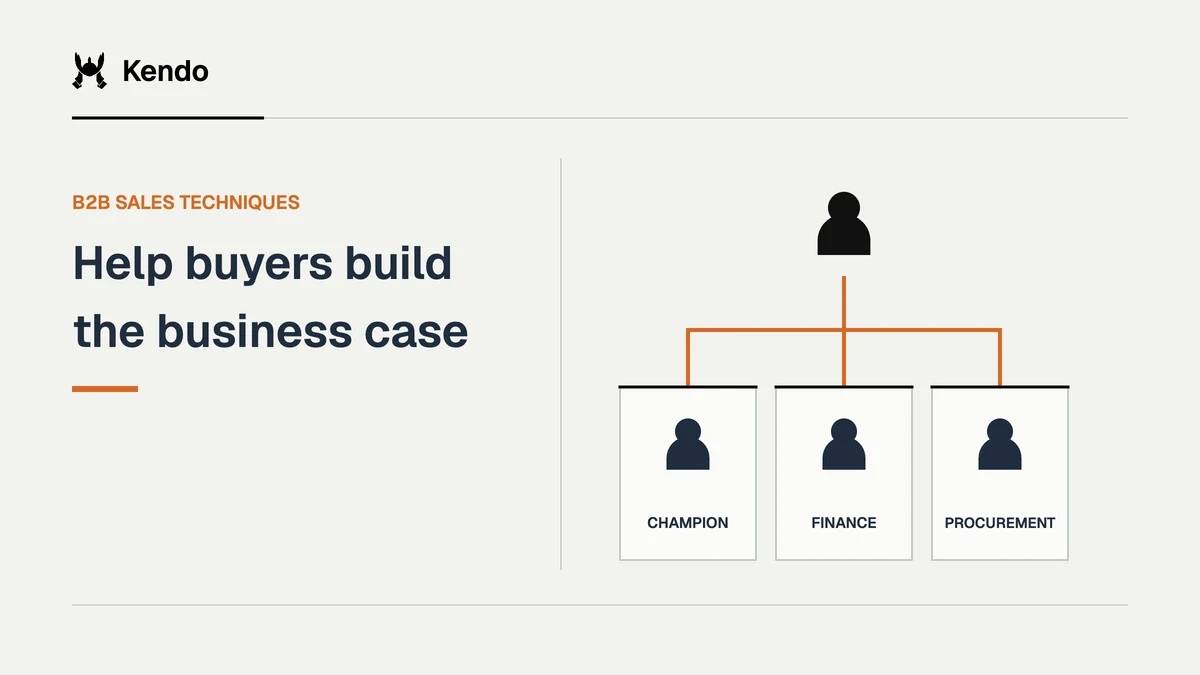
Modern B2B sales techniques are the moves that win multi-stakeholder, long-cycle deals: multi-threading the buying committee, running discovery deep enough to find the real pain, selling a quantified business case instead of a product, leading with insight, helping buyers make sense of conflicting information, building a champion who sells for you internally, co-building a mutual action plan that survives procurement, and selling across the channels buyers actually use. Knowing them is table stakes. Running them under pressure is the edge.
Multi-Thread the Whole Buying Committee
Single-threaded deals are fragile, and the data is brutal. Multi-threading boosts win rates by 130% in deals over $50K, and won deals carry roughly twice as many buyer contacts as lost ones [Gong, 2025].
Enterprise deals average 17 contacts. Yet around 70% of B2B opportunities still have only one point of contact in the CRM [Gong, 2025].
That single contact is a liability. About 40% of deals stall when the primary contact leaves or changes roles [Gong, 2025]. You did everything right, your champion got promoted, and the deal evaporated because you never met anyone else.
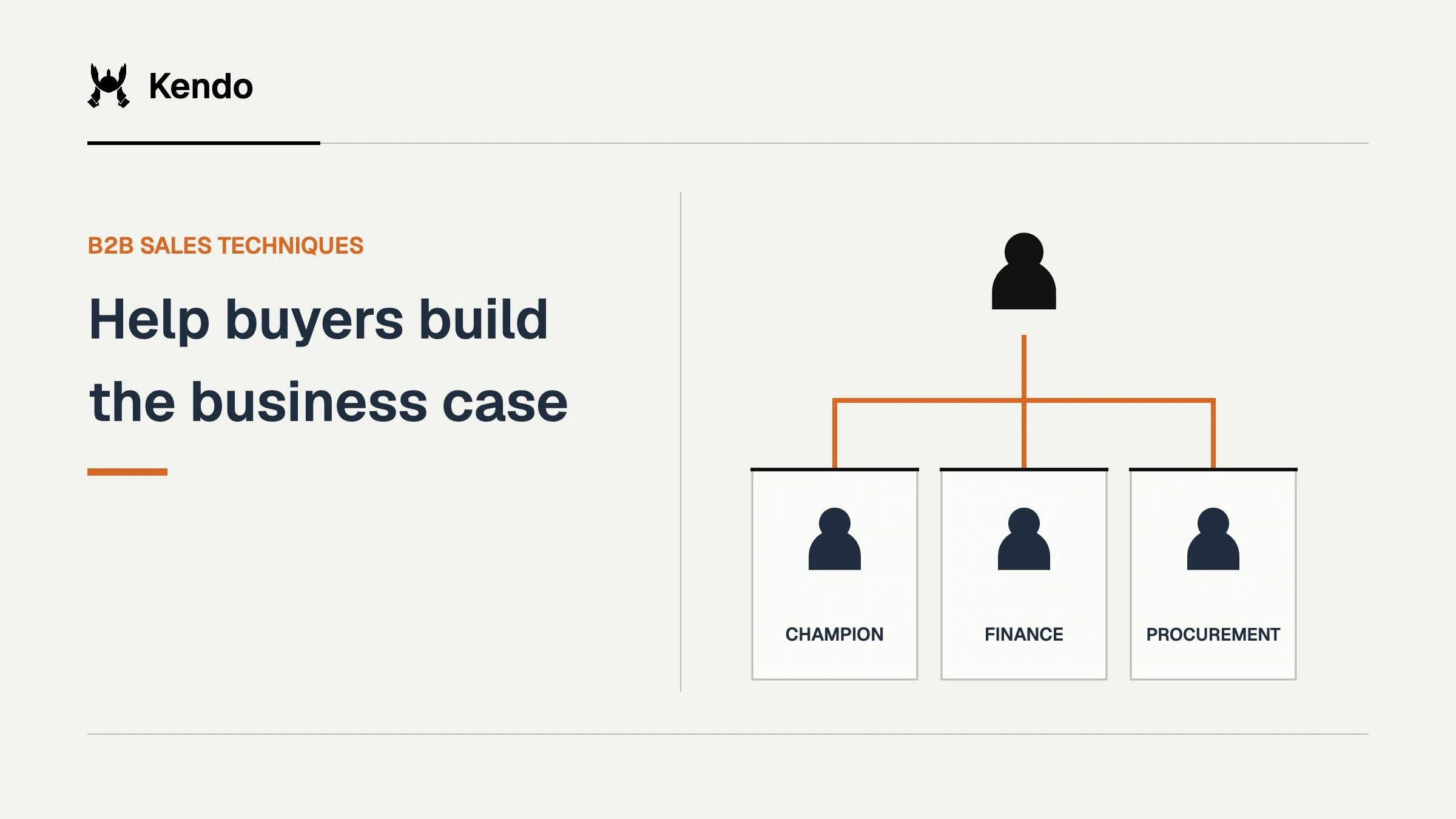
The committee is already big. A typical complex B2B purchase involves 6 to 10 decision makers, each showing up with four or five pieces of research they gathered on their own [Gartner]. Know one of them, and the other nine form opinions about you without you in the room.
Single-threading holds the bright thread and hopes. Multi-threading means a named relationship in every role that touches the deal.
- Map the org before you pitch. In an early call, ask your contact directly: "Walk me through who else weighs in on a decision like this, and what each of them cares about." That one question surfaces the economic buyer, the technical evaluator, the end users, and the blocker you didn't know existed.
- Engage three or more contacts across functions, not three people in the same department. The CFO's risk, the VP's outcome, and the admin's daily workflow are different deals. Sell each one.
- Get a name in every function before you forecast. If you can't name the economic buyer, you don't have a deal. You have a conversation.
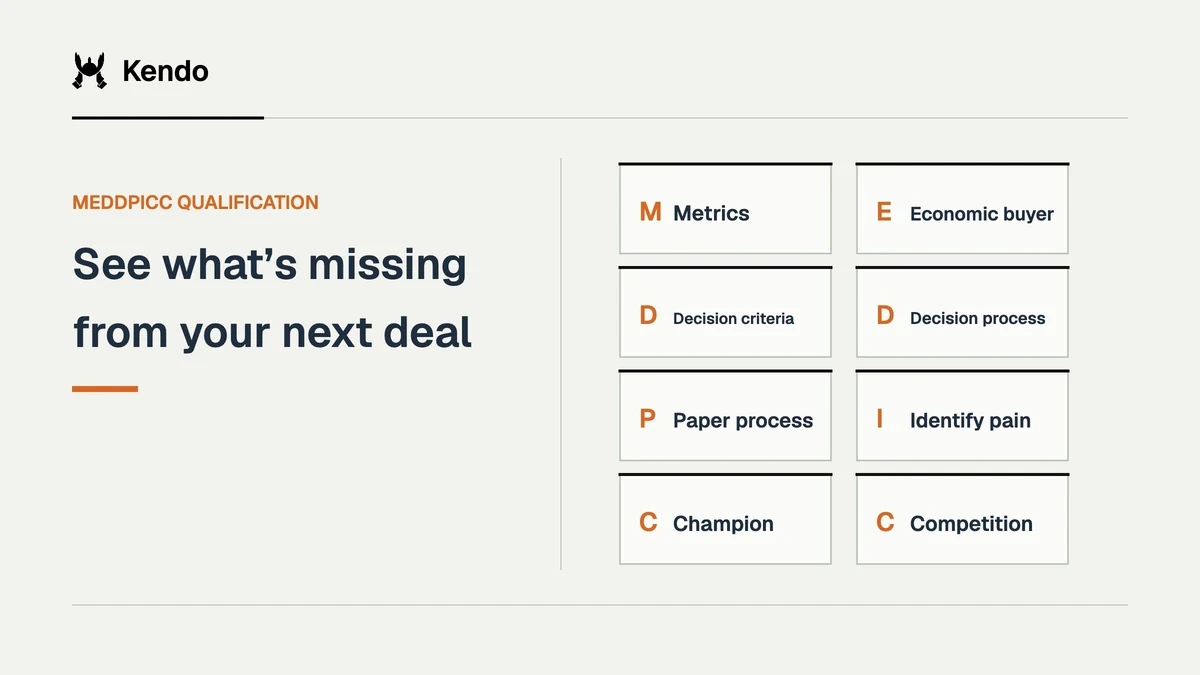
The deeper qualification spine for this is the MEDDIC framework, which forces you to identify the economic buyer and your champion before a deal is real.
Run Discovery Deep Enough to Find the Real Pain
Most reps discover at the surface, hear a problem, and start pitching. The best ones keep digging, and there's a measurable line between the two.
In Gong's analysis of over 519,000 B2B sales call recordings, top performers asked 11 to 14 questions per call, versus 6 to 7 for average reps, and the 11-to-14 band hit the highest success rate at around 74%. Go below that and you miss the gaps that resurface later as a lost deal. Go way above it and the call turns into an interrogation.
The number is a proxy for the real skill: layered questioning. You're not trying to hit a quota of questions. You're trying to get past the symptom to the business problem underneath it.
How to run it- Ask the cost-of-inaction question. "If this stays broken for another year, what does that cost you?" A prospect who can quantify the pain is a prospect who can build you a business case later.
- Go one level deeper on every answer. They say onboarding is slow. Ask how slow, what it costs per rep, who feels it, what they've already tried. Surface symptoms don't move committees. Quantified pain does.
- Listen more than you talk. High performers hold a steady talk-to-listen ratio whether they win or lose. Low performers talk more when they're losing [Gong, 2025].
This is consultative work, not a feature dump. If you want the full posture, the breakdown of consultative, diagnose-first selling is the right companion read.
Sell the Business Case, Not the Product
Your biggest competitor in a B2B deal isn't the other vendor. It's "do nothing." Roughly 61% of potential B2B deals end in no decision [2025 value-selling research]. The committee gets nervous, can't agree, and defaults to the status quo.
You beat the status quo with a quantified business case, not a feature list. Deals close materially more often when the seller can show a clear, numbers-backed case for change that the buyer helped build [2025 value-selling research]. Economic buyers don't approve features. They approve returns.
How to run it- Co-build the ROI, don't present it. A business case you hand over is a slide. A business case the buyer's own numbers built is theirs to defend in the committee meeting you're not invited to.
- Anchor on the cost of inaction. Use the number you surfaced in discovery. "You told me the current process costs roughly $X a quarter. Here's what changing it looks like against that."
- Name the economic buyer's language. The CFO cares about payback period and risk, not your product roadmap. Translate every feature into a financial outcome before it reaches them.
For complex deals, MEDDPICC's metrics and economic-buyer pillars are exactly how you keep the business case tied to the people who sign.
Lead With Insight, Not Just Answers
The reps who win complex deals don't show up and ask "so what keeps you up at night?" They show up with a point of view that reframes how the buyer sees their own problem.
This is the Challenger pattern from Matthew Dixon and Brent Adamson's CEB study of 6,000 reps. Challenger reps make up about 40% of top performers, and 54% of high performers in complex sales [The Challenger Sale].
The relationship-builder, the rep who leads with rapport and being likable, was the worst-performing profile at around 7% [The Challenger Sale].
That isn't an argument against being likable. It's an argument that in a committee deal, insight beats agreeableness. Buyers value a supplier who teaches them something about their business more than one who simply nods along.
How to run it- Bring one reframe to every first meeting. Something true about their industry or their numbers that they probably haven't connected yet. Earn the right to challenge by being specific, not contrarian.
- Teach, then tailor. Lead with the insight, then connect it to the individual stakeholder's world. The CFO and the end user need the same insight framed two different ways.
- Take control of the timeline. Challengers are comfortable saying "based on what you've told me, here's the order I'd tackle this in." Passive reps wait. Insight-led reps direct.
Be the Sense-Maker, Not the Brochure
Here's the modern paradox: buyers have more good information than ever, and it's paralyzing them. Gartner found 89% of B2B customers said the information they encountered was high quality. The sheer volume of trustworthy, often contradictory information makes it harder to decide, not easier.
Pile that on top of a committee, and it gets worse. 74% of B2B buyer teams show "unhealthy" conflict during the decision process [Gartner, 2025]. They're not stuck because they lack information. They're stuck because they can't reconcile it or agree on it.
The seller who wins isn't the one who sends the most content. It's the one who helps the committee make sense of what they already have. Gartner calls this sense-making, and sellers who do it close more high-quality, low-regret deals [Gartner].
How to run it- Curate, don't dump. When a prospect says they're "doing research," don't email five more PDFs. Help them judge what they've already found: what to trust, what to ignore, what actually applies to their situation.
- Give the committee a shared frame. A simple decision criteria doc the whole group can align on does more than another demo. You're reducing their internal conflict, which is the thing actually blocking the deal.
- Quantify the trade-offs for them. "Option A is cheaper but slower to value; B is the reverse. Given your timeline, here's how I'd weigh it." That's the work the buyer can't do alone.
This advisory posture is the same one behind consultative selling, and it's what separates a guide from a vendor.
Build a Champion Who Sells When You're Not in the Room
You get 5 to 6% of the buyer's time [Gartner]. Your champion is in the building for the other 94%. The whole game is whether they can sell your value internally when you're not there.
A weak champion likes you. A real champion can articulate your business case to their CFO without you on the call. That difference decides committee deals.
And one champion isn't enough. Remember, around 40% of deals die when a single contact changes roles [Gong, 2025]. Betting the deal on one person is the same single-threaded risk that kills pipelines, just wearing a friendlier face.
How to run it- Validate the champion, don't assume them. Test it: "If you had to make the case for this internally next week, how would you frame it?" If they can't, you haven't built a champion yet. You've built a fan.
- Arm them with a champion kit. A one-page business case, the answers to the three objections their committee will raise, and the ROI math, all in their language. Make it effortless for them to sell you.
- Build a backup. Develop a second supporter in a different function so one reorg doesn't end the deal. This is multi-threading applied to your champions.
The champion kit only works if your rep can deliver it under fire. The objections a CFO throws at your champion are the same ones your rep has to answer first, live, without freezing.
This is how Kendo customers build the reflex. At Globe Life, brand-new agents drill the rebuttals on AI prospects before live calls, which is what nearly doubled their close rate.
Reps Get Specific, Technique-Level Feedback After Every Practice Call
After a roleplay, a rep can ask Kendo's AI Coach how to handle the committee better and get back prioritized, concrete fixes tied to these exact techniques, not a vague score. This is where real-time AI sales coaching earns its keep: it names the habit costing the deal and the move to make instead, so the next call runs the play instead of just knowing it.
You left them the pitch. Hand over a one-page business case plus the three objections their committee will raise, so they can defend it without you.
You sold features. The economic buyer approves returns, so reframe the value as payback period and risk before your champion ever forwards it up.
The deal rides on one person. Name a backup supporter in another function this week, so one reorg doesn't end the opportunity.
A real example of Kendo AI Coach feedback on a scored practice call. Reps act on the specifics, not a number.
Co-Build a Mutual Action Plan and Handle Procurement Early
Deals don't usually die at the close. They die in the gap between "verbal yes" and "signed," where procurement, legal, and security suddenly appear and reset your timeline by six weeks.
A mutual action plan is the fix. It's a shared, dated close plan that both sides build and edit together, mapping every step from here to signature. Deals with a mutual action plan have a 26% higher win rate [Outreach]. It works because it makes the buyer's process visible, including the parts they forgot to mention.
The other half is procurement. Most reps treat it as a black box they hit at the end. The reps who win treat it as a stakeholder to brief early.

- Build the close plan together, out loud. "Let's map backward from your go-live date. What has to happen, in what order, and who owns each step on your side?" Their answer exposes the procurement and legal steps you'd otherwise discover too late.
- Pre-brief procurement before you need them. Ask your champion who runs procurement and what they'll require: security review, MSA redlines, vendor forms. Get ahead of it in week two, not week fourteen.
- Keep the plan live and shared. A close plan that lives in your head isn't a plan. One both sides can see keeps the deal honest and the buyer accountable.
The paper-process and procurement pillars are exactly what MEDDPICC adds on top of MEDDIC, and they're where most committee deals actually stall. When procurement pushes back on price or terms, a repeatable way to handle those objections keeps the deal moving instead of frozen.
Sell the Way Buyers Actually Buy: Across Channels
Your buyer already did most of their evaluation without you. They prefer it that way: 67% want a rep-free experience, 70% want fully digital self-service [Gartner, 2026]. Fighting that is a losing battle. Meeting them in it is the technique.
The rep's job changed. It's no longer to be the source of information. It's to help the buyer make sense of the information they found, including the AI-generated kind. 69% of B2B buyers turn to sales reps to validate AI-generated insights [Gartner, 2026]. That's your new high-value moment.
And reps who lean into AI in their own workflow are pulling ahead. Sellers who frequently use AI generate 77% more revenue than those who don't [Gong, 2025].
How to run it- Run an asynchronous-friendly process. Digital sales rooms, recorded walkthroughs, and a shared deal space let the committee evaluate on their own time, which is exactly how they want to buy.
- Be the validator. When a buyer shows up with an AI-generated comparison or a half-formed conclusion, don't dismiss it. Pressure-test it with them. That's where trust gets built now.
- Use AI on your side too. Putting AI to work across the sales workflow means researching accounts, prepping for committee dynamics, and rehearsing the call before you ever dial. The reps using these AI sales tools are out-earning the ones who aren't.
The B2B Deal Health Check
Here's the question every "techniques" article skips: which of your open deals are actually winnable, and which are quietly dying? The eight techniques above turn into eight signals you can run against any live opportunity.
Run this against your three biggest open deals right now. Every row in the At Risk column is either a deal action or a coaching assignment. It is not a reason to keep the deal in best-case.
The B2B Deal Health Check
Eight signals that tell you whether a complex deal is real or quietly dying. Run it on your top 3 open deals; coach to any At Risk row.
| Deal Health Signal | Strong (the deal is real) | At Risk (intervene now) |
|---|---|---|
| Committee coverage | 3+ contacts engaged across different functions | One point of contact in the CRM |
| Discovery depth | You've quantified the cost of inaction in their numbers | You know the symptom, not the business cost |
| Business case | A quantified ROI case the buyer helped build | The ROI lives only in your slides |
| Insight | You taught them something about their own business | You answered questions and pitched features |
| Sense-making | You've given the committee a shared decision frame | They're "still doing research" with no end in sight |
| Champion | Your champion can sell your value without you in the room | You're the only one selling internally |
| Mutual action plan | A shared, dated close plan both sides edit | Next steps live in your head |
| Procurement | You've pre-briefed procurement and know the steps | Procurement is a black box at the end |
How to Actually Drill These Before a Live Call
Knowing these eight techniques and running them live under pressure are different skills. Most reps can recite "multi-thread the committee" in training and then freeze when a CFO asks a sharp question on a real call. The gap between knowing and doing is where deals die.
You can't close that gap with more slides. You close it with reps, the practice kind. The teams winning complex deals make their people rehearse the hard moments, the procurement pushback, the committee skeptic, the cost-of-inaction conversation, before those moments cost a real opportunity.
That used to mean a manager roleplaying with each rep, which doesn't scale. AI roleplay changed the economics. Reps now run unlimited practice against realistic AI buyers that push back like a real committee member, then get scored on what they actually did.
Kendo turns each weak technique into a live drill: build a skeptical CFO, technical evaluator, or procurement lead, then have the rep practice the exact conversation before it's live.
Every Practice Call Comes Back Scored, With Exactly Where to Coach
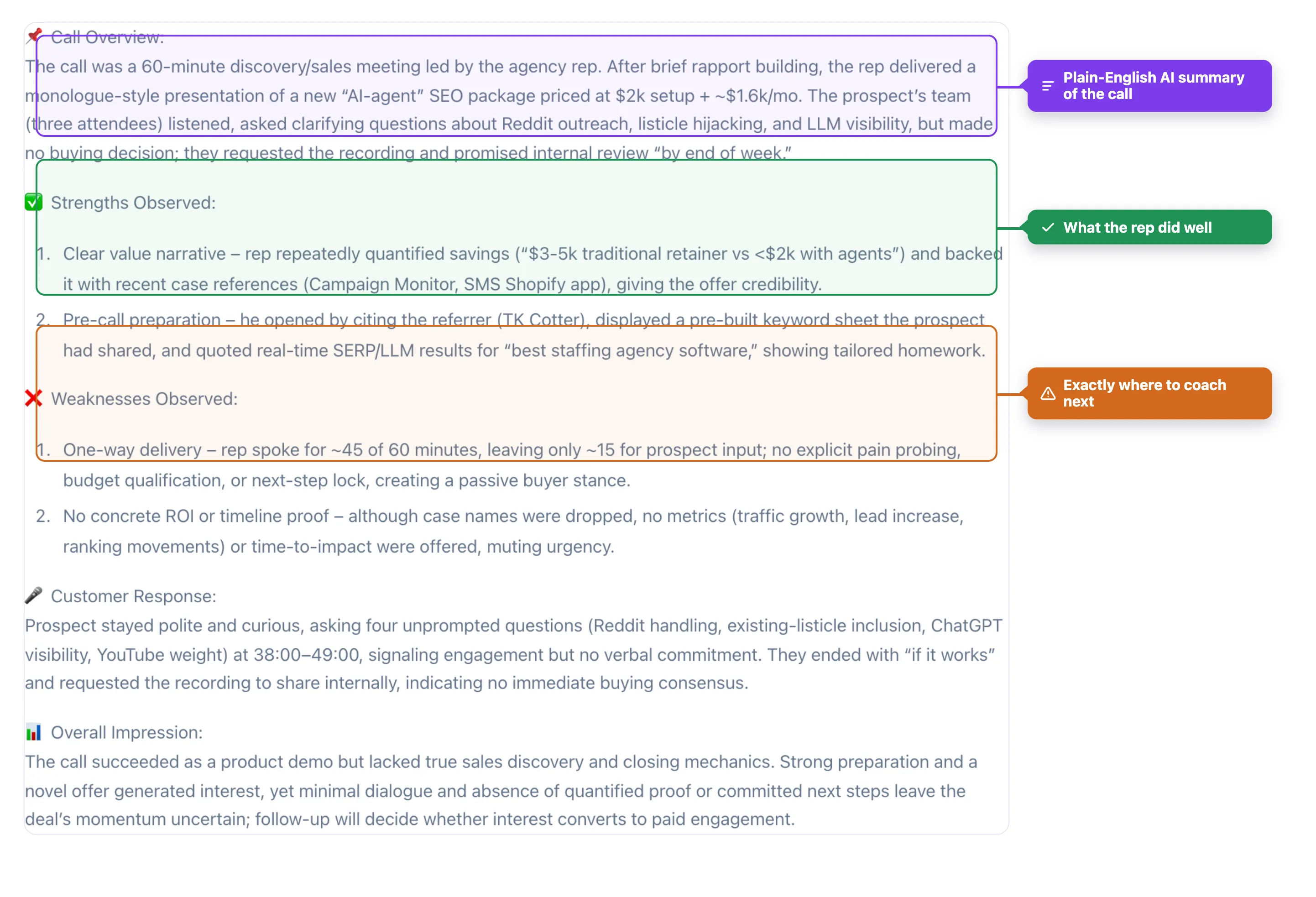
Kendo auto-reviews each call and writes a plain-English read of what the rep did well and where the technique broke down, then scores it against a custom scorecard. Managers stop guessing which rep needs which drill, and the feedback points to the specific move, not a vague number.
If you're weighing which tool to practice on, the breakdown of the best AI sales roleplay tools is the right next read, and structured roleplay scenarios give you the situations to run. For a wider view across platforms, the roundup of the best AI sales training software covers how the categories compare. This isn't theory; it's how real teams compress the learning curve.
When reps drilled the techniques, they started closing nearly 2x as often
Knowing the rebuttals and the objection paths isn't the same as running them live. By drilling them on AI prospects first, Globe Life moved brand-new agents from around 33% to 60%+ close rates in about six months.
Result: new agents getting the repetition, rebuttals, and practice before live calls closed at nearly double their old rate, around 33% up to 60%+.
"Our closing rate for brand new agents has been almost close to double with the use of Kendo just because they're getting that repetition, they're getting the rebuttals, they have the practice."Jess Chang, Partner, Globe Life
The mechanism is the same every time: reps build the reflex on AI prospects, so the technique holds when the real deal is on the line.
United Insurance Pros used the same pattern to cut sales onboarding from 45 days to 14 days and reach baseline in 14 days instead of 45+, saving $3,000+ per agent per month [United Insurance Pros].
Skvarla Insurance saw 5 to 20% production gains after reps practiced objections on AI instead of burning real leads [Skvarla Insurance].
B2B Sales Techniques FAQ
The techniques that win complex deals are the ones built for how B2B buyers actually behave now: multi-threading the buying committee, running deep discovery to quantify the real pain, selling a numbers-backed business case instead of features, leading with insight, helping the committee make sense of conflicting information, building a champion who sells internally, co-building a mutual action plan, and selling across digital channels. Tactics like "always be closing" underperform because they were built for a single buyer, not a committee of 6 to 10.
B2B deals involve multiple decision makers (typically 6 to 10), longer cycles measured in months, higher contract values, and a formal procurement and legal process. A B2C sale is usually one person deciding quickly. A B2B sale is a group decision where your champion has to sell your value internally and the biggest competitor is often "do nothing," which is where roughly 61% of potential deals end, according to 2025 value-selling research.
Multi-thread it. Map who's involved early by asking your contact who else weighs in and what each person cares about, then engage three or more contacts across different functions. Sell each stakeholder their version of the value (financial for the CFO, outcome for the VP, workflow for the end user), and help the group reconcile their internal disagreement, since Gartner found 74% of buyer teams show unhealthy conflict during the decision in 2025. Multi-threaded deals win at much higher rates than single-threaded ones, per Gong's 2025 data.
Multi-threading means building relationships with several stakeholders in a deal instead of relying on one contact. It matters because around 40% of deals stall when a single contact leaves or changes roles, and multi-threading boosts win rates by 130% in deals over $50K, according to Gong's 2025 analysis. The goal is to have a named relationship in every function that touches the decision.
Through scored roleplay. Reps rehearse the hard moments (a skeptical CFO, procurement pushback, the cost-of-inaction conversation) against realistic AI buyers, then get feedback on what they actually did. AI roleplay platforms like Kendo make this scalable, so every rep drills the exact committee scenarios they'll face before a real opportunity is at stake, instead of learning on live deals.
Knowing the Techniques Isn't the Edge. Running Them Is.
Every rep on your team can read this list and nod. The committee deal still gets won by the one who actually multi-threads, actually builds the business case, actually has a champion who can sell without them in the room. The knowledge is free. The execution is the moat.
So here's the move this week, not someday:
- Run the Deal Health Check against your three biggest open deals. Find the At Risk rows. Those are your actions.
- Assign practice on the weakest technique. If your reps freeze on procurement objections or can't reframe a problem, that's a roleplay rep, not a lecture. Bake these drills into your B2B sales training program so the reps come back to them.
The buyer changed. They self-serve, they buy by committee, they barely want you in the room. The techniques that win in 2026 are the ones that work with that reality, and the teams that win are the ones whose reps can run them live, on the deal that matters, without freezing.

Luke Alexander is the founder of Kendo AI, where he's helped train more than 5,000 sales reps. He started in sales as a frontline closer, scaled a high-ticket sales-training company, and founded Closer Cartel and AI Insiders before building Kendo to fix the tools he wished he'd had: realistic AI roleplay and automated call review for fast-moving sales teams. He writes about sales technique, ramp speed, objection handling, and applying AI across the revenue org.