
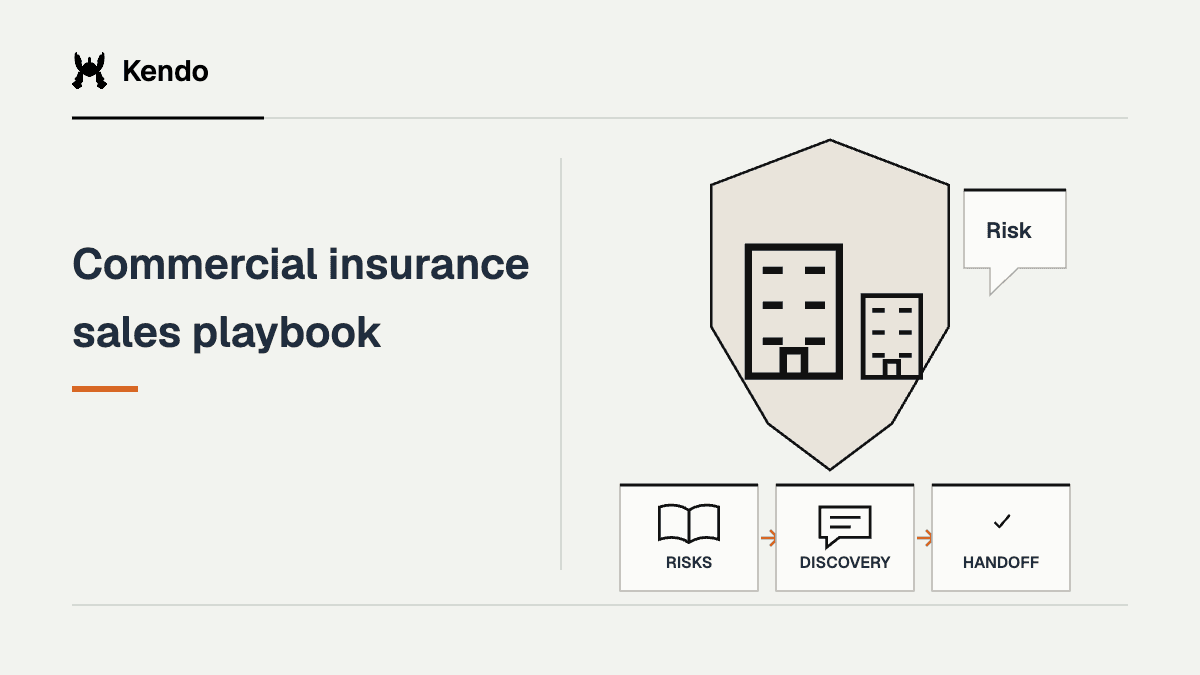

To sell commercial insurance, pick a type of business your agency can actually place, learn how that business works before you quote, and send the underwriter facts you have checked. You earn the next meeting by spotting what changed in the business and asking about it, not by promising to save money before you know the account.
For a producer moving from personal lines, the biggest change is how deep the business conversation goes. A renewal date is only one fact. You also need to know how the business runs, who decides, what service the owner expects and who on your team can answer technical questions. A full prospect list does not help if your agency has no carrier for that business or nobody who can check the coverage advice.
Independent agencies place most U.S. commercial premium, so a producer's results depend on the carriers and technical colleagues the agency can bring.
Share of U.S. written premium placed by independent agencies, 2025.
1. Choose a niche with both access and technical support
A good niche is more than an industry name. Pick businesses you can understand and serve: what they do, how big they are, where they operate, how they usually change and which carriers your agency can approach.
“Contractors” is probably too broad for a new producer. Two contractors can do very different work, use subcontractors in different ways and need different information. Start with a group narrow enough that experienced colleagues can explain the common questions and the exceptions.
Check three things with the agency before building the prospect list:
- Market access: which carriers will actually quote this kind of business right now.
- Technical support: who on the team checks risks, submissions and quotes you have not seen before.
- Service capacity: who looks after the account once it is placed, and what promises the team can keep.
If one is missing, fix it before you tell a prospect the agency can help. You do not want to find out after the second meeting that nobody can support the account.
Commercial lines also move at different speeds, which is one more reason to pick a niche before building a list.
- +4.0%
- commercial lines overall ($502.35B)
- +10.2%
- commercial auto ($70.94B)
- -5.3%
- workers comp ($55.42B)
Year over year change in U.S. direct premiums written, 2024.
Source: S&P Global Market Intelligence, reported by Business Insurance
Producers who have made the move say the same thing: growing a commercial book takes a plan for carriers, support and service, not just a new script. One Short from a California commercial broker shows the carrier side of that.
A California commercial broker on why carriers hold back from new agencies, and what sat between his agency and its first appointments.

Clip this for anyone who thinks the prospect list comes first.
Formal education exists too. The Hartford runs a Commercial Producer School that pairs technical instruction with applied exercises. Match the course to what the producer is missing; the insurance sales training comparison shows which options teach product knowledge and which focus on practice and coaching.
2. Start a business conversation the owner recognizes
Have a real reason to call: an introduction, an inquiry they sent, a renewal conversation they agreed to, or a change in their business you can describe correctly. Follow your agency's outreach rules.
Never pretend you already know the owner, and never claim their current policy falls short. What you read online gives you a question to ask. It does not give you the answer.
A simple opener for a contact you are allowed to make:
“Your business now lists installation work alongside equipment sales. Has that changed how your team approaches its insurance review, or is that information out of date?”
The owner gets one specific thing to confirm or correct. You are not judging the risk from a website, hinting at a coverage gap or asking for a full application before the owner knows why you called.
You: “Great. Send me the application and I will have a quote by Friday.”
Owner: “More of our work goes to subcontractors this year. My operations lead has the agreements. Renewal is next month.”
Good discovery starts here, not at the quote.
If the timing is wrong, ask whether a later call would help and write down the real renewal date. “Call next quarter” is less useful than knowing when the decision starts and who will be part of it.
A one-minute voicemail to a business owner who may already have renewed. The prospect's greeting runs to 0:25; skip ahead to the message.
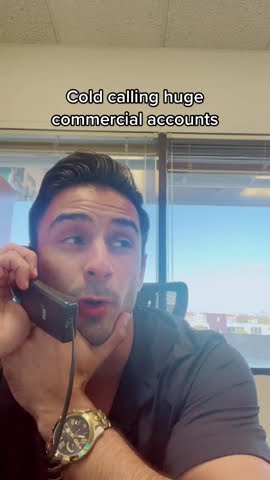
- 0:25Name, agency and the texts he already sent about general liability and workers comp, so the voicemail has context.
- 0:35He says out loud that the owner may already have settled this year's policy, instead of pretending otherwise.
- 0:41He asks for a comparison now or, if the decision is made, next year. The next contact gets a date.
- 0:52Callback number, then a promise to follow up by text.
The voicemail leans on a price comparison; clip it for the respect-the-decision move, not the pitch.
An appointment is real only when the decision maker knows why you are meeting and has agreed to it. A slot on a setter's calendar is not enough.
For openers by lead source, use the insurance cold-calling scripts. Whatever the opener, keep who you are, what you know and your permission to call accurate.
Openers are hard to practice on live prospects. With Kendo's AI prospect, producers rehearse the opener out loud before the real call.
Insurance case study: Kody's team reports a 5 to 20% improvement
Kody Skvarla leads an insurance sales team; one top performer roughly doubled his own baseline.
“Kendo matches or beats a human practice partner. The objections are the exact same as real calls.”
3. Run discovery around operations, changes and decisions
Discovery should leave you with a description of the business your account team can use. A filled-in application is not the same as knowing what changed and why the owner is shopping.
Start with how the business runs. Then ask about changes, worries, timing and who decides. When an answer is thin, ask a follow-up instead of guessing what a familiar industry name means.
Understand how the work is actually done
Ask the owner to walk you through the work from first request to delivery. Who does it, where does it happen, and what has changed since the last review?
A Hiscox survey of 2,000 U.S. small business owners shows how often owners misread their own coverage. So discovery starts with how the business works, not with a coverage list.
- 77%
- lack adequate coverage, by Hiscox's measure
- 74%
- could not correctly describe what general liability covers
- 83%
- misunderstood what professional liability covers
Hiscox 2025 Underinsurance in Small Business Report, 2,000 U.S. owners surveyed in June 2025.
For a contractor, that can lead to questions about the jobs they take, how work is assigned and how much employees or subcontractors do. For a retailer, the change might be a new location or a delivery service. These are questions to ask, not automatic coverage recommendations.
Keep what the owner says separate from what you have checked. If the owner estimates a figure during the meeting, label it as an estimate and note who will confirm it. Do not let a guess turn into a fact by the time it reaches the underwriter.
Find the concern behind the request for a quote
Ask what prompted the review and what the current setup makes hard. Price may be the main worry, but it could also be slow service, an unanswered question, a contract requirement or a change in the business.
Chubb's own guidance on cross-selling makes the same point: extra coverage conversations start with a business need. Your job is to understand the need before you suggest a product, and to get it checked by someone qualified when needed.
Do not treat every concern as proof the current broker failed. The owner may not have mentioned the change yet, or there may be facts you have not seen. Get the facts without turning discovery into criticism of someone who is not in the room.
Map the people and the decision date
The person answering your questions may not approve the proposal or hold every document. Ask who keeps the records, who compares the options and who should join the next conversation.
Confirm the real renewal or decision date, then work backward with the account team. Different accounts need different information and review time. Do not promise a quote date until the colleague doing the work confirms it is possible.
Use a commercial opportunity worksheet
Keep this record in the agency's own system. The point is to carry the conversation through the handoff, not to create a second place where account data goes stale.
| Field | Useful entry |
|---|---|
| Business and operations | Work actually performed, locations and relevant operating model |
| People and timing | Decision-maker, document owner and confirmed dates |
| Reason for review | The customer's stated concern, not the producer's interpretation |
| Changed exposures | Confirmed changes and open questions, clearly distinguished |
| Missing information | Specific records needed, source and responsible person |
| Technical review | Named reviewer and the question requiring their judgment |
| Next step and service handoff | Agreed action, owner and date, plus ongoing service expectations |
Take a made-up contractor who says subcontractors are doing more of the work. The producer should ask what changed, which tasks they do and how the arrangements are written down. The technical reviewer decides what else is needed.
The weak response is an instant promise that an endorsement will fix it. The strong response is a precise handoff: “The owner reports a change in how work is assigned. The extent and the documents are not checked yet. The account specialist will confirm what is needed before terms are discussed.”
- Owner
- Subcontractors are handling more of the work this year.
- Producer
- Which work has changed, and how are those assignments documented?
- Owner
- The operations lead has those details.
- Producer
- Can the operations lead join the next review? The account specialist can confirm what information is needed before options are discussed.
Illustrative contractor dialogue.
4. Turn the conversation into a usable submission
Before passing the account to marketing or a carrier-facing colleague, check that the record explains the business, why the owner is reviewing, what information you have and what is still open.
Ask the receiving colleague whether the account fits the carriers being approached and what is needed next. What carriers want to write, and what they need to see, changes. Check with the marketing team instead of trusting an old cheat sheet.
Assign missing documents by name and owner. “Waiting on client” is too vague when the client sent what they thought you asked for. Write down the exact item, who can provide it and whether the team has explained why it is needed.
A California commercial broker calls a business about general liability and workers comp. He has a real reason to call: the owner answered his text. Watch the ask at the end.

- 0:00Name, agency and role, then the reason for the call: the owner replied to a text and said to call.
- 0:20He checks he has the right person: are you the admin who handles insurance?
- 0:30She says their broker is already working on bids. He stays calm and keeps the conversation going.
- 0:52He names exactly what is missing: number of employees and annual payroll. Not “send me everything”.
Clip and share from 0:43 to the end: the ask starts there and the named items land at 0:52.
Do not submit guesses as checked facts. If you are unsure about an operation, a past incident or a document, flag it. The right reviewer can clear it up before it becomes a bigger problem.
Track the work in the agency's CRM, AMS or submission process. Coaching software like Kendo helps with the conversation; quoting, underwriting and policy admin stay where they are.
“Contractor. Needs GL. Waiting on client.”
“Legal name confirmed. Payroll and loss runs requested from the owner. Subcontractor change reported, ops lead to confirm.”
Name the item, the owner and the date.
When a carrier's answer changes the plan, tell the customer right away. Say what is still needed or why the date moved, without promising something the carrier decides.
5. Explain the proposal in the context of the business
The proposal meeting should come back to the concerns you found earlier. Show how the terms on offer relate to those concerns, where the options differ and what is still open. Bring a qualified colleague when the discussion goes past what you know.
Use the actual proposal and documents. Separate the quoted terms, conditions and open requirements from what the customer asked for. A cheaper quote is not the same coverage. A pricier quote is not better coverage.
Ask the customer to point out anything that does not match the business as described. This matters most when several people supplied the information. If you find a mismatch, fix it; do not brush it aside to keep momentum. Then close with a clear decision process:
- Who will review the material?
- What question still needs an answer?
- When does the group reconnect?
Silence is not a yes, and a conversation does not bind coverage.
If the customer mentions a related need, route it to the right person. The needs-based cross-selling process keeps account growth tied to real concerns instead of a product quota.
Explaining options clearly takes practice. With Kendo, new producers rehearse the proposal conversation before the real meeting, and managers see the scores without sitting in.
Insurance case study: Globe Life new agents went from about 33% to 60%+ close rates
The change took about six months. Jess Chang, Partner at Globe Life, walks through it in the video.
“Kendo buys back time for my leaders”
6. Hand off service and practice commercial discovery with Kendo
Your promises should survive placement. Introduce the service contact, write down open questions and explain how routine requests, changes and claims help will work. Check that the service team received the account context, not just the documents.
Renewal is not automatic, and the insurance customer retention playbook covers what to do after placement.
For managers, review discovery quality before celebrating quote volume. Did the producer check the change in operations, spot the missing information and bring in the right reviewer? A quote built on an incomplete story is not a clean win.
With Kendo's AI roleplay, you build the prospect: a contractor whose subcontractor use just grew, say. Producers practice the discovery call against that prospect. For how Kendo compares with other practice tools, see the AI sales roleplay tools compared.
Custom scorecards let you score what matters on a commercial call: did the producer ask what changed, name the missing documents and set a next step? Call review does the same for real customer calls. Coverage decisions stay with people.
Targeted Diagnosis and Value
- Recap and ConfirmRequired7 pts
- Change Discovery6 pts
- Focused Questions6 pts
- Business Case6 pts
Add criteria
A producer cannot quote accurately from half the story. Build a business owner with changed operations, practice the discovery questions and review the handoff. The next step needs the right documents and the right people.
Buyer Profile
Define who the buyer is and the context they make decisions in.
Scenario & Resistance
Set what is being sold, the conversation stage, and how this buyer should resist.
Commercial: changed operations and handoffACTIVE



Renewal is next month, and we're using more subcontractors.
Which work has changed, and who has the agreements and operating details?
Our operations lead has them. Can you just match last year's coverage?
We need to review the changes first. Can we involve your operations lead and our account specialist, and confirm when you need a decision?
Run that loop week after week and ramp time becomes something you can measure, the way United Insurance Pros did.
Insurance case study: United Insurance Pros cut time to baseline from 45+ days to 14
United Insurance Pros runs a 500+ agent organization. Founder Waylon Artrip talks through the change in the video.
“If you've got more than five agents, it's a no-brainer.”
Line those scores up against submission quality and outcomes using the agency KPI definitions. Compare like with like: same call type, same producer experience, same market. A practice score does not predict premium or commission.
The insurance coaching workflow makes this review repeatable. Start with one recent opportunity: look at the discovery notes, the open questions and the handoff. Fix the first missing piece before asking the producer for more activity.
When you scale feedback across several managers, the sales coaching platform comparison helps you tell call review and practice tools apart from commercial product training.
Frequently asked questions
Where should a new commercial insurance producer start?
Choose a segment the agency can understand and serve, then confirm market access, technical support and service capacity. Build product knowledge with qualified instruction and practice the business conversation. A longer prospect list does not fix having no carrier for the business or nobody to check the coverage advice.
What should happen before asking the business for documents?
Agree on why the review is happening, learn how the business runs and find out who can supply or confirm the information. Ask the account team which records are actually needed. Name the document, its owner and why it matters, rather than asking for a pile of files or treating a website description as checked fact.
How can a producer compete when another quote is cheaper?
Compare the actual terms and service commitments against what the customer cares about, with a qualified review where needed. A higher premium is not proof of better protection, and a lower premium is not proof of an equal offer. Explain the real differences without inventing a flaw in the competing proposal.
Can AI roleplay replace commercial product education?
No. Kendo lets you set up a discovery scenario and gives feedback against criteria your agency picks. Technical instruction and human judgment are still needed. Use practice to test questions, uncertainty and handoffs; use qualified people and source documents for coverage, quoting and underwriting.