

The best insurance cold calling scripts say who is calling, why, and what the agent actually knows about this person. They also make it easy to say no. Give a true reason for the call, ask if a short chat is okay, then ask one useful question. A slick opener cannot fix a made-up reason for calling.
Managers do not need every agent to sound the same. They need agents who know what they can honestly say, listen to the first answer, and leave notes the next person can use.
Most people will not pick up a call from a number they do not know. The ones who do give you one sentence to prove the call is worth it.
- 8 in 10
- U.S. adults do not usually answer a cellphone call from an unknown number
- 67%
- do not answer, but still check the voicemail
- 14%
- do not answer and ignore the voicemail too
Two in three adults still check the voicemail, so script 6 deserves real practice.
Source: Pew Research Center, survey of 10,211 U.S. adults, July 2020
Choose the opening before the dial
Deciding whether to call is a different job from deciding what to say. A polite opening does not give you permission to dial. Check the lead source, the contact rules, the do-not-call list and agency policy first.
The FTC's telemarketing guidance treats insurance as a special case and points to FCC and state rules. Get your compliance owner or a lawyer to sign off on how you contact people. A script is not a compliance policy.
| What the record supports | Opening should establish | Do not imply |
|---|---|---|
| No prior relationship | Identity and the commercial reason for calling | An inquiry, appointment or previous conversation |
| Documented inquiry | The actual request and source | That an old or ambiguous record proves current interest |
| Authorized introduction | Who introduced you and what was agreed | That a friend's referral authorizes every contact method |
| Agreed callback | The real topic and agreed timing | That the prospect already accepted a recommendation |
| Existing client | The specific review or service context | That service automatically authorizes unrelated solicitation |
Consumers already file insurance near the top of their scam-call complaints. A real agent has to prove who they are in the first sentence.
Share of 2025 scam robocall complaints by category, as chosen by consumers on the complaint form.
Six scripts with a useful next question
These six are practice scripts, not legal-approved wording. Fill every [bracket] with a fact you can see in the record, add your agency's required disclosures, and rehearse the yes, no and maybe branches. Never fill a gap with a guess.
1. A genuinely cold introduction
Use case: No earlier contact with this person. Clear the contact rules before dialing.
Agent: “Hello, this is [name] with [agency]. This is an unexpected sales call about [insurance line]. Is a brief explanation welcome?”
If yes: “The reason for calling is to see whether an insurance review would be useful. Are you actively comparing coverage, or is that not a priority?”
If comparing: “What prompted the review?” Their answer decides what comes next: an appointment, a handoff to a licensed specialist, or nothing.
If not interested: “Understood. Thank you for telling me.” End the pitch. If the person asks not to be contacted, follow the do-not-call process.
Managers: listen for a clean pause after the permission question. Asking “is this okay?” and pitching in the same breath is not asking. Leave room for the answer.
Practice script. Check it against your agency's approved wording before use.
2. A documented web inquiry
Use case: The record shows a real request from a source you can name.
Agent: “Hello, this is [name] at [agency]. The record shows a request through [verified source] about [specific insurance need]. Is that something you're still looking into?”
If recognized: “What would you like help comparing?” Do not assume they want the cheapest option. Some want more cover, some want it fast.
If not recognized: “Thanks for clarifying. I won't treat that record as a request from you. I'll flag it for review.” Follow the agency's process. Never argue with someone about what a lead vendor's record says.
If already resolved: Ask whether any further contact is welcome; accept the answer.
Old leads need more than a different adjective. Check whether you can still contact them, whether the request is still relevant and where it came from before anyone dials. Do not say “you just requested” because the dialer served the record today.
Practice script. Check it against your agency's approved wording before use.
3. An authorized referral
Use case: Someone introduced you, and the record shows what they agreed to.
Agent: “Hello, this is [name] with [agency]. [Referrer] suggested an introduction about [verified topic], and [accurate description of the agreed introduction]. Is now a suitable time to discuss whether a review would help?”
If interested: “What did you want the review to address?” What the referrer thinks they need is not what they told you they need.
If surprised: “Understood. There is no obligation to discuss it.” Do not share more about the referrer, and do not use the friendship as leverage.
If interested later: Agree on what the next call is for, how to reach them and when. Book it the way the agency allows.
A name-drop makes the call feel warm. It does not make it permitted. Managers should check both the introduction record and the words the agent used. “Your colleague thought a review might help” is very different from “your colleague booked this for you.”
Practice script. Check it against your agency's approved wording before use.
Here is what a clean referral opener sounds like on a real call to a business front desk. The same rules apply to personal lines; the business side is covered in selling commercial insurance.

- 0:00Name, agency, city and role in the first seconds. That is the prove-who-you-are move the FCC numbers above make necessary.
- 0:09The reason for the call and the real referral (the owner replied to his text and said to call), then a role check: is she the admin who handles insurance? He asks before he pitches.
- 0:27She says their broker is already working on bids, then invites one more quote. He does not argue. He gets her name and asks only for the two missing basics: employee count and annual payroll.
It works because the referral is real. Script 3 never rests on a referral the record cannot show.
4. An agreed callback
Use case: The prospect agreed to a callback, and you noted the topic and time.
Agent: “Hello, [name] from [agency]. When we spoke on [verified day], you asked for a callback about [topic]. Does that still work?”
If yes: “You wanted to understand [documented question]. Has anything changed before we pick that up?”
If the time no longer works: “Would you prefer another time, or should we leave it here?” Write down the answer. Do not invent another appointment.
If they do not remember: Briefly say what the earlier call was about, then let them decide whether to go on. Do not use “as promised” unless they really asked for the callback.
The next appointment should have a job. “Review the deductible differences with both decision-makers” is stronger than “touch base.”
Practice script. Check it against your agency's approved wording before use.
Insurance case study: 500+ agents reach the defined baseline in 14 days instead of 45+
Four openers in, a new agent already has a dozen branches to get right. United Insurance Pros runs 500+ agents.
“If you've got more than five agents, it's a no-brainer.”
5. An existing-client coverage review
Use case: An existing client, with a specific review or service reason to call.
Agent: “Hello, this is [name] at [agency]. I'm calling about [specific, accurate review purpose]. Is this a suitable time to discuss it?”
If yes: “Has anything changed in [relevant household or business circumstance] since your last review?” Ask about their situation, not about every product the agency sells.
If there is an unresolved service issue: Fix it or pass it to the right person first. Do not push a coverage review while the client is still waiting for help.
If the client declines: Record that decision and finish politely. Being a client does not cancel a clear no.
Moving into another line of cover is a separate conversation with its own approved process. The cross-selling insurance playbook covers when to raise it and who to hand off to. If the client has a service problem, fixing it comes first; that is the whole point of keeping existing clients.
Practice script. Check it against your agency's approved wording before use.
6. A voicemail that does not invent urgency
Use case: No one picked up, and agency policy allows a message.
Agent: “Hello, this is [name] with [agency]. I'm calling about [accurate, appropriate purpose]. You can reach me at [verified callback number]. Again, [name] at [agency], [number].”
Say only what your policy allows in a voicemail. Anyone could hear it, so leave out health, coverage and money details.
Do not say “urgent policy issue,” “final notice” or “returning your call” unless it is true. A scary message may get a callback, but it kills trust in the first second of that call.
A voicemail does not get around a do-not-call request. Agency policy decides whether you can leave a message, what it says and whether you try again.
Practice script. Check it against your agency's approved wording before use.
Two in three adults still check the voicemail from an unknown number (Pew, above). This one runs under 40 seconds, stays calm and is honest about the earlier texts.
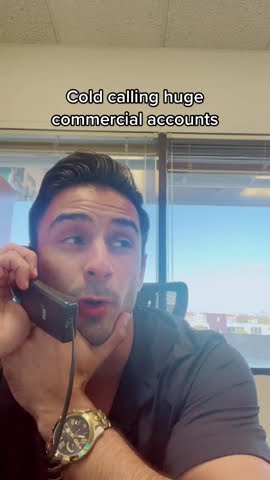
- 0:22First name, agency and the reason for the call in two sentences, including the lines he means (general liability, workers comp). The listener knows what this is before deciding to keep listening.
- 0:30He refers to his earlier texts and the owner's last reply, then offers a comparison if no decision is made yet, with next year as the fallback. An easy yes or no, with no fake deadline.
- 0:50Callback number, and a text will follow. Texting a business contact still needs the consent rules in the callout above.
Two things to coach: he says the number once and fast (script 6 repeats it), and the earlier texts have to exist for this to be honest.
Handle the first answer without wrestling for airtime
The opener only works if the next sentence answers the person. There is no proven winning phrase. Test openers on your own leads, within the same lead source and lead age.
For later worries about price or coverage, use the insurance sales objections guide. For an established life prospect, move into the life insurance sales scripts rather than stretching a cold opener into a full financial conversation.
Insurance case study: Kody Skvarla's team reports a 5 to 20% improvement
Kody Skvarla leads an insurance sales team that practices with Kendo. One top performer roughly doubled his own baseline.
“Kendo matches or beats a human practice partner. The objections are the exact same as real calls.”
Approve the branches, not just the happy path
If you only sign off the opener, you miss the lines agents make up under pressure. Include the wrong person, the disputed inquiry, the product question, the recording objection and the stop-calling request.
- Check the source claim
Can the agent see the fact this opening relies on?
- Approve the required wording
Identity, disclosures and recording steps that fit the actual call.
- Check sales claims
Remove unproven savings, guesses about who qualifies and any hint of a carrier tie that does not exist.
- Decide who handles what
Name who takes unclear permissions, policy questions and do-not-call requests.
- Version the library
Give agents one current approved source, an owner and a way to flag a broken branch.
One owner, one current version, one way to flag a broken branch.
In a multi-office agency, branch managers should not quietly rewrite legal or product wording while coaching tone. Mark which lines are fixed and which questions agents can phrase their own way. Agents sound natural and every office follows the same policy.
Build the same checks into insurance agent onboarding. Knowing the opener is not the same as being ready to work real leads.
Practice insurance cold-call scripts with Kendo
Build a cold-call scenario around the first answer your agents struggle with. In Kendo, they practice the opening, get feedback after the call and try the branch again. A clean exit can be the right result.
Buyer Profile
Define who the buyer is and the context they make decisions in.
Scenario & Resistance
Set what is being sold, the conversation stage, and how this buyer should resist.
Insurance Cold Calls: First AnswerACTIVE



I'm busy.
I'm [name] with [agency]. This is an unexpected sales call about life insurance. I'll let you go.
What were you calling about? I already have insurance.
Only whether a review would be useful. Is there anything you'd want checked, or should we leave it here?
No, I'm happy with it.
Understood. Thank you for your time.
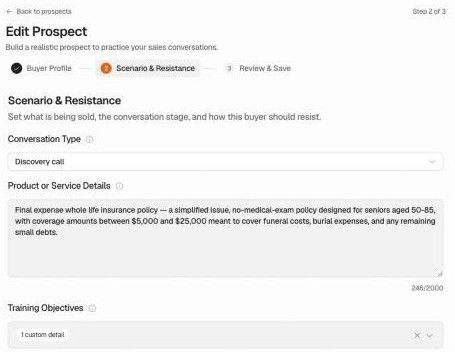
Where the manager sets the call type and what the rep is working on. The example on screen is a final-expense discovery call.
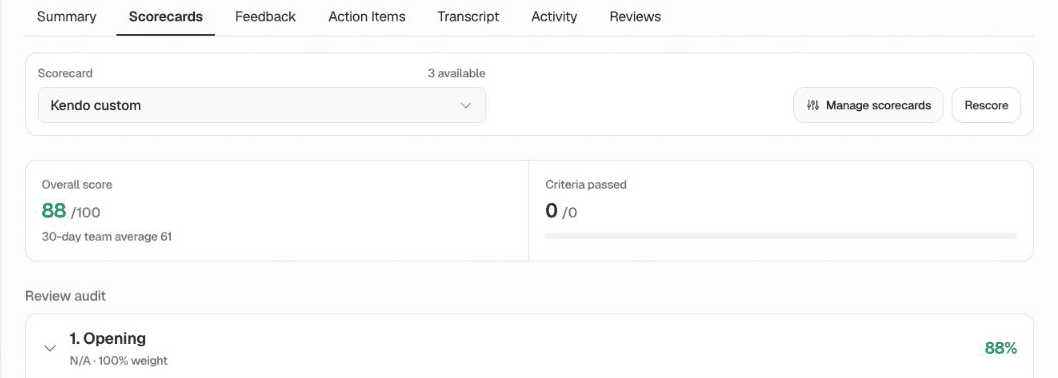
What the manager sees after the call ends: an overall score, the team average and the opening scored on its own. Example scorecard.
Compare openers only across similar lead sources, lead ages, lines and agent experience. Otherwise a fresher lead list looks like a better script.
Track answered calls, real conversations, booked appointments and kept appointments separately in your insurance agency KPIs. Add checks for made-up claims, pitching too early and ignored stop requests. More bookings with worse honesty is not a win.
Insurance case study: Globe Life new-agent close rates rise from about 33% to 60%+
Tracking those numbers is manager time. Jess Chang, Partner at Globe Life, saw new-agent close rates climb over about six months.
“Kendo buys back time for my leaders”
Questions managers ask
Should new and old leads use the same opening?
No. State only the history you can support. An old inquiry may mean you should not call at all, not just that you say “a while ago.” If you are not sure where the lead came from or whether you can contact them, sort that out before an agent dials.
How closely should an agent follow the script?
Keep approved identity statements, disclosures and key claims word for word. Let agents phrase the questions naturally where your policy allows. Check whether the answer changed the next question, not whether the agent recited every optional line.
What happens when someone asks not to be called?
Stop selling and follow the do-not-call process. The manager's check is whether that request made it into the system that stops future calls, not whether the agent got a last word in.